The Lusiads: Portugal's Epic of the Sea
An exiled poet, a fleet bound for India, and gods bickering on Olympus over the fate of a tiny kingdom — this is the poem that made a nation of sailors into legend.
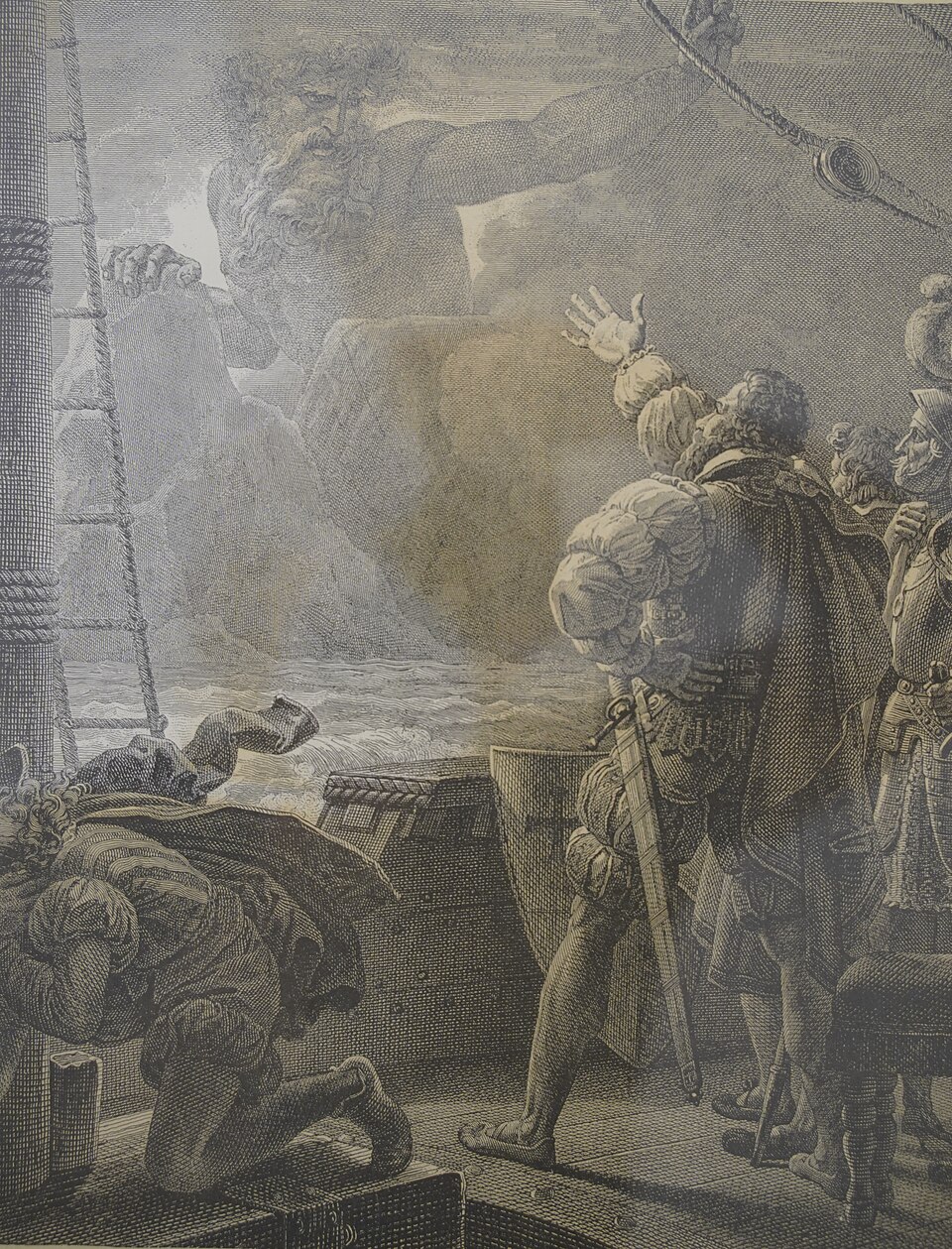
On the far edge of the Portuguese empire in Macau, a soldier and poet named Luís Vaz de Camões sat down to write the story of his people. He was living there in exile, and his epic reached print in 1572, three years after he had returned from the Indies.
The poem he wrote, Os Lusíadas, takes its name from the Lusíadas — the sons of Lusus, a mythic ancestor said to represent the Portuguese people themselves. Structured in ten cantos and written in ottava rima, it totals 1,102 stanzas and 8,816 lines of decasyllabic verse, an immense architecture built to rival the great epics of antiquity.
And rival them it does, deliberately. Camões modeled his work on Virgil's Aeneid and Homer's epics, opening with a dedication to King Sebastian of Portugal, an invocation to the Tágides — nymphs of the river Tagus — and then plunging in medias res into the heart of the action, with backstory unspooling later, exactly as Homer and Virgil had done centuries before.
At the center of it all is Vasco da Gama, the explorer whose voyage opened a sea route to India. Camões casts him as the 'eloquent captain,' a hero whose speeches carry much of the poem's narrative weight, alongside his brother Paulo da Gama, the goddess Thetis, and a prophetic Siren who appears in the tenth canto to foretell the future.
The gods themselves take sides. In the Council of the Olympian Gods that opens the narrative, Jupiter delivers a speech praising the Lusiad people, invoking earlier figures such as Viriathus and Quintus Sertorius as part of the history of this people, and declaring that this small nation, having triumphed over Moors and Castilians, was destined by fate to discover new worlds and impose its law among nations.
More from Mythology

The Doctor Who Sang a Nation Into Being
A country doctor rode into the forests of Karelia armed with nothing but a notebook — and rode out with the soul of a nation.

The Boat That Carried the Sun
Every sunset, the ancient Egyptians believed, the sun climbed into a boat and sailed straight into the realm of the dead — only to fight a monstrous serpent before dawn could return.

The Wild Man of the Snows
At 21,000 feet, a colonel found tracks in the snow that he blamed on a wolf — but his guides knew better, and gave the world a name that would echo for a century.

The Knight Who Went Mad for Love: Orlando Furioso
A hero so devoted to duty he was Charlemagne's greatest paladin loses his mind—not to a sword wound, but to heartbreak. To cure him, a friend must ride a flying horse to the Moon.

The Book That Turned the World Into Myth
A poet condemned to exile spent his final years in Rome finishing a poem that would outlive empires—a poem about nothing standing still, not gods, not lovers, not even the shape of a man.

Paradise Lost: Milton's Rebel Angel
A blind poet, dictating verses in the dark, dared to explain the ways of God to men — and in doing so, made Hell's ruler unforgettable.