The Mountain Where the Flood Ended
A wooden vessel the length of a stadium, built over half a century, is said to have come to rest on a snow-capped Anatolian peak — but which mountain, and whose story, gets to claim it?
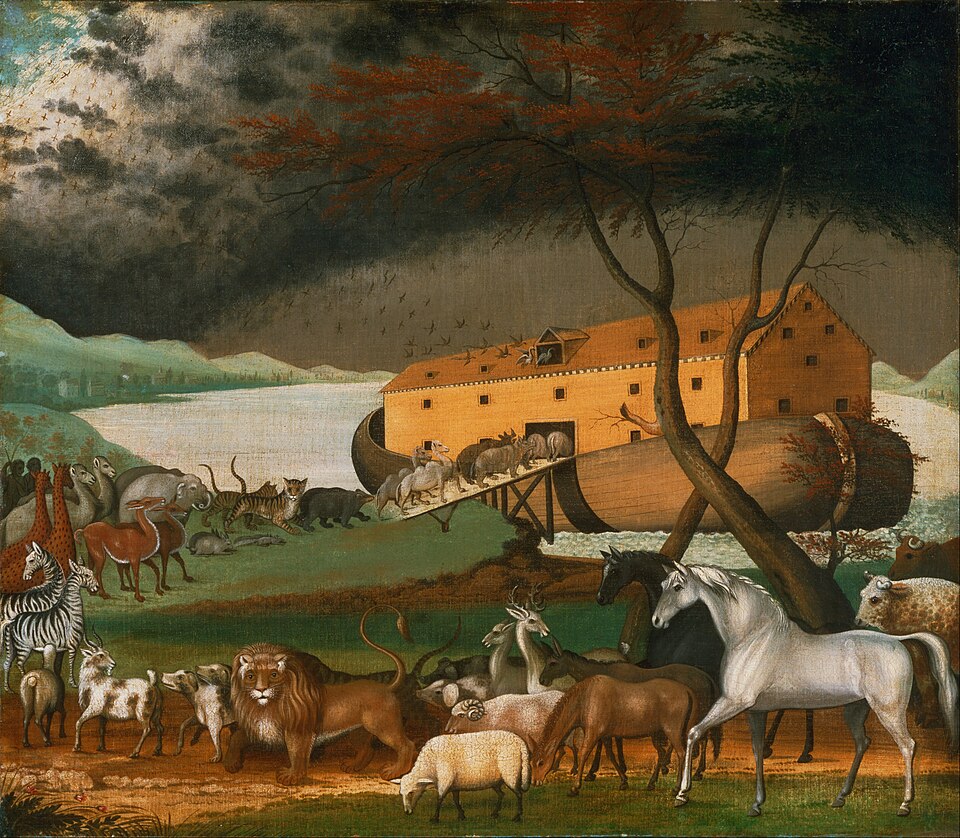
On the slopes of Mount Ararat, in eastern Anatolia, believers and skeptics alike have climbed for centuries chasing the same rumor: that somewhere beneath the ice lies the hull of Noah's Ark. The mountain's name is inseparable from the story recorded in Genesis 8:4 — 'the ark rested... upon the mountains of Ararat' — and for generations that single verse has turned a volcanic summit into one of the most searched-for archaeological mysteries on Earth.
The biblical account describes a vessel of staggering scale: 300 cubits long, 50 wide, 30 high — approximately 134 by 22 by 13 meters. Built from gopher wood and sealed inside and out with pitch, the ark took Noah, according to the Genesis narrative, fifty-two years to complete. Its purpose: to carry Noah, his family, and a pair — or in some cases seven pairs — of every animal species through a flood sent to destroy a corrupted world.
According to Genesis, Noah and his household remained aboard for twelve months while the waters receded, sustained by stores of food and seed loaded before the deluge. The ark's internal structure — three decks — has been read by scholars as a reflection of the ancient Israelite cosmos: heaven, earth, and underworld, with each level said to echo the proportions of the Temple in Jerusalem.
The Quran tells a related but distinct version of the story. In it, Noah is a prophet sent to a corrupt people who mock him and reject his warnings. Told to build the ship under divine instruction, using metal plates and nails according to some traditions, he loads it with his family, believers, and pairs of animals. The Quran states that when the flood ended, 'the ship came to rest on al-Judi' — a mountain identified by various traditions with sites near Mosul in Iraq, or elsewhere, such as Cizre or Nusaybin in southeastern Turkey — a different peak from the Ararat of Genesis.
More from Mythology

The Doctor Who Sang a Nation Into Being
A country doctor rode into the forests of Karelia armed with nothing but a notebook — and rode out with the soul of a nation.

The Boat That Carried the Sun
Every sunset, the ancient Egyptians believed, the sun climbed into a boat and sailed straight into the realm of the dead — only to fight a monstrous serpent before dawn could return.

The Wild Man of the Snows
At 21,000 feet, a colonel found tracks in the snow that he blamed on a wolf — but his guides knew better, and gave the world a name that would echo for a century.

The Knight Who Went Mad for Love: Orlando Furioso
A hero so devoted to duty he was Charlemagne's greatest paladin loses his mind—not to a sword wound, but to heartbreak. To cure him, a friend must ride a flying horse to the Moon.

The Book That Turned the World Into Myth
A poet condemned to exile spent his final years in Rome finishing a poem that would outlive empires—a poem about nothing standing still, not gods, not lovers, not even the shape of a man.

Paradise Lost: Milton's Rebel Angel
A blind poet, dictating verses in the dark, dared to explain the ways of God to men — and in doing so, made Hell's ruler unforgettable.