The Night the Green Vault Bled Diamonds
A fire on a bridge, a blackout, and a hole barely wide enough for a child — in minutes, three centuries of royal treasure vanished from one of Europe's oldest museums.
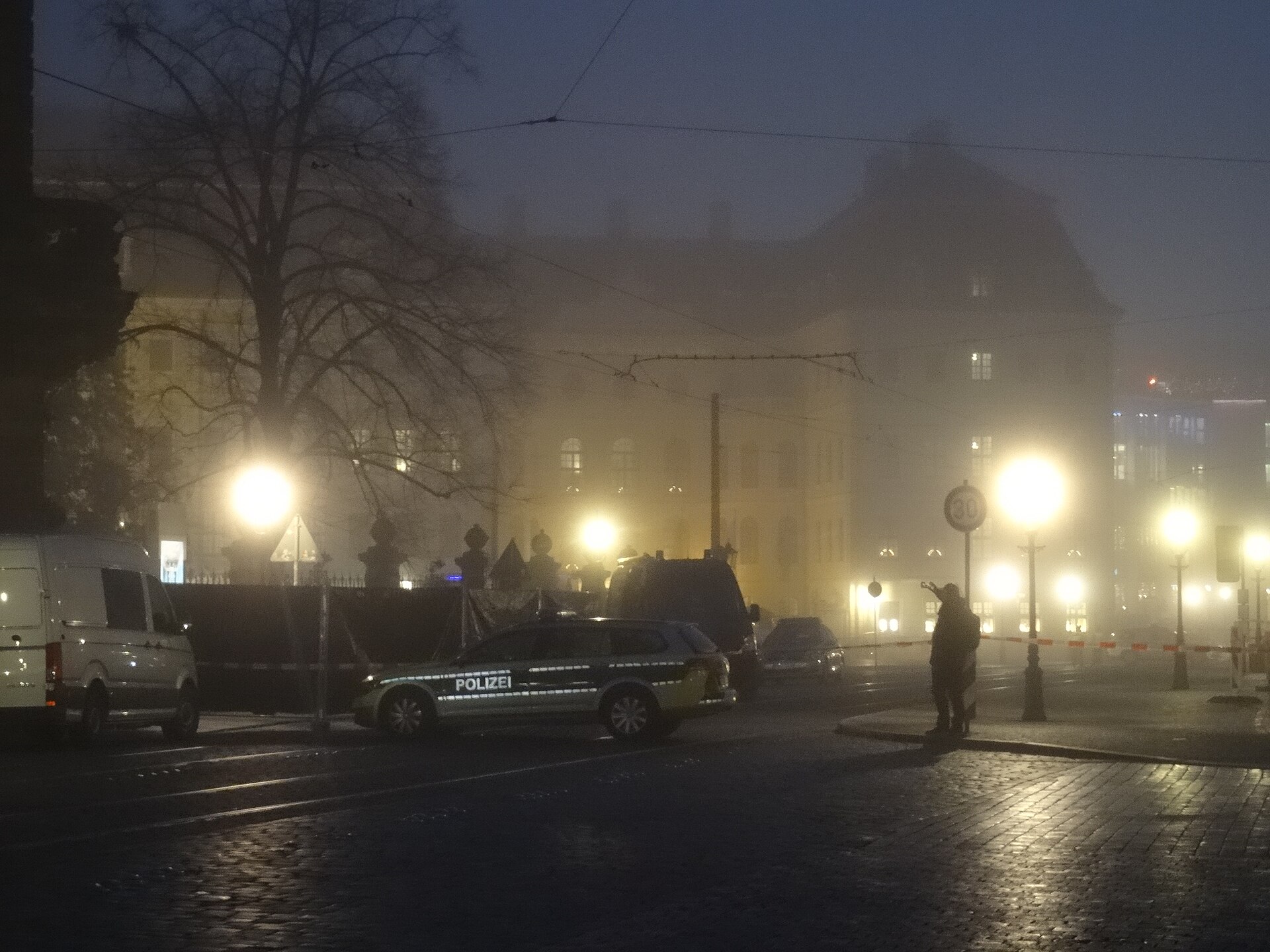
At 4 a.m. on 25 November 2019, flames rose from a power box on Dresden's Augustus Bridge. The fire was no accident. Within moments, streetlights across the old city died, and with them the security alarms guarding the Green Vault, the museum inside Dresden Castle that Augustus the Strong had founded in 1723 to house his glittering collections. CCTV cameras, unaffected by the outage, kept recording — but there was no one left watching in real time.
Under cover of that darkness, thieves cut through the iron bars of a window into the Jewel Room. Police later said whoever slipped through the gap must have been remarkably small. Footage showed two figures moving among the display cases, smashing the protective glass with an axe to reach the treasures inside.
They went for three 18th-century jewellery sets, each made of 37 pieces studded with diamonds, rubies, emeralds, and sapphires. Some pieces resisted — sewn fast to the display fabric — and were left behind. But the thieves succeeded in taking the Dresden White Diamond, a 62-carat stone worth an estimated €9–10 million, along with a diamond-studded sword hilt bearing nine large and 770 smaller diamonds, a matching scabbard, a diamond epaulette, a hat clasp topped by a 16-carat stone once worn by Frederick Augustus III, and the breast star of the Polish Order of the White Eagle, its 20-carat centre diamond ringed by a Maltese cross of rubies.
Before leaving, they replaced the window bars, buying themselves precious minutes. It worked: guards, unarmed and following protocol, did not discover the robbery until 4:56 a.m. — and did not confront anyone, only called police. The first police car was called to the building at 4:59 a.m., arriving about five minutes later, but by then the thieves were already gone, vanishing down the nearby autobahn in what investigators believe was an Audi A6, an identical model of which was later found burning in an underground car park.
Estimates of the loss swung wildly. Early tabloid reports suggested more than €1 billion, which would have made it the largest museum theft in history, eclipsing the 1990 Isabella Stewart Gardner Museum heist. Saxony's state prosecutors eventually settled on a more sober figure: around €113 million. Museum director Marion Ackermann insisted the true cost was incalculable — these were not just gems, but pieces of Saxon royal history.
More from Art

The Painting With No Foreground
A single robed figure stares out at an empty grey sea — and the emptiness itself became a scandal. When it was unveiled in Berlin in 1810, no one knew quite what to do with it.

The Painter Who Chased the Light
For a few purple minutes each evening, an American exile knelt in an English garden and raced the dying sun to paint two little girls lighting lanterns. It took him two years to finish.

When a President Became a God
Look straight up inside the U.S. Capitol dome and you will find George Washington enthroned among the clouds, surrounded by goddesses — the founding father transformed into myth.

Marble Brought Back to Life
A corpse asleep, a wing barely brushing her skin — and marble somehow learns to breathe. This is the moment Antonio Canova dared to carve.

The World Turned Upside Down
Look closely at a sixteenth-century Flemish village and you'll find a man biting a pillar, another carrying daylight in a basket, and a wife slipping a blue cloak over her husband's shoulders. Every gesture is a joke — if you know the language.

The Girl in the Glass Case
She stood two-thirds life size, dressed in a real tutu and human hair — and the critics who saw her in 1881 recoiled as if she were something obscene.