The Scholar Who Bargained With the Devil
At a crossroads, a man tired of everything he knew struck a deal that would echo through five centuries of art, music, and nightmares.
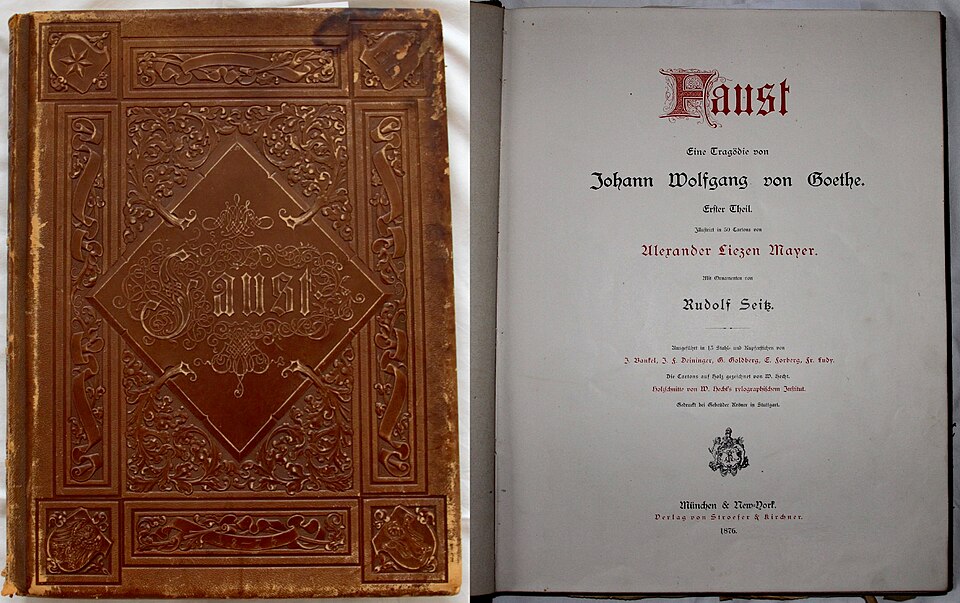
Somewhere in the German lands of the early sixteenth century lived a real man named Johann Georg Faust, born around 1480, likely in Knittlingen, Württemberg. He was an alchemist and magician who earned a degree in divinity from Heidelberg University in 1509. Little else about his actual life survives, but that scarcity of fact left room for legend to grow wild around his name.
The story that took shape told of a brilliant scholar embittered by the limits of science, theology, and the humanities. Convinced he had wasted his life chasing knowledge that could never satisfy him, this Faust turned to darker means. After a suicide attempt, he summoned the Devil, whose representative, Mephistopheles, appeared to strike a bargain: Faust's soul in exchange for a single year of the demon's unquestioned service, granting him unlimited knowledge and worldly pleasure.
The earliest printed version of this tale appeared in 1587 as a chapbook titled Historia von D. Johann Fausten. It proved immensely popular, spawning a whole lineage of similar books across the sixteenth and seventeenth centuries — among them Das Wagnerbuch, Das Widmann'sche Faustbuch, and Dr. Fausts großer und gewaltiger Höllenzwang. In these early tellings, Faust is irrevocably damned: he prefers human knowledge to divine wisdom, and when his year expires, the Devil drags him to Hell without mercy.
The legend crossed borders quickly. Christopher Marlowe gave it its classic English form around 1592 in The Tragical History of Doctor Faustus, setting his scholar's studies at Wittenberg (which Marlowe also spelled Wertenberge). The story's roots may reach even further back, echoing the older Theophilus legend, recorded in Greek, in which a saintly figure bargains with the infernal keeper but is ultimately saved by the Virgin Mary's mercy — a scene carved into the north tympanum of Notre-Dame Cathedral in Paris.
Scholars have long puzzled over where Faust's name and character truly originated. Some connect him to Johann Fust, Johann Gutenberg's business partner, who lived roughly a century earlier. Others note curious parallels with Pan Twardowski, a figure in Polish folklore whose tale emerged around the same time; intriguingly, the historical Johann Georg Faust is known to have studied for a time in Kraków, which may have inspired the Polish legend. The town of Staufen, in southwestern Germany, claims to be where the real Faust died around 1540, a tradition traced to a single passage in the Chronik der Grafen von Zimmern written roughly twenty-five years later.
More from Mythology

The Doctor Who Sang a Nation Into Being
A country doctor rode into the forests of Karelia armed with nothing but a notebook — and rode out with the soul of a nation.

The Boat That Carried the Sun
Every sunset, the ancient Egyptians believed, the sun climbed into a boat and sailed straight into the realm of the dead — only to fight a monstrous serpent before dawn could return.

The Wild Man of the Snows
At 21,000 feet, a colonel found tracks in the snow that he blamed on a wolf — but his guides knew better, and gave the world a name that would echo for a century.

The Knight Who Went Mad for Love: Orlando Furioso
A hero so devoted to duty he was Charlemagne's greatest paladin loses his mind—not to a sword wound, but to heartbreak. To cure him, a friend must ride a flying horse to the Moon.

The Book That Turned the World Into Myth
A poet condemned to exile spent his final years in Rome finishing a poem that would outlive empires—a poem about nothing standing still, not gods, not lovers, not even the shape of a man.

Paradise Lost: Milton's Rebel Angel
A blind poet, dictating verses in the dark, dared to explain the ways of God to men — and in doing so, made Hell's ruler unforgettable.