The Slave Who Became a Poet-Knight
A boy born to a slave mother was told he was fit only to milk goats. He would become one of the most celebrated warriors and poets the desert ever produced.
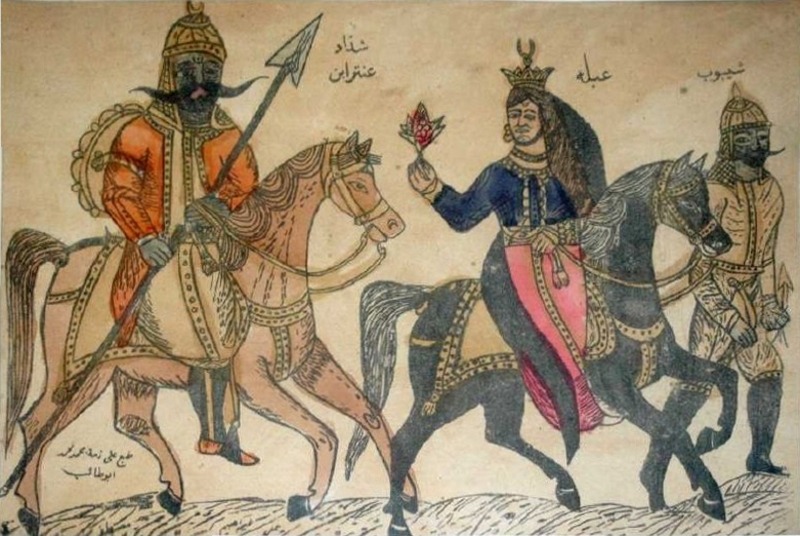
In the sands of Najd, sometime around 525 AD, a child was born who would spend his early years without a name that mattered. His father was Shaddad al-Absi, a respected warrior of the Banu Abs tribe under Chief Zuhayr. His mother, Zabibah, was an Ethiopian woman, and because of his dark complexion, the boy was counted among the so-called 'Arab crows' — men of mixed heritage who, despite noble blood on one side, grew up enslaved. That boy was Antarah.
Despite his status, Antarah fell in love with his cousin Abla. It was a hopeless love by the standards of his world: a slave could not simply ask to marry a free woman, no matter how fiercely he felt for her. He also earned the enmity of his father's wife, Sumayya, who had no love for the boy born outside her own bloodline. Yet Antarah possessed something no one could enslave — a formidable talent for both poetry and combat, and these gifts slowly won him respect among his people.
His path to freedom came through crisis. When the Tayy tribe invaded Banu Abs lands at the outset of the Dahis and al-Ghabra war, Shaddad turned to his son and ordered him to fight. Antarah answered bitterly: a slave, he said, did not know how to invade or defend — he was only good for milking goats and serving his masters. His father's reply changed his life: 'Defend your tribe, O Antar, and you are free.' Antarah fought, the Banu Abs repelled the invaders, and the slave became a free man.
Freedom, however, did not immediately bring him Abla. To win permission to marry his beloved cousin, Antarah faced a set of trials, including a demand to obtain a rare breed of camel from the Lakhmid Kingdom, then ruled by al-Nu'man III ibn al-Mundhir. These challenges became part of the romance that would later be told and retold for centuries.
Antarah's true immortality, though, came from his verse. His poetry captured chivalry, courage, and the brutal poetry of battle itself — detailed descriptions of armor, weapons, horses, and the vast desert that shaped his life. One of his poems earned a place among the Mu'allaqat, the seven 'hanging odes' legendarily suspended in the Kaaba at Mecca, an honor reserved for the finest poets of pre-Islamic Arabia.
More from Mythology

The Doctor Who Sang a Nation Into Being
A country doctor rode into the forests of Karelia armed with nothing but a notebook — and rode out with the soul of a nation.

The Boat That Carried the Sun
Every sunset, the ancient Egyptians believed, the sun climbed into a boat and sailed straight into the realm of the dead — only to fight a monstrous serpent before dawn could return.

The Wild Man of the Snows
At 21,000 feet, a colonel found tracks in the snow that he blamed on a wolf — but his guides knew better, and gave the world a name that would echo for a century.

The Knight Who Went Mad for Love: Orlando Furioso
A hero so devoted to duty he was Charlemagne's greatest paladin loses his mind—not to a sword wound, but to heartbreak. To cure him, a friend must ride a flying horse to the Moon.

The Book That Turned the World Into Myth
A poet condemned to exile spent his final years in Rome finishing a poem that would outlive empires—a poem about nothing standing still, not gods, not lovers, not even the shape of a man.

Paradise Lost: Milton's Rebel Angel
A blind poet, dictating verses in the dark, dared to explain the ways of God to men — and in doing so, made Hell's ruler unforgettable.