The Song of Roland: Legend Born from a Mountain Ambush
A doomed rear guard, a horn blown too late, and a betrayal by a stepfather — this is the tale that became France's founding epic.
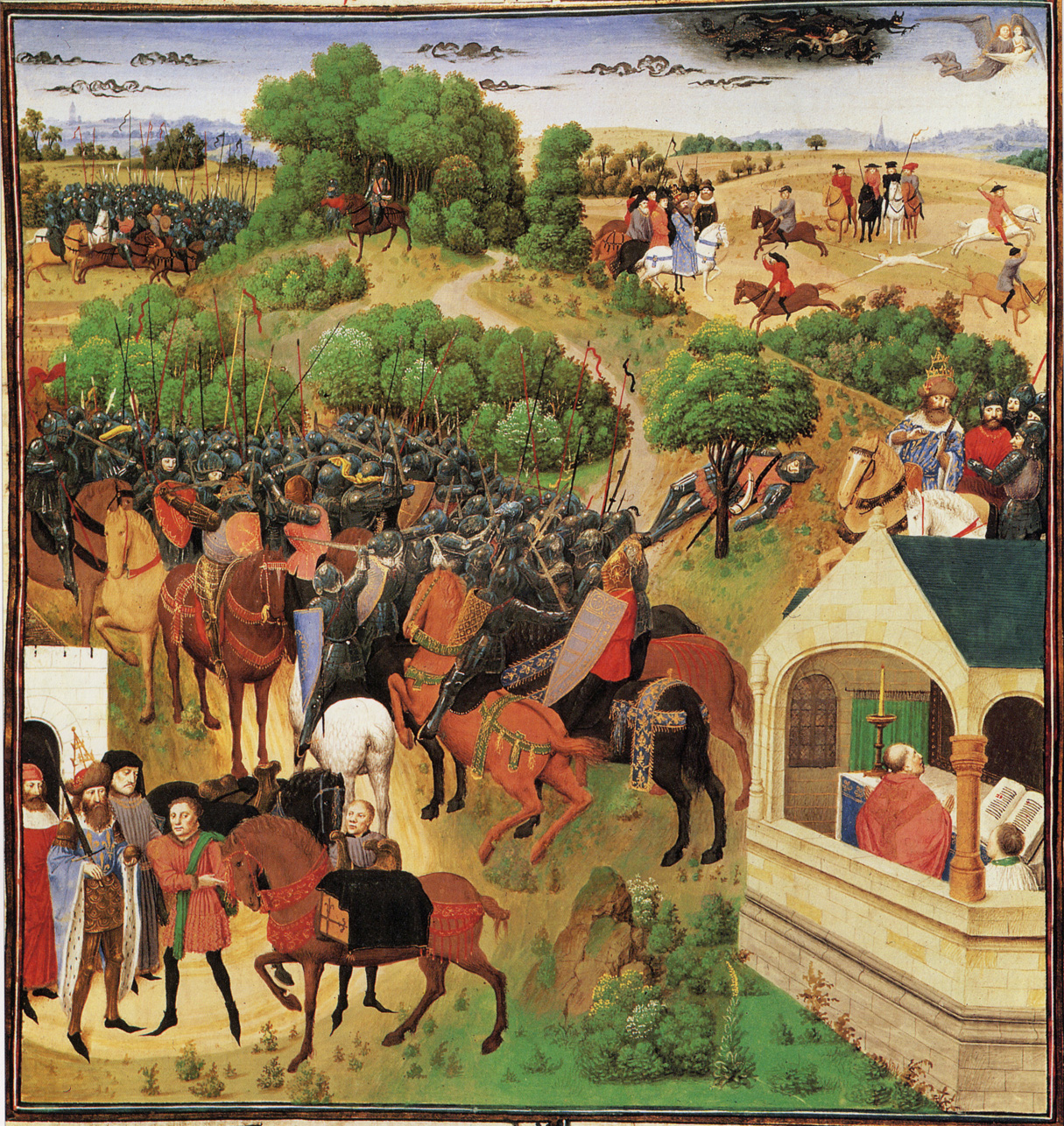
In the high passes of the Pyrenees, sometime in the summer of 778, a portion of Charlemagne's army was ambushed and destroyed. Centuries later, this obscure defeat was transformed into one of the towering works of medieval European literature: the Song of Roland, an Old French chanson de geste of roughly 4,000 lines, composed sometime between 1040 and 1115, with most alterations settled by around 1098.
The poem survives today primarily through a single manuscript, held at the Bodleian Library at the University of Oxford, written in Anglo-Norman and dated between 1129 and 1165. Eight additional manuscripts and three fragments touching on the Roland material also exist, testifying to the story's enduring grip on medieval and Renaissance audiences alike. Scholars have long debated who composed it; the manuscript itself names a poet, Turold — Turoldus — though little else is known of him.
The dating of the poem hinges partly on a small phrase: d'oltre mer, 'from overseas,' used three times to describe Muslims who came to fight in Spain and France. Because this term became common usage during and after the First Crusade of 1096–1099, some scholars argue the poem — or at least parts of it — was composed or revised after the Crusade. Others believe the term was used more generically before that, pointing instead to the Castilian campaigns of the 1030s as an early inspiration, and suggesting the poem was already established enough to influence crusading ideology.
The story it tells departs sharply from history. According to Einhard's Vita Karoli Magni, written in the late eighth century, the attackers at Roncesvalles were actually Basques taking revenge for the sack of Pamplona. But the poem recasts the battle as a clash between Christendom and Islam. In its account, Charlemagne's army has campaigned in Spain for seven years, and only Zaragoza — held by King Marsile, a follower of 'Mahumet and Apollin' — remains unconquered.
Threatened by Charlemagne's power, Marsile takes the counsel of his advisor Blancandrin and offers surrender, treasure, and conversion to Christianity if the Franks will withdraw. Charlemagne's men, weary after years of war, accept. A messenger must be chosen to carry the terms to Marsile's court — and Roland, Charlemagne's nephew and the poem's hero, nominates his own stepfather, Ganelon, for the task.
More from Mythology

The Doctor Who Sang a Nation Into Being
A country doctor rode into the forests of Karelia armed with nothing but a notebook — and rode out with the soul of a nation.

The Boat That Carried the Sun
Every sunset, the ancient Egyptians believed, the sun climbed into a boat and sailed straight into the realm of the dead — only to fight a monstrous serpent before dawn could return.

The Wild Man of the Snows
At 21,000 feet, a colonel found tracks in the snow that he blamed on a wolf — but his guides knew better, and gave the world a name that would echo for a century.

The Knight Who Went Mad for Love: Orlando Furioso
A hero so devoted to duty he was Charlemagne's greatest paladin loses his mind—not to a sword wound, but to heartbreak. To cure him, a friend must ride a flying horse to the Moon.

The Book That Turned the World Into Myth
A poet condemned to exile spent his final years in Rome finishing a poem that would outlive empires—a poem about nothing standing still, not gods, not lovers, not even the shape of a man.

Paradise Lost: Milton's Rebel Angel
A blind poet, dictating verses in the dark, dared to explain the ways of God to men — and in doing so, made Hell's ruler unforgettable.