The Song That Almost Burned Twice
A doomed prince's raid against the steppe. A manuscript found, then lost to fire. A poem that refused to disappear.
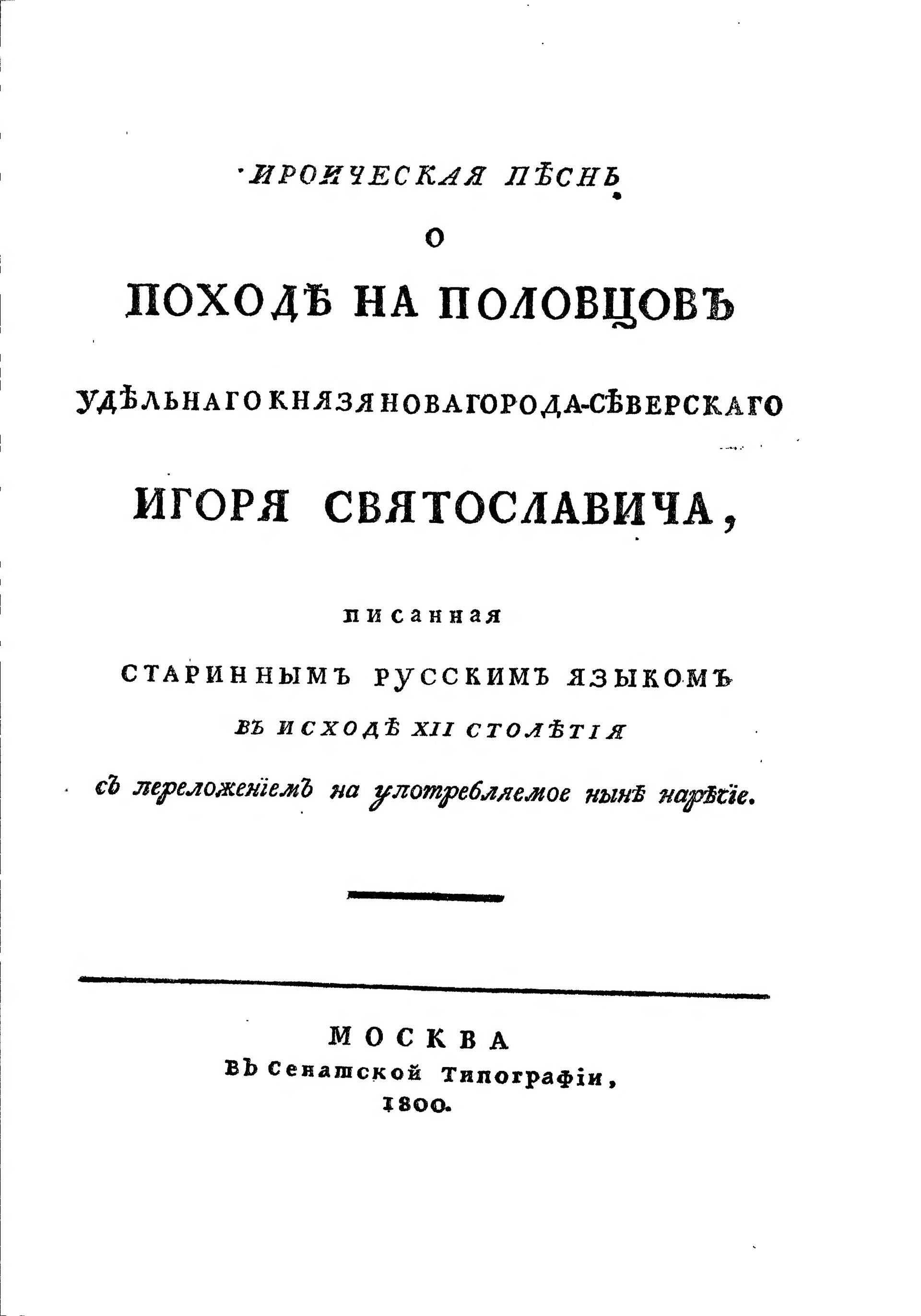
In 1185, Igor Svyatoslavich, Prince of Novgorod-Seversk, led his warriors south against the Polovtsians, nomadic Cumans who ranged the lands along the lower Don. The raid failed. But out of that failure came one of the most haunting works of medieval literature: The Tale of Igor's Campaign, an anonymous epic written in Old East Slavic that would outlast empires, fires, and centuries of doubt.
The poem does more than recount a battle. It weaves in other Rus' figures—the skald Boyan, called 'the Bard', along with princes Vseslav of Polotsk, Yaroslav Osmomysl of Halych, and Vsevolod the Big Nest of Suzdal. Through them, the anonymous author makes an urgent plea: unity among the warring Rus' princes against the constant threat from the Turkic East. Igor's ill-fated campaign itself is corroborated in the Kievan Chronicle, written around 1200.
What sets the Tale apart is its blending of worlds. Christian faith sits beside ancient Slavic religion without contradiction. Igor's wife, Yaroslavna, calls upon the forces of nature from the walls of Putyvl, her voice merging Christian motifs with depersonalized pagan gods. Patriotism, homeland, and above all the power of nature run through every verse—nature portrayed not as backdrop but as a living force shaping human fate, a quality that sets the Tale apart from Western epics like The Song of Roland or The Song of the Nibelungs.
For centuries, the poem existed only as a memory of Rus' storytelling, until 1795, when a single manuscript, believed to date to the 15th century, surfaced in the library of the Transfiguration Monastery in Yaroslavl—a monastery that had housed Russia's very first library and school back in the 12th century. The monastery's superior, Joel Bykovsky, sold the manuscript along with nine other texts to a local landowner, Aleksei Musin-Pushkin.
Musin-Pushkin recognized what he held. He had it transcribed for Empress Catherine the Great around 1795 or 1796, and in 1800 published it with the help of paleographers Alexei Malinovsky and Nikolai Bantysh-Kamensky. It was an electrifying discovery for Russian letters: the earliest known Slavonic-language writing untouched by Church Slavonic. Then, in 1812, during Napoleon's occupation, the great fire of Moscow consumed Musin-Pushkin's library—and, it is claimed, the original manuscript along with it.```
More from Mythology

The Doctor Who Sang a Nation Into Being
A country doctor rode into the forests of Karelia armed with nothing but a notebook — and rode out with the soul of a nation.

The Boat That Carried the Sun
Every sunset, the ancient Egyptians believed, the sun climbed into a boat and sailed straight into the realm of the dead — only to fight a monstrous serpent before dawn could return.

The Wild Man of the Snows
At 21,000 feet, a colonel found tracks in the snow that he blamed on a wolf — but his guides knew better, and gave the world a name that would echo for a century.

The Knight Who Went Mad for Love: Orlando Furioso
A hero so devoted to duty he was Charlemagne's greatest paladin loses his mind—not to a sword wound, but to heartbreak. To cure him, a friend must ride a flying horse to the Moon.

The Book That Turned the World Into Myth
A poet condemned to exile spent his final years in Rome finishing a poem that would outlive empires—a poem about nothing standing still, not gods, not lovers, not even the shape of a man.

Paradise Lost: Milton's Rebel Angel
A blind poet, dictating verses in the dark, dared to explain the ways of God to men — and in doing so, made Hell's ruler unforgettable.