The Stone That Counted the Suns
Carved into a single slab of basalt lies the memory of four ruined worlds — and the terrifying birth of a fifth.
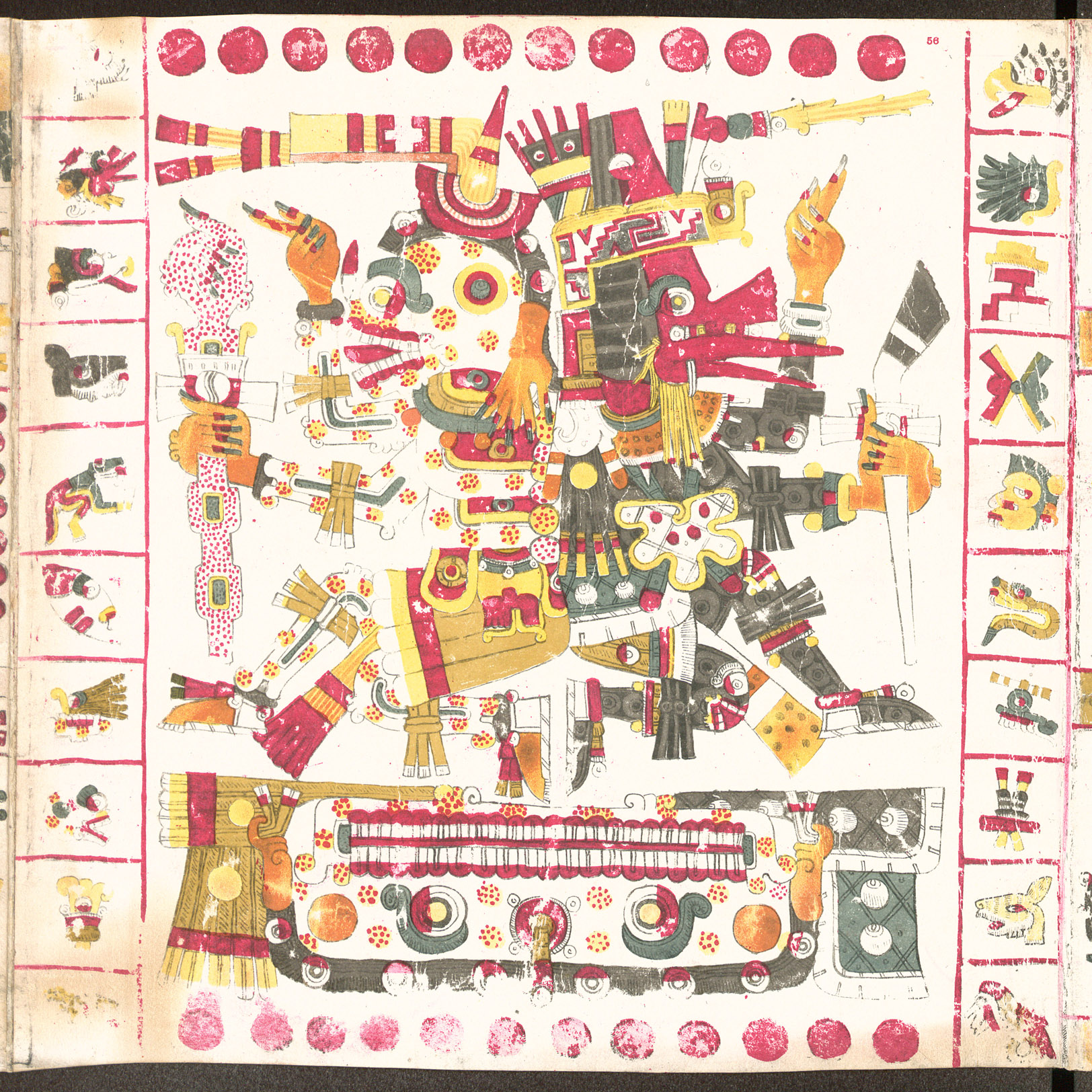
At the heart of the Aztec cosmos sat a story of repeated destruction. According to legend, the present age — called Nahui-Ollin, the Fifth Sun — was not the first attempt at creation. Four earlier ages had come before it, each ended by catastrophe, each one 'named in function of the force or divine element that violently put an end to it.' The Aztecs remembered these vanished worlds not as distant fiction but as the deep history of existence itself, a history that culminated in the age they themselves inhabited.
The myth of the Five Suns began, fittingly, in a city the Aztecs did not build but revered: Teotihuacan. There, according to the legend, all the gods gathered and agreed to sacrifice themselves so that a new age could begin. The sun and the world already existed, but without that sacrifice they would remain frozen — lifeless, motionless, without time or history. The gods needed someone willing to burn.
Tecuciztecatl, the strongest and most handsome among them, was expected to make the leap into the sacrificial fire. But when the moment came, his courage failed him. He could not throw himself into the flames. It was Nanahuatl — the smallest, humblest of the gods, his body covered in boils — who stepped forward first and hurled himself into the fire without hesitation. With his sacrifice, the sun lurched into motion. Time began. History, as the Aztecs understood it, was born from that single act of self-immolation.
Humiliated by what Nanahuatl had done, Tecuciztecatl finally leapt into the flames as well, but too late to become the sun — he became the moon instead, forever the dimmer companion to the one who had gone first without fear.
This creation story existed alongside another Aztec myth of origins, one centered on the goddess Coatlicue. She became pregnant after tucking a ball of feathers into her waistband, and her other children — suspicious of the child's father — vowed to kill her. She gave birth on Mount Coatepec while being pursued, and the newborn Huitzilopochtli emerged already armed, ready to fight. He defeated most of his brothers, who became the stars, and killed his half-sister Coyolxauhqui by tearing out her heart with a blue serpent called Xiuhcoatl, throwing her body down the mountainside.
More from Mythology

The Doctor Who Sang a Nation Into Being
A country doctor rode into the forests of Karelia armed with nothing but a notebook — and rode out with the soul of a nation.

The Boat That Carried the Sun
Every sunset, the ancient Egyptians believed, the sun climbed into a boat and sailed straight into the realm of the dead — only to fight a monstrous serpent before dawn could return.

The Wild Man of the Snows
At 21,000 feet, a colonel found tracks in the snow that he blamed on a wolf — but his guides knew better, and gave the world a name that would echo for a century.

The Knight Who Went Mad for Love: Orlando Furioso
A hero so devoted to duty he was Charlemagne's greatest paladin loses his mind—not to a sword wound, but to heartbreak. To cure him, a friend must ride a flying horse to the Moon.

The Book That Turned the World Into Myth
A poet condemned to exile spent his final years in Rome finishing a poem that would outlive empires—a poem about nothing standing still, not gods, not lovers, not even the shape of a man.

Paradise Lost: Milton's Rebel Angel
A blind poet, dictating verses in the dark, dared to explain the ways of God to men — and in doing so, made Hell's ruler unforgettable.