The Wolf Bound in Silence: Fenrir and the Debt of a Hand
The gods raised him like a pet, fed him, watched him grow — until they realized the only way to survive him was to trick him with a chain no eye could see.
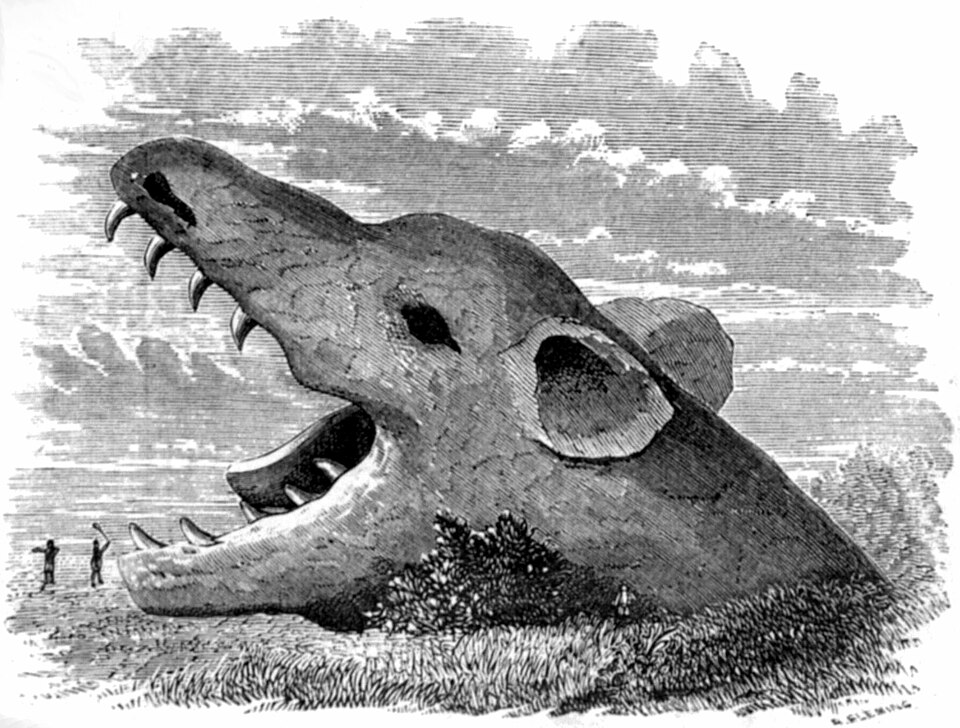
In the land of Jötunheimr, the trickster god Loki fathered three children with the female jötunn Angrboða: the serpent Jörmungandr, the being Hel, and a wolf cub named Fenrir. When the gods learned of these children and traced prophecies foretelling great mischief and disaster from them, they resolved to act. Odin sent the gods to gather the three siblings and bring them before him.
Jörmungandr was cast into the deep sea encircling all lands. Hel was thrown into Niflheim and given dominion over nine worlds. But Fenrir was different — the Æsir chose to raise him among themselves, at home. Only one god found the courage to approach the wolf and feed him: Týr.
Fenrir grew with unsettling speed, and the gods, mindful of every prophecy naming him a source of coming harm, devised a plan. They forged a fetter called Leyding, strong beyond ordinary measure, and asked Fenrir to test his strength against it. He obliged — and snapped it at his first kick.
Undeterred, the gods built a second fetter, Dromi, twice as powerful, promising Fenrir great fame if he could break it. Weighing the risk against the reward, the wolf agreed to be bound again. When the Æsir declared themselves ready, Fenrir shook himself, strained, and kicked the restraint clean off the ground, shattering it as he had the first.
With brute strength failing them, the gods needed something no ordinary chain could offer, and something no oath could refuse. It was Fenrir himself who demanded a pledge before he would submit to a third binding — the fetter known as Gleipnir. He did not trust that the Æsir would release him afterward, so he asked that one of them place a hand in his mouth as a guarantee.
More from Mythology

The Doctor Who Sang a Nation Into Being
A country doctor rode into the forests of Karelia armed with nothing but a notebook — and rode out with the soul of a nation.

The Boat That Carried the Sun
Every sunset, the ancient Egyptians believed, the sun climbed into a boat and sailed straight into the realm of the dead — only to fight a monstrous serpent before dawn could return.

The Wild Man of the Snows
At 21,000 feet, a colonel found tracks in the snow that he blamed on a wolf — but his guides knew better, and gave the world a name that would echo for a century.

The Knight Who Went Mad for Love: Orlando Furioso
A hero so devoted to duty he was Charlemagne's greatest paladin loses his mind—not to a sword wound, but to heartbreak. To cure him, a friend must ride a flying horse to the Moon.

The Book That Turned the World Into Myth
A poet condemned to exile spent his final years in Rome finishing a poem that would outlive empires—a poem about nothing standing still, not gods, not lovers, not even the shape of a man.

Paradise Lost: Milton's Rebel Angel
A blind poet, dictating verses in the dark, dared to explain the ways of God to men — and in doing so, made Hell's ruler unforgettable.