The Wolf, the Girl, and the Long Road Through the Woods
A girl in a red hood, a wolf with too many questions, and a warning her mother gave her before she stepped off the path — this simple errand became one of the most retold stories in Europe.
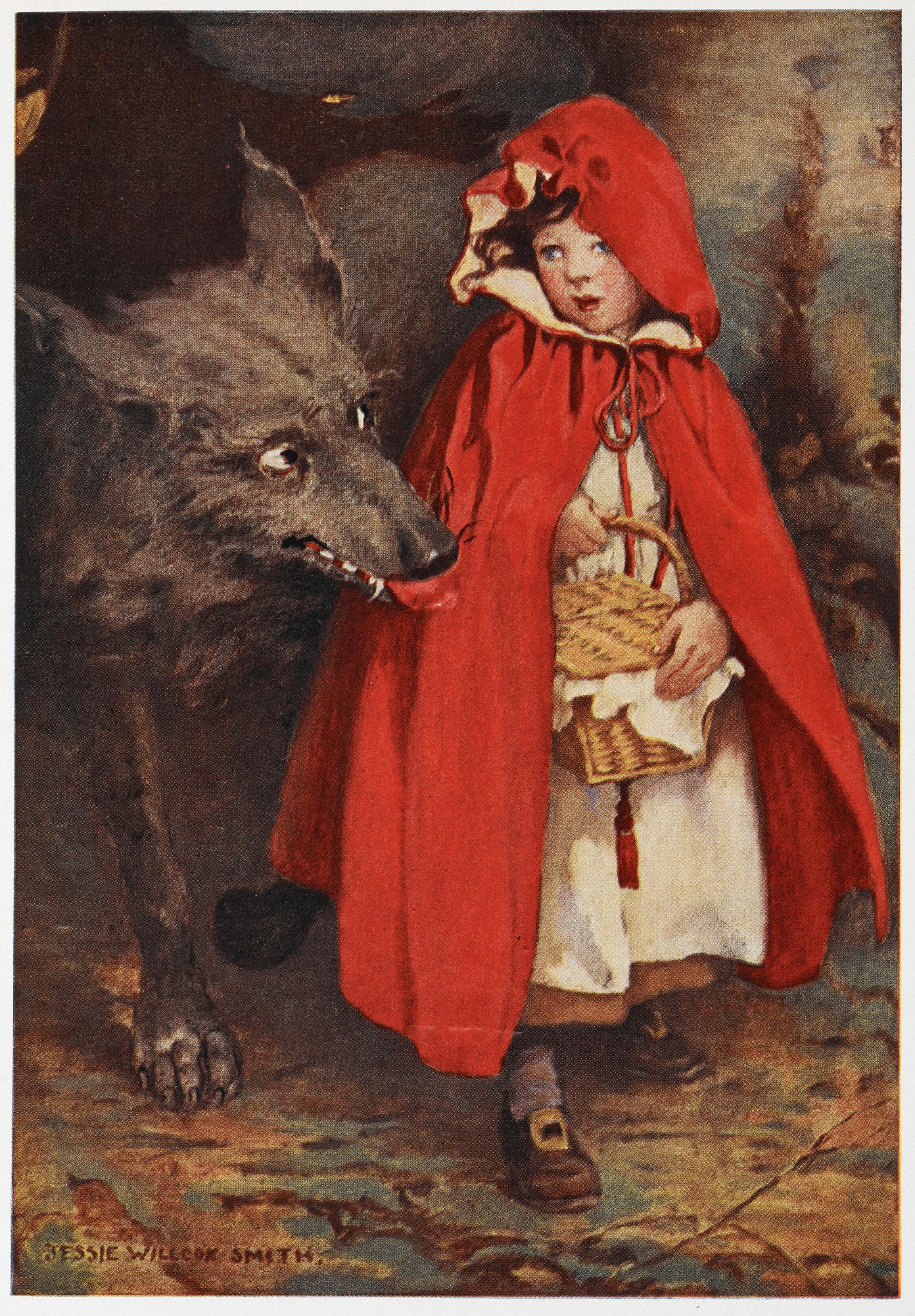
Long before it had a fixed shape, the story existed as scattered oral tales across pre-17th-century Europe — in what is now France, Italy, and German-speaking lands — passed from mouth to mouth in villages where wolves were a real danger and warnings to children carried real weight. It was Charles Perrault who first gave it literary form, publishing it in French in his 1697 collection. In his version, the tale ends abruptly and darkly: the wolf simply eats the girl, and nothing more happens.
The plot, in its essentials, is deceptively simple. A girl wears a red hooded cape and is sent by her mother through the woods to bring food — wine and cake, in some tellings — to her sick grandmother. Along the way she meets a wolf, who asks where she is going. Believing him friendly, she answers honestly, and he suggests she stop to pick flowers, sending her down a longer path while he hurries ahead.
The wolf reaches the grandmother's house first, gains entry by pretending to be the girl, and swallows the old woman whole. He puts on her nightclothes, climbs into her bed, and waits. When the girl arrives, she notices something is wrong — the ears, the eyes, the hands, the mouth are all too large. Before she can react, the wolf leaps out and eats her too. In Perrault's original, the wolf then simply falls asleep, and the story ends there, unresolved and unsettling.
It was two centuries later that the Brothers Grimm, collecting folk tales from German villages in the 19th century, gave the story the ending most people now know. A woodcutter, or in some versions a hunter, arrives at the grandmother's cottage, finds the wolf asleep, and realizes what has happened. He cuts open the wolf's belly, and the girl and her grandmother emerge shaken but alive. They then fill the sleeping wolf's stomach with heavy stones; when he wakes and tries to flee, the weight causes him to collapse and die. In the Grimms' telling, he then leaves the house and tries to drink from a well, but the stones inside him cause him to fall in and drown.
Later, gentler retellings softened the horror further: the grandmother is merely locked in a closet rather than devoured, the wolf eats the basket of food instead of the girl, and the woodcutter arrives in time to save the girl before any harm comes to her at all. These sanitized versions reflect how the tale shifted over time — from something closer to a folk warning about danger and consequence, to a tidy children's story about obedience.
More from Mythology

The Doctor Who Sang a Nation Into Being
A country doctor rode into the forests of Karelia armed with nothing but a notebook — and rode out with the soul of a nation.

The Boat That Carried the Sun
Every sunset, the ancient Egyptians believed, the sun climbed into a boat and sailed straight into the realm of the dead — only to fight a monstrous serpent before dawn could return.

The Wild Man of the Snows
At 21,000 feet, a colonel found tracks in the snow that he blamed on a wolf — but his guides knew better, and gave the world a name that would echo for a century.

The Knight Who Went Mad for Love: Orlando Furioso
A hero so devoted to duty he was Charlemagne's greatest paladin loses his mind—not to a sword wound, but to heartbreak. To cure him, a friend must ride a flying horse to the Moon.

The Book That Turned the World Into Myth
A poet condemned to exile spent his final years in Rome finishing a poem that would outlive empires—a poem about nothing standing still, not gods, not lovers, not even the shape of a man.

Paradise Lost: Milton's Rebel Angel
A blind poet, dictating verses in the dark, dared to explain the ways of God to men — and in doing so, made Hell's ruler unforgettable.