The Woman Whose Fingers Became the Seals
At the bottom of the Arctic sea lives a goddess with no fingers and total power over every whale, walrus and seal — and she got that way because someone she trusted threw her overboard.
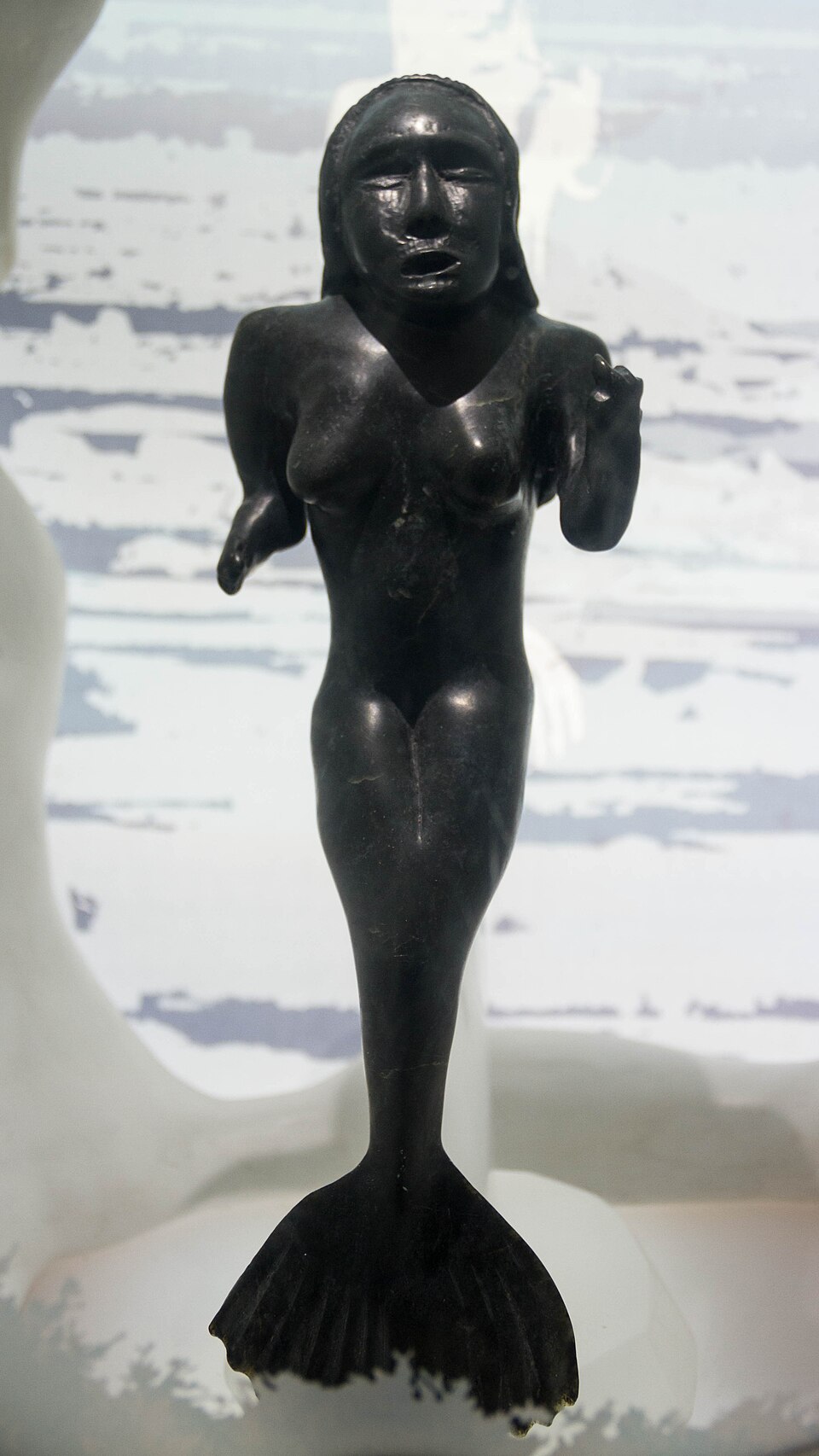
In the villages of the Inuit, hunters who returned empty-handed did not simply blame bad luck. They blamed a woman living far beneath the ice, and they sent their shaman down to soothe her. Her name was Sedna, though depending on who told the story and where — Greenland, Nunavut, Labrador, Igloolik — she might be called Sassuma Arnaa, Nuliajuk, Arnapkapfaaluk, or simply 'Old-woman-who-lived-in-the-sea.'
The stories about how she came to rule the deep differ wildly, but they share a devastating shape. In every telling, Sedna ends up in a kayak with her father, a storm or a crisis erupts, and he throws her into the water. In every telling, as she clings desperately to the boat, he cuts off her fingers. And in every telling, those severed fingers do not simply vanish — they become the seals, walruses, and whales that Inuit hunters depend on for survival.
One version casts her as a giant, daughter of the creator-god Anguta, whose enormous hunger drove her to attack her own parents. Enraged, Anguta paddled her out to sea and hurled her overboard, chopping her fingers away as she grasped the kayak's edge. She sank into the underworld and became ruler of its monsters, her huge severed fingers transforming into the ringed seals and whales hunted ever after.
Another version paints her as a defiant daughter who married a dog against her father's wishes, provoking him to throw her into the sea and cut off her fingers as she tried to climb back in. In the Netsilik telling, she is instead a mistreated orphan whom the community tries to drown, chopping her fingertips off until they become seals and walruses; she eventually marries a sculpin and takes her place ruling the sea.
Perhaps the most elaborate versions involve deception. In these, Sedna is a beautiful young woman who spurns the hunters courting her. A mysterious stranger arrives, her father trades her to him for fish, and only after a sleeping potion and a journey to a cliffside nest does she discover her new husband is a bird-spirit — a raven, fulmar, or petrel-being. When her father tries to rescue her, the bird-spirit conjures a storm so violent that, in desperation, her father throws his own daughter into the sea to save himself, severing her fingers as she clings on, one joint at a time in some accounts — the tips, then the knuckle, then the last knuckle — until she sinks and grows a fishtail.
More from Mythology

The Doctor Who Sang a Nation Into Being
A country doctor rode into the forests of Karelia armed with nothing but a notebook — and rode out with the soul of a nation.

The Boat That Carried the Sun
Every sunset, the ancient Egyptians believed, the sun climbed into a boat and sailed straight into the realm of the dead — only to fight a monstrous serpent before dawn could return.

The Wild Man of the Snows
At 21,000 feet, a colonel found tracks in the snow that he blamed on a wolf — but his guides knew better, and gave the world a name that would echo for a century.

The Knight Who Went Mad for Love: Orlando Furioso
A hero so devoted to duty he was Charlemagne's greatest paladin loses his mind—not to a sword wound, but to heartbreak. To cure him, a friend must ride a flying horse to the Moon.

The Book That Turned the World Into Myth
A poet condemned to exile spent his final years in Rome finishing a poem that would outlive empires—a poem about nothing standing still, not gods, not lovers, not even the shape of a man.

Paradise Lost: Milton's Rebel Angel
A blind poet, dictating verses in the dark, dared to explain the ways of God to men — and in doing so, made Hell's ruler unforgettable.