Zeus and the War That Made a King of the Gods
A stone wrapped like a newborn, a hidden cave, and a boy raised on goat's milk — this is how the ruler of Olympus survived his own father's hunger.
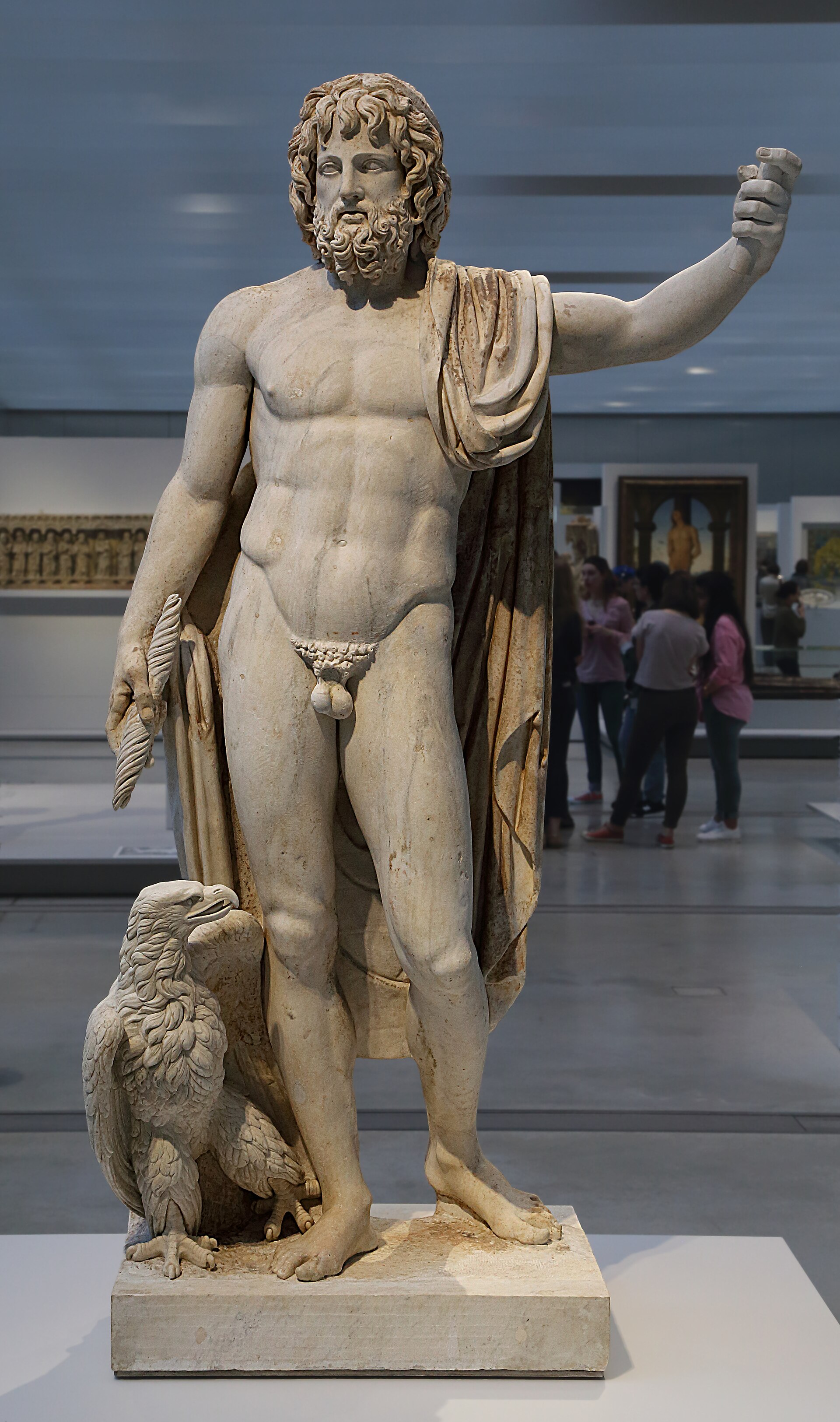
Before Zeus ever hurled a thunderbolt, he was a secret. His father, Cronus, had learned from a prophecy passed down through Gaia and Uranus that one of his own children would one day dethrone him, just as he had dethroned his own father. So Cronus swallowed each child the moment it was born — Hestia, Demeter, Hera, Hades, Poseidon — one after another, sealing them inside himself. His wife Rhea bore this in silent grief until she was pregnant with her sixth child.
Following the counsel of her parents, Rhea traveled to Crete to give birth to Zeus in secret. Accounts differ on the exact place — Hesiod names Lyctus, others point to Mount Ida, Dicte, or even Arcadia and Lydia — but the pattern is the same: Zeus was born far from his father's reach, and Gaia hid the infant in a mountain cave. In his place, Rhea handed Cronus a stone wrapped in swaddling clothes. He swallowed it whole, certain he had consumed his last threat.
In the cave, Zeus grew up swiftly, nursed on the milk of the goat Amalthea. Around him, the Kouretes clashed their spears against their shields, drowning out the infant's cries so that Cronus would never hear the child he thought he had destroyed. Other traditions add further guardians — nymphs, a hidden tree, even a Cretan shepherd family sworn to protect their flocks from wolves while sheltering the god in disguise.
When Zeus reached maturity, he emerged from hiding and prepared for war. His first act was to descend into the underworld and free the Cyclopes and the Hundred-Handed Ones, monstrous brothers whom Cronus had imprisoned. Grateful for their release, the Cyclopes forged thunderbolts and gave them to Zeus as weapons.
The war that followed, the Titanomachy, shook the heavens themselves. The Hundred-Handed Ones, each able to hurl a hundred boulders at once with their many arms, bombarded the Titans from the sky alongside the Cyclopes, driving them back again and again. Zeus struck through the chaos with his new thunderbolts, lightning tearing through the ranks of his father's allies.
More from Mythology

The Doctor Who Sang a Nation Into Being
A country doctor rode into the forests of Karelia armed with nothing but a notebook — and rode out with the soul of a nation.

The Boat That Carried the Sun
Every sunset, the ancient Egyptians believed, the sun climbed into a boat and sailed straight into the realm of the dead — only to fight a monstrous serpent before dawn could return.

The Wild Man of the Snows
At 21,000 feet, a colonel found tracks in the snow that he blamed on a wolf — but his guides knew better, and gave the world a name that would echo for a century.

The Knight Who Went Mad for Love: Orlando Furioso
A hero so devoted to duty he was Charlemagne's greatest paladin loses his mind—not to a sword wound, but to heartbreak. To cure him, a friend must ride a flying horse to the Moon.

The Book That Turned the World Into Myth
A poet condemned to exile spent his final years in Rome finishing a poem that would outlive empires—a poem about nothing standing still, not gods, not lovers, not even the shape of a man.

Paradise Lost: Milton's Rebel Angel
A blind poet, dictating verses in the dark, dared to explain the ways of God to men — and in doing so, made Hell's ruler unforgettable.