Apollo and Daphne: The Tree Born of a Chase
A boastful archer mocks a boy with a bow — and pays for it with an arrow to the heart. What follows is a chase that ends not in love, but in bark and leaves.
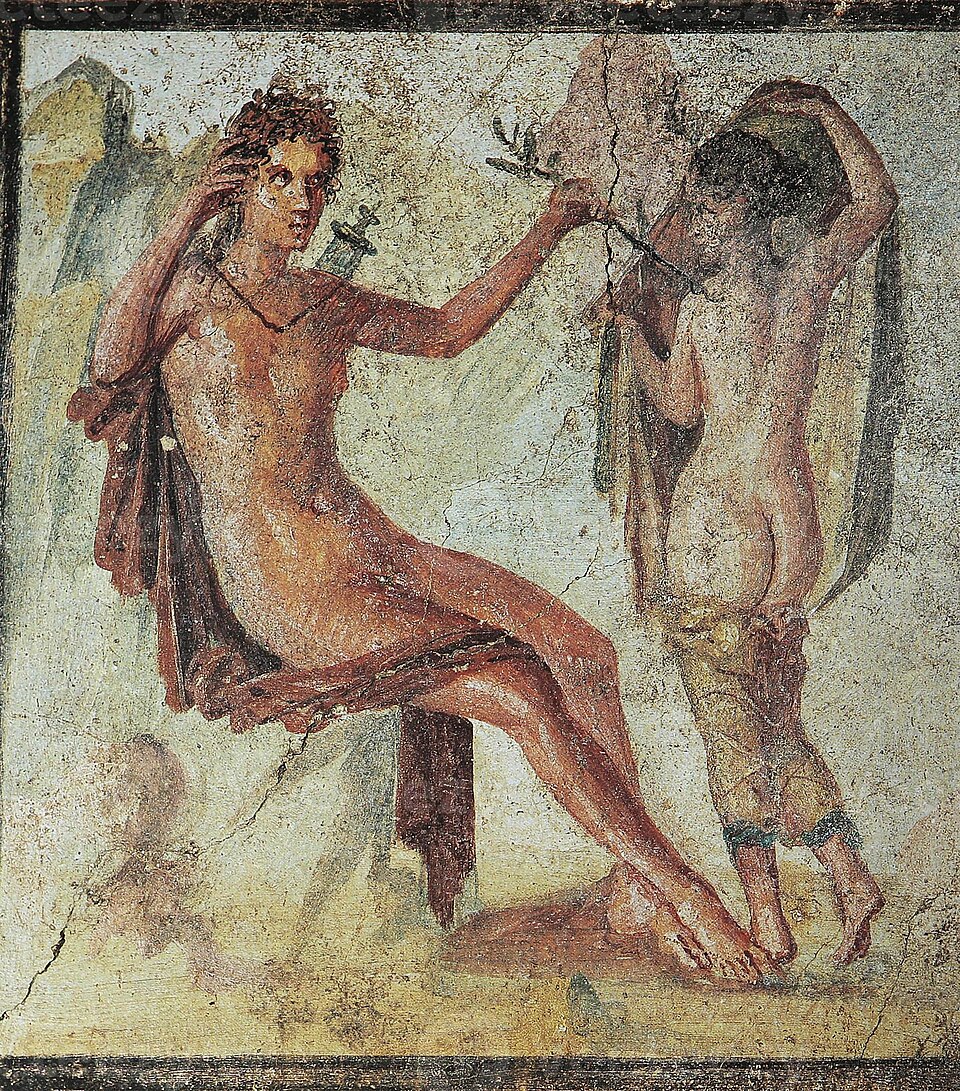
It began, as so many disasters do, with pride. Apollo, having just slain the great Python and founded the sanctuary at Delphi, was flush with triumph. He came upon Eros stringing his little bow and could not resist a jab: that weapon, Apollo said, was suited to a man's shoulders, not a boy's — his arrows brought down beasts and enemies, while Eros should content himself with kindling small fires of love, not claiming a warrior's glory.
Eros did not forgive the insult. He flew to the peak of Mount Parnassus and drew two arrows from his quiver — one tipped in gold, sharp and gleaming, meant to kindle love; the other blunt and leaded, meant to drive it away. The leaded arrow struck the nymph Daphne, daughter of the river god Peneus. The golden one struck Apollo, piercing him to the marrow.
Daphne was no ordinary nymph. She had modeled herself after Artemis, Apollo's own sister, spurning every suitor who came near and giving herself instead to the forest, the hunt, and a vow of perpetual virginity. Her father had begged her to marry and grant him grandchildren; she begged him instead to let her remain unwed, and he relented, though he warned her that her beauty would make peace impossible.
The moment Apollo saw her in the woods, the golden arrow did its work. He fell in love instantly and completely — and, cruelly, his own gift of foresight could not tell him how the pursuit would end. He called out to her, but Daphne fled at once, swifter than a breath of wind, deaf to every word meant to call her back.
Apollo ran after her, pleading. He was not her enemy, he said — he chased her not as a predator chases prey, but as a man driven by love, and he begged her to have pity, warning that he feared she might stumble and be hurt in her flight. He told her who he truly was: lord of Delphi, Claros, Tenedos, and Patara, son of Jupiter, the god through whom past, present, and future were revealed, through whom the lyre's strings sang in harmony. Even his skill with medicine, he admitted bitterly, could do nothing — no herb could heal a heart wounded by a truer arrow than his own.
More from Mythology

The Doctor Who Sang a Nation Into Being
A country doctor rode into the forests of Karelia armed with nothing but a notebook — and rode out with the soul of a nation.

The Boat That Carried the Sun
Every sunset, the ancient Egyptians believed, the sun climbed into a boat and sailed straight into the realm of the dead — only to fight a monstrous serpent before dawn could return.

The Wild Man of the Snows
At 21,000 feet, a colonel found tracks in the snow that he blamed on a wolf — but his guides knew better, and gave the world a name that would echo for a century.

The Knight Who Went Mad for Love: Orlando Furioso
A hero so devoted to duty he was Charlemagne's greatest paladin loses his mind—not to a sword wound, but to heartbreak. To cure him, a friend must ride a flying horse to the Moon.

The Book That Turned the World Into Myth
A poet condemned to exile spent his final years in Rome finishing a poem that would outlive empires—a poem about nothing standing still, not gods, not lovers, not even the shape of a man.

Paradise Lost: Milton's Rebel Angel
A blind poet, dictating verses in the dark, dared to explain the ways of God to men — and in doing so, made Hell's ruler unforgettable.