Beowulf: The Song of the Monster-Slayer
For twelve years, a monster terrorized a king's hall each night — until a stranger from across the sea arrived to end it.
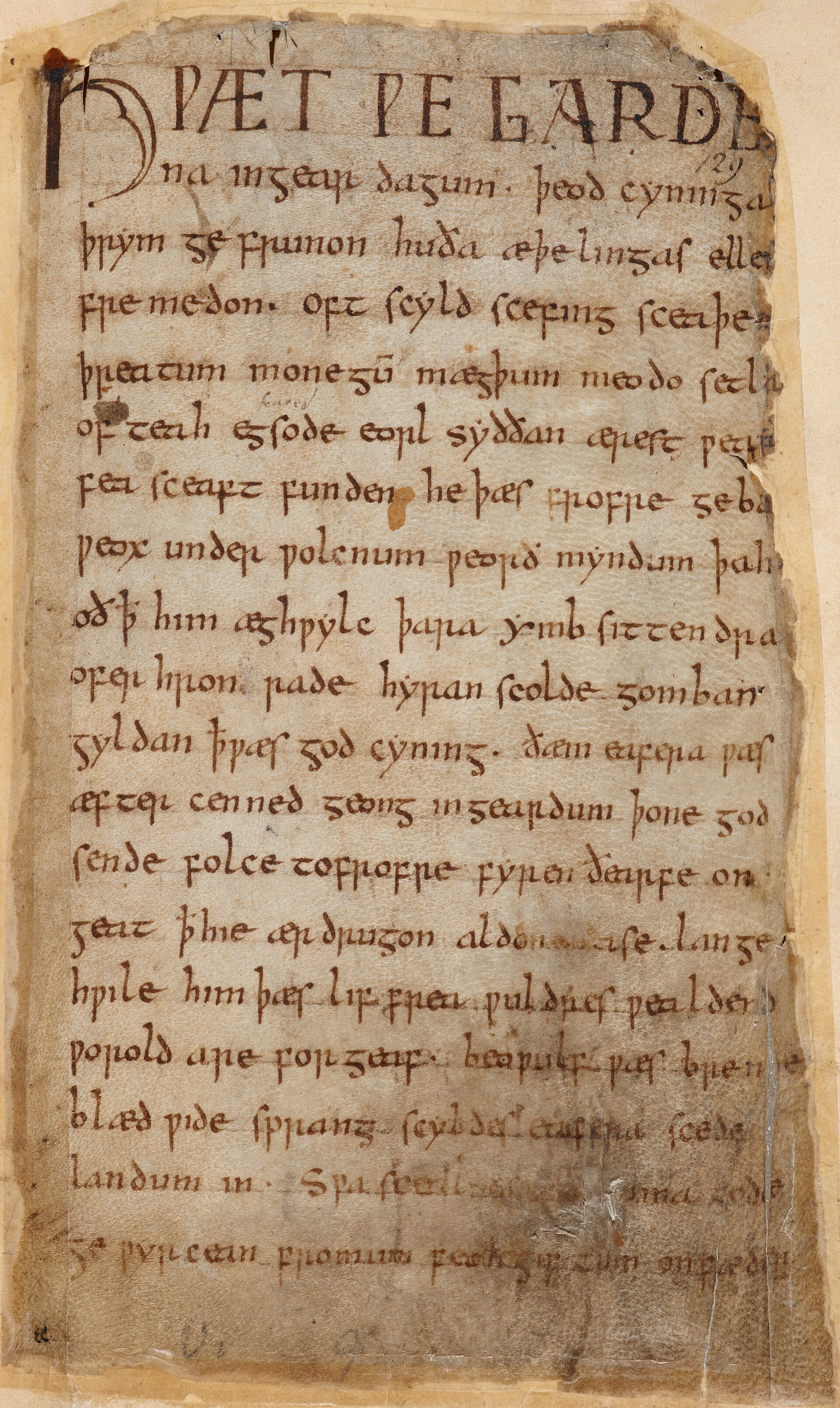
In the mead-hall of Heorot, the Danish king Hrothgar's warriors feasted and sang, until the darkness brought Grendel, a monster who could not bear the noise of joy. For twelve winters, Grendel raided the hall, killing Hrothgar's men, and no one in Denmark could stop him. Word of this terror crossed the sea to the land of the Geats, where a warrior named Beowulf heard of Hrothgar's suffering and resolved to help.
Beowulf sailed to Denmark with his men and offered his strength to Hrothgar. That night, he waited in Heorot without weapons, and when Grendel came, Beowulf seized him with his bare hands. In the struggle, he tore the monster's arm from its body; Grendel fled into the night and died of his wound.
But Grendel's mother, grieving and vengeful, came to Heorot to avenge her son. Beowulf pursued her to her lair beneath a lake and killed her in a fierce underwater battle. Victorious, he returned to Geatland, and in time became king of his own people.
Fifty years passed. Beowulf, now an old king, faced a final threat: a dragon whose treasure hoard had been disturbed. In the battle that followed, Beowulf slew the dragon but was mortally wounded. His people cremated his body and raised a barrow on a headland to honor him forever.
The poem that tells this story survives in a single manuscript, the Nowell Codex. The only certain date is for that manuscript itself, produced sometime between AD 975 and 1025 — but when the poem was actually composed remains a matter of contention among scholars, and the tale itself may be far older, rooted in pagan Scandinavian legend later shaped by a Christian hand. Its 3,182 alliterative lines make it one of the most significant works of Old English literature, though its author remains anonymous, known only as the 'Beowulf poet.'
More from Mythology

The Doctor Who Sang a Nation Into Being
A country doctor rode into the forests of Karelia armed with nothing but a notebook — and rode out with the soul of a nation.

The Boat That Carried the Sun
Every sunset, the ancient Egyptians believed, the sun climbed into a boat and sailed straight into the realm of the dead — only to fight a monstrous serpent before dawn could return.

The Wild Man of the Snows
At 21,000 feet, a colonel found tracks in the snow that he blamed on a wolf — but his guides knew better, and gave the world a name that would echo for a century.

The Knight Who Went Mad for Love: Orlando Furioso
A hero so devoted to duty he was Charlemagne's greatest paladin loses his mind—not to a sword wound, but to heartbreak. To cure him, a friend must ride a flying horse to the Moon.

The Book That Turned the World Into Myth
A poet condemned to exile spent his final years in Rome finishing a poem that would outlive empires—a poem about nothing standing still, not gods, not lovers, not even the shape of a man.

Paradise Lost: Milton's Rebel Angel
A blind poet, dictating verses in the dark, dared to explain the ways of God to men — and in doing so, made Hell's ruler unforgettable.