Dance: The Oldest Circle
Long before canvases and stages, a ring of moving bodies could tell an entire story — no words required.
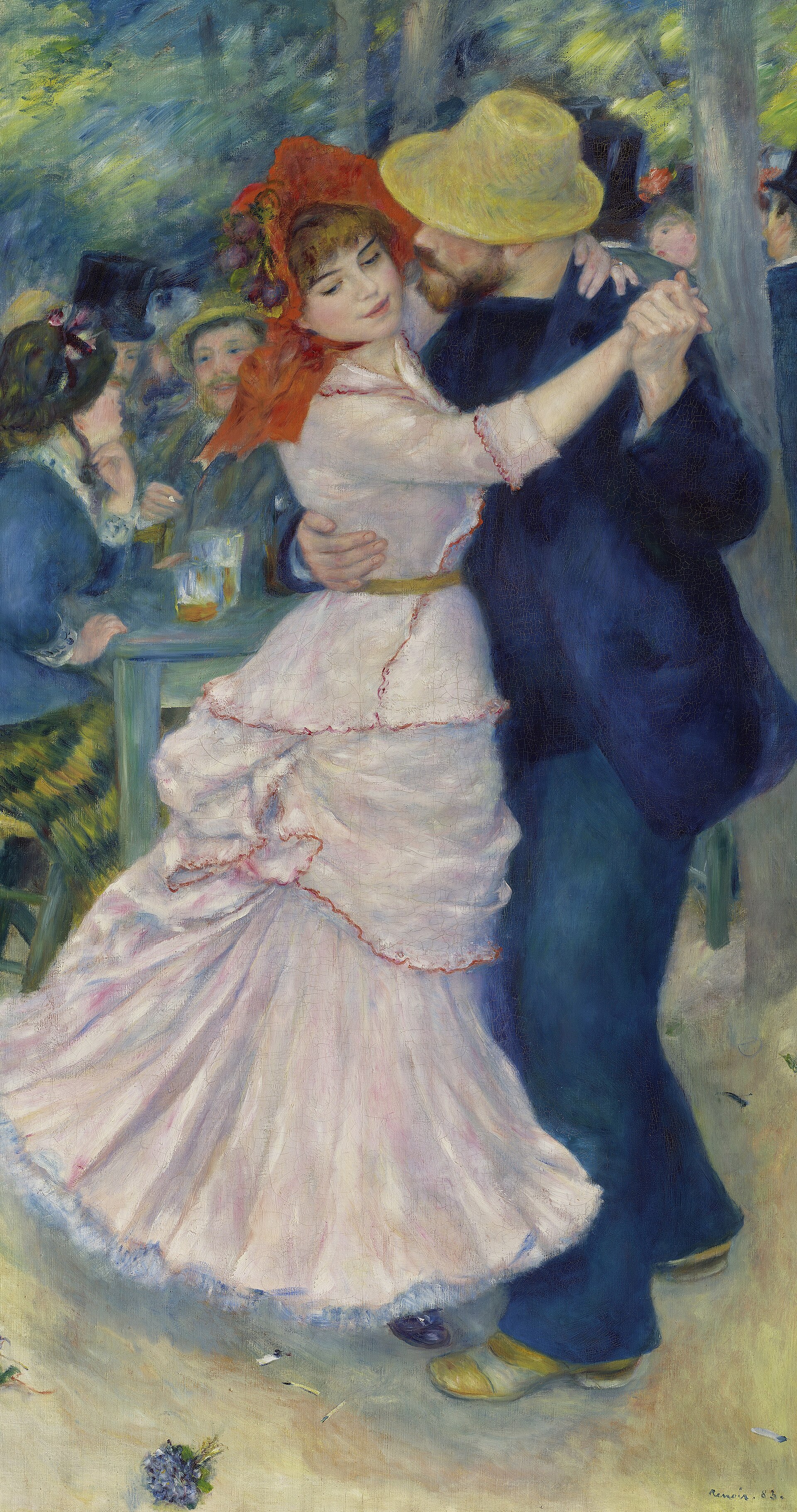
Ten thousand years before anyone thought to write a word down, human beings were already dancing. In the Rock Shelters of Bhimbetka in Madhya Pradesh, India, painted figures leap and bend across stone, evidence that rhythmic movement of the body was already an art form worth recording. In Egypt, tomb paintings dated to around 3300 BC show dancers frozen mid-motion, their gestures preserved for millennia. Dance, it seems, arrived almost as early as memory itself.
Before written language existed, dance likely served a practical purpose beyond beauty: it helped carry stories from one generation to the next. Movement became a vessel for oral history, a way of encoding meaning in the body when there was no page to hold it. Dance was also entwined with trance and healing rituals, a role it still plays in many indigenous cultures today, linking the physical and the spiritual through repetition and rhythm.
The circle recurs again and again in dance's earliest traces. On Neolithic Chinese pottery, groups of people are shown dancing in a line, holding hands — a shape of unity rendered in clay. The earliest Chinese written character for 'dance' appears on oracle bones, and the ancient text Lüshi Chunqiu describes dance as bound up with sorcery and shamanic ritual. Halfway across the world, Greek philosophers Plato, Aristotle, Plutarch and Lucian wrote about choros, dance as both art and civic practice, while the Bible and Talmud contain more than thirty distinct dance terms.
In India, during the first millennium BCE, Bharata Muni composed the Natya Shastra, 'the text of dramaturgy,' one of the earliest attempts to codify performance and the central role dance plays within it. That lineage never broke: Indian classical forms such as Bharatanatyam descend from this tradition, still performed today, still feeding into contemporary culture through Bollywood.
Over time, two broad currents emerged. Theatrical dance — ballet, modern dance, the dragon dances of Chinese and Japanese theatre — is built as spectacle, performed by trained dancers for an audience, often narrating a story through mime, costume, and set. Participatory dance is different in purpose: folk dances, line and circle dances, ballroom partner dances exist not to be watched but to be lived, built for social connection, exercise, or simply the pleasure of moving together.
More from Art

The Painting With No Foreground
A single robed figure stares out at an empty grey sea — and the emptiness itself became a scandal. When it was unveiled in Berlin in 1810, no one knew quite what to do with it.

The Painter Who Chased the Light
For a few purple minutes each evening, an American exile knelt in an English garden and raced the dying sun to paint two little girls lighting lanterns. It took him two years to finish.

When a President Became a God
Look straight up inside the U.S. Capitol dome and you will find George Washington enthroned among the clouds, surrounded by goddesses — the founding father transformed into myth.

Marble Brought Back to Life
A corpse asleep, a wing barely brushing her skin — and marble somehow learns to breathe. This is the moment Antonio Canova dared to carve.

The World Turned Upside Down
Look closely at a sixteenth-century Flemish village and you'll find a man biting a pillar, another carrying daylight in a basket, and a wife slipping a blue cloak over her husband's shoulders. Every gesture is a joke — if you know the language.

The Girl in the Glass Case
She stood two-thirds life size, dressed in a real tutu and human hair — and the critics who saw her in 1881 recoiled as if she were something obscene.