Digging for Troy: Schliemann's Obsession
For centuries scholars dismissed Troy as a poet's fantasy. Then a German businessman, guided by a forgotten archaeologist's hunch, put a shovel to a hill in Turkey and the myth began to bleed real dust.
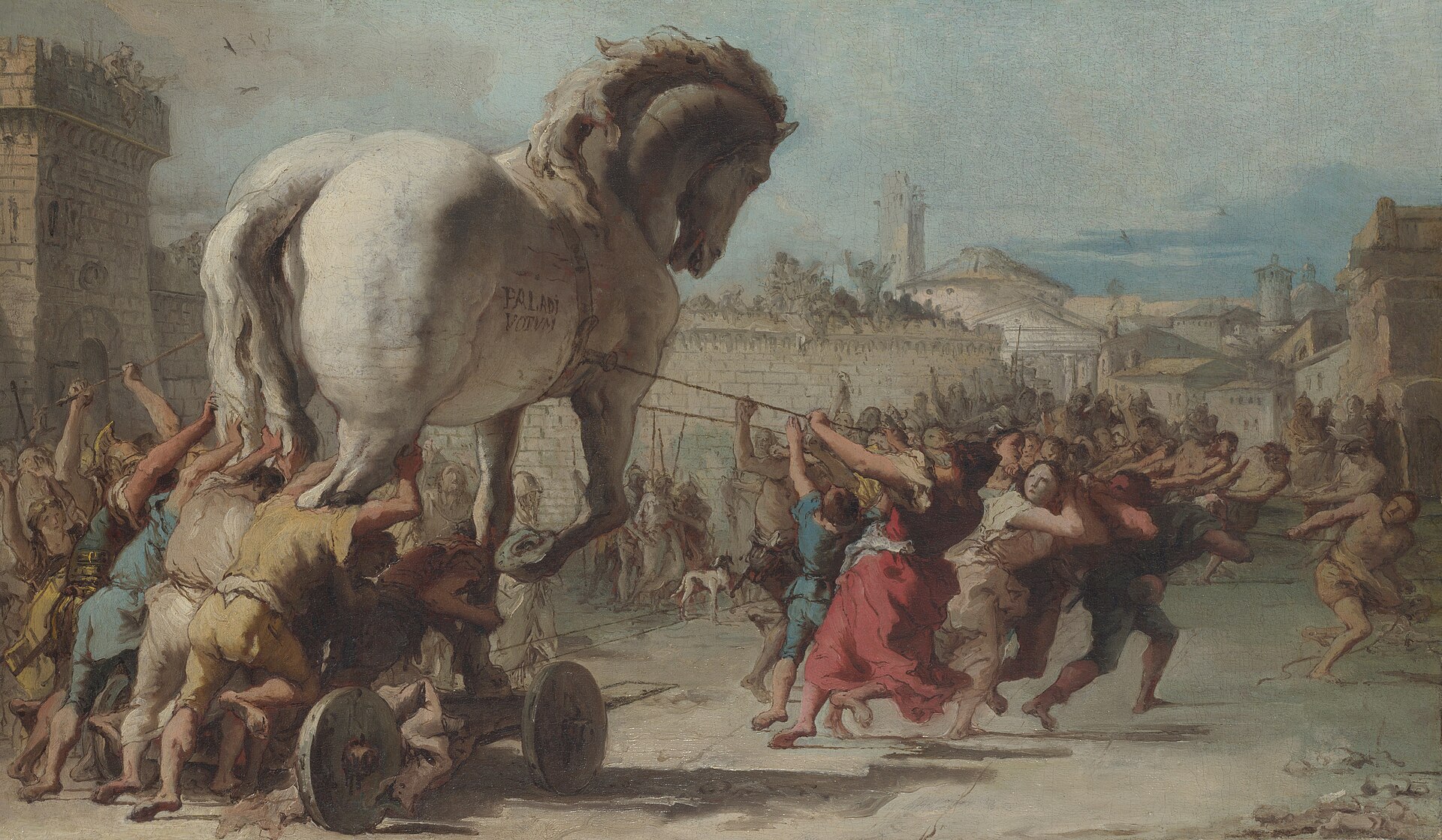
For most of the nineteenth century, educated Europe treated the Trojan War as a beautiful fiction — the stuff of Homer's Iliad and Odyssey, not history. The war supposedly took place around the thirteenth or early twelfth century BC, sparked when Paris of Troy took Helen from her husband Menelaus, king of Sparta. Menelaus's brother Agamemnon, king of Mycenae, rallied the Achaean kings for a ten-year siege that ended only when the city fell to the ruse of the Trojan Horse. It was a magnificent story. By the mid-1800s, almost nobody thought it had actually happened.
The tale survived through Homer's two epics, composed sometime between the ninth and sixth centuries BC, and through a cycle of now-fragmentary epic poems — the Cypria, Aethiopis, Little Iliad, Iliou Persis, Nostoi, and Telegony — whose contents are known mainly from a later summary by Proclus. Greek tragedians Aeschylus, Sophocles, and Euripides mined the war for drama, and the Roman poet Virgil gave Aeneas, a surviving Trojan, a starring role in the Aeneid. Vase painters spread the myths further still. None of this, however, counted as proof to nineteenth-century skeptics who saw only literature, not geography.
The ancient Greeks themselves had never doubted it. They believed Troy stood near the Dardanelles and that the war was a real historical event of the twelfth or thirteenth century BC. That confidence had simply eroded over the centuries, until Troy seemed no more real than Olympus.
Everything changed in 1868, when the German archaeologist Heinrich Schliemann met Frank Calvert. Calvert convinced Schliemann that Troy lay at Hisarlık, a mound in modern-day Turkey. It was a modest meeting with an outsized consequence: Schliemann, driven and unrelenting, threw himself into excavating the site.
The digs that followed — carried out by Schliemann and later archaeologists — turned Hisarlık into one of the most examined mounds on earth. Layer after layer of settlement was uncovered, and the claim that this was indeed the Troy of legend gradually won over the scholarly world. Today, most academics accept that Hisarlık is Troy, a conclusion built entirely on the physical evidence Schliemann's obsession first exposed.
More from Archaeology

The Bronze Disc That Rewrote the Sky
Two looters with a metal detector dug up something illegal, invisible in value, and older than Stonehenge's final stones — a map of the heavens buried for over three thousand years.

The Faceless Women of the Ice Age
Long before writing, before cities, before the wheel, someone carved a woman's body into stone and ivory — and left no name, no face, no explanation.

The Pebble That Might Be Human
A palm-sized stone found on a Moroccan riverbank may be humanity's oldest attempt to see itself — or simply a trick of erosion.

The Crown That Vanished: Deshret and the Red Land
A crown worn by kings for three thousand years has never once been found in a tomb — not one. So where did it go?

The Face That Traveled Between Empires
A farm worker's shovel struck stone in 1897 and unearthed a face so striking it would be sold to France, seized as war booty, and finally traded back for a Velázquez.

The Boy in the Dark Tunnel
A schoolboy fell into black water inside an ancient tunnel and surfaced with his fingers brushing letters no one had noticed for 2,600 years.