The Crown That Vanished: Deshret and the Red Land
A crown worn by kings for three thousand years has never once been found in a tomb — not one. So where did it go?

On a slab of dark siltstone carved more than five thousand years ago, a pharaoh stands victorious, his head crowned with a tall red vessel curling upward at the back like a wave frozen in mid-motion. This is the Narmer Palette, and the crown is Deshret — the Red Crown of Lower Egypt, one of the oldest royal symbols to survive from ancient Egypt, though the object itself never has.
Deshret's name meant simply 'Red One.' It described both the crown and the desert wilderness flanking the Nile's fertile floodplain, the black land the Egyptians called Kemet. Red and black, wasteland and abundance — the Egyptians built their entire geography around this contrast, and the crown carried that same duality into the realm of kingship.
According to Egyptian myth, the earth god Geb, the original ruler of Egypt, granted Horus dominion over Lower Egypt. Pharaohs, who considered themselves Horus's earthly heirs, wore the Red Crown to declare that inherited authority over the northern delta region. The crown was not theirs alone: goddesses wore it too, among them Wadjet, the protective serpent deity, and Neith, the creator-goddess worshipped at Sais, often depicted with the Deshret upon her head.
No physical example of the crown has ever survived — not fragments, not remnants buried alongside a king, even in tombs left remarkably intact. Scholars believe it was woven from plant fiber: grass, straw, flax, palm leaf, or reed, materials that would have disintegrated over the millennia. Its absence from royal burials suggests something else too — that the crown may have been passed down from reign to reign, an object of continuity rather than a possession to be sealed away with the dead, much as modern monarchies still transfer regalia from one ruler to the next.
Historian Toby Wilkinson has pointed to rock art in Egypt's Eastern Desert as perhaps the earliest depictions of royal crowns, suggesting Deshret's origins may lie in the southern Nile Valley long before it appeared on Narmer's palette. A label from the reign of King Djer even records a royal visit to a shrine of the Deshret, possibly located at Buto in the Nile delta — evidence that the crown was tied to actual cult sites, not merely artistic convention.
More from Archaeology

The Bronze Disc That Rewrote the Sky
Two looters with a metal detector dug up something illegal, invisible in value, and older than Stonehenge's final stones — a map of the heavens buried for over three thousand years.

The Faceless Women of the Ice Age
Long before writing, before cities, before the wheel, someone carved a woman's body into stone and ivory — and left no name, no face, no explanation.

The Pebble That Might Be Human
A palm-sized stone found on a Moroccan riverbank may be humanity's oldest attempt to see itself — or simply a trick of erosion.

The Face That Traveled Between Empires
A farm worker's shovel struck stone in 1897 and unearthed a face so striking it would be sold to France, seized as war booty, and finally traded back for a Velázquez.

The Boy in the Dark Tunnel
A schoolboy fell into black water inside an ancient tunnel and surfaced with his fingers brushing letters no one had noticed for 2,600 years.
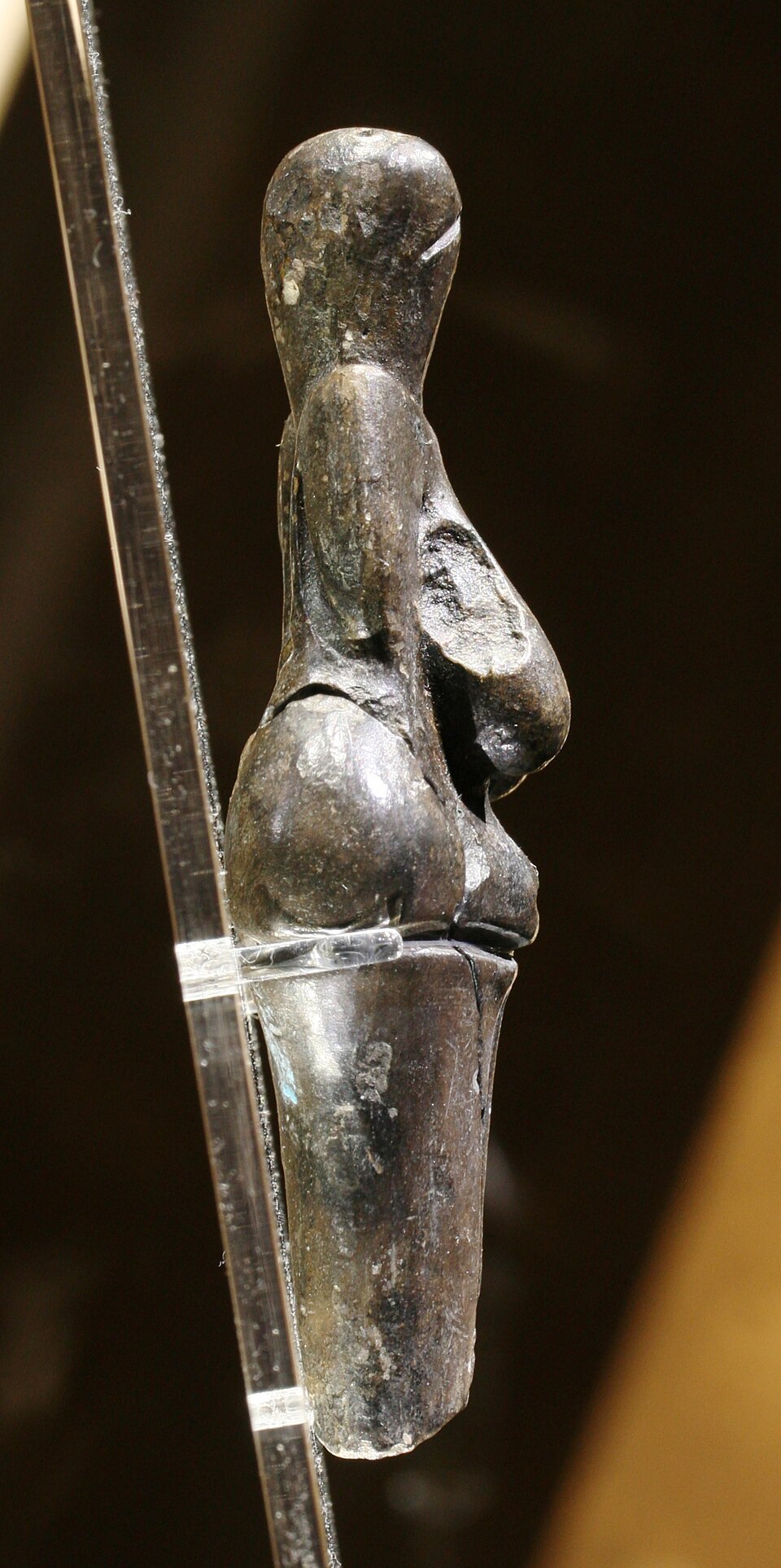
The Woman Made of Fire and Earth
Buried in ash for tens of thousands of years, a fist-sized clay woman would turn out to be older than pottery itself was thought to exist — and she still bears the fingerprint of a child.