The Boy in the Dark Tunnel
A schoolboy fell into black water inside an ancient tunnel and surfaced with his fingers brushing letters no one had noticed for 2,600 years.

In 1880, deep beneath the City of David, a sixteen-year-old pupil of Conrad Schick lost his footing on broken rock and tumbled into the water of the Siloam tunnel. When he rose to the surface, he noticed marks on the wall that looked like letters. That small accident led to one of the most important discoveries in Hebrew epigraphy.
The tunnel itself had been found decades earlier, in 1838, by Edward Robinson. It was studied extensively through the nineteenth century by Robinson, Charles Wilson, and Charles Warren, yet all three missed the inscription entirely, likely because mineral deposits had built up over the carved surface, hiding it from view. It took a curious student, and a mishap in the dark, to finally reveal it.
The pupil was later identified as Jacob Eliahu, who would go on to be adopted by Horatio Spafford and known as Jacob Spafford. Seventy years afterward, his adoptive sister Bertha Spafford Vester recalled the story: Jacob was fascinated by tales of a tunnel excavated by King Hezekiah, said to be haunted by a dragon or genie, and determined to explore it anyway. Feeling his way through the dark, he noticed that the chisel marks on the walls changed direction — a sign, it turned out, that he had reached the exact point where two ancient teams of workers had met underground.
The inscription, cut in the rock on the eastern side of the tunnel about 19 feet in from Siloam Pool, records the construction of the tunnel itself. Written in the Paleo-Hebrew alphabet, a regional variant of the Phoenician script, it has been dated to the 8th century BC on stylistic grounds. Remarkably, it is the only known ancient inscription from Israel or Judah commemorating a public construction project, even though such commemorative texts were common in Egypt and Mesopotamia.
The tunnel's purpose, according to biblical accounts, was defensive. Jerusalem sat on a mountain and was naturally protected on most sides, but its main freshwater source, the Gihon Spring, lay exposed on a cliff above the Kidron valley. Second Kings and Second Chronicles describe King Hezekiah, fearing an Assyrian siege, blocking the spring outside the city walls and channeling its water through a hidden conduit into the Pool of Siloam instead.
More from Archaeology

The Bronze Disc That Rewrote the Sky
Two looters with a metal detector dug up something illegal, invisible in value, and older than Stonehenge's final stones — a map of the heavens buried for over three thousand years.

The Faceless Women of the Ice Age
Long before writing, before cities, before the wheel, someone carved a woman's body into stone and ivory — and left no name, no face, no explanation.

The Pebble That Might Be Human
A palm-sized stone found on a Moroccan riverbank may be humanity's oldest attempt to see itself — or simply a trick of erosion.

The Crown That Vanished: Deshret and the Red Land
A crown worn by kings for three thousand years has never once been found in a tomb — not one. So where did it go?

The Face That Traveled Between Empires
A farm worker's shovel struck stone in 1897 and unearthed a face so striking it would be sold to France, seized as war booty, and finally traded back for a Velázquez.
The Woman Made of Fire and Earth
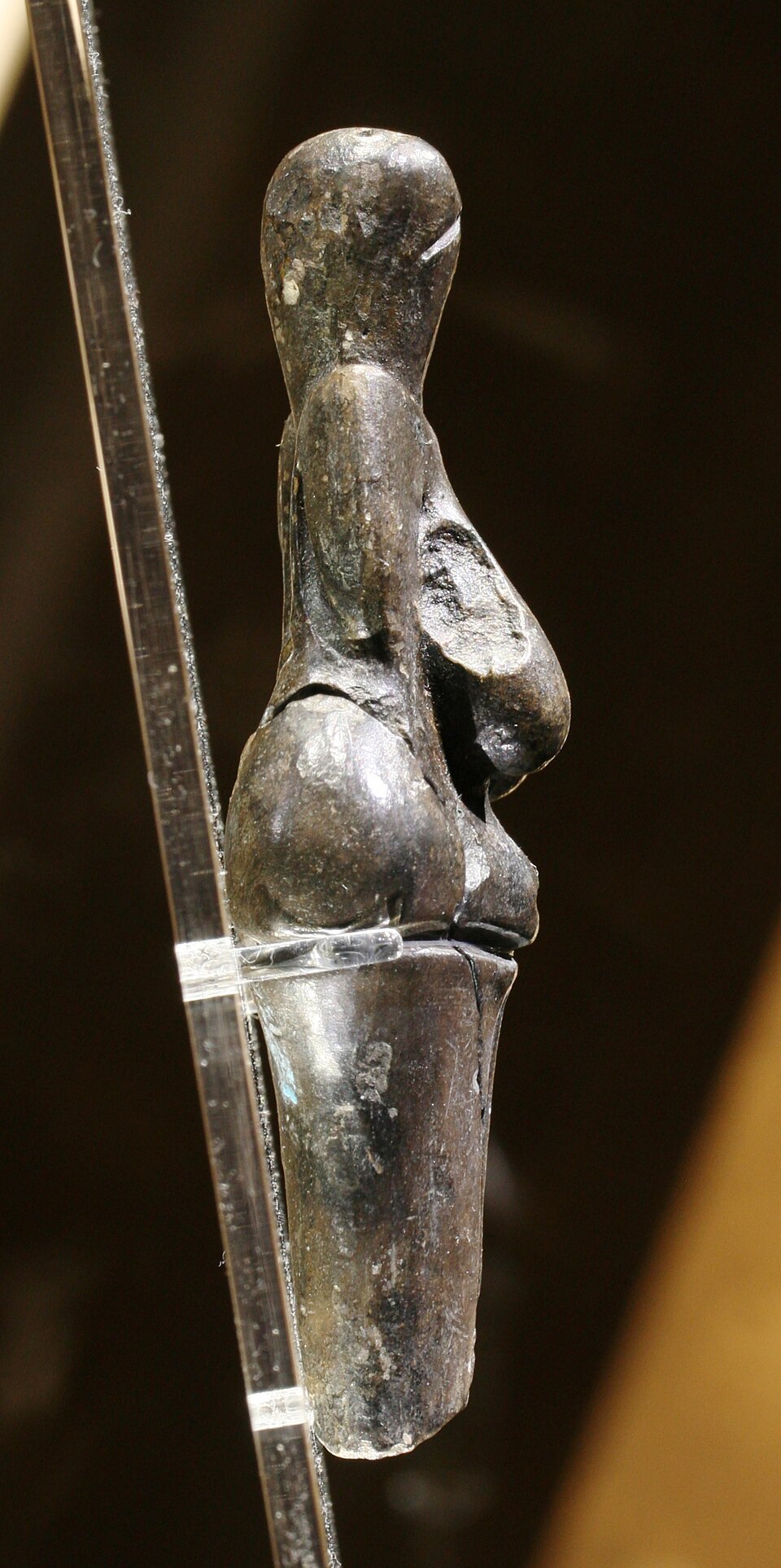
Buried in ash for tens of thousands of years, a fist-sized clay woman would turn out to be older than pottery itself was thought to exist — and she still bears the fingerprint of a child.