The Face That Traveled Between Empires
A farm worker's shovel struck stone in 1897 and unearthed a face so striking it would be sold to France, seized as war booty, and finally traded back for a Velázquez.

On 4 August 1897, on a slope of La Alcudia near Elche, Spain, farm workers clearing land for agriculture uncovered a limestone bust of a woman. The popular telling credits a young worker named Manuel Campello Esclapez with the find, though the official report from local record-keeper Pere Ibarra names another worker, Antonio Maciá. Whoever's hands first touched it, the townspeople quickly gave the bust an affectionate nickname: 'Reina Mora', the Moorish Queen.
The sculpture itself was extraordinary. Carved from limestone and originally painted, it depicted a woman wearing an elaborate headdress with large wheel-like coils, called rodetes, framing each side of her face. An opening at the rear suggested it may once have served as a funerary urn. Scholars generally date it to the 4th century BC, an Iberian artifact whose craftsmanship carries strong Hellenistic influence — and according to The Encyclopedia of Religion, it is believed to connect to Tanit, the Carthaginian goddess worshipped by Punic-Iberian peoples.
The land where it was found belonged to Dr. Campello, who was married to Asunción Ibarra, daughter of Aureliano Ibarra Manzoni, a nineteenth-century humanist and amateur archaeologist who had spent years gathering Iberian antiquities from his own land and elsewhere around Elche. He had willed that his collection eventually be offered to the Real Academia de la Historia, destined for Spain's National Archaeological Museum. But the newly discovered bust, displayed proudly on the family's balcony for the people of Elche to admire, took a different path.
Don Pedro Ibarra invited the French archaeologist Pierre Paris to Elche to see the town's famous Mystery Play. When Paris laid eyes on the Iberian bust, he immediately recognized its significance and alerted the Louvre in Paris. Within weeks, the museum offered 4,000 francs — a substantial sum at the time — and purchased the sculpture despite Doña Asunción's objections. On 30 August 1897, less than a month after its discovery, the Lady of Elche departed for France.
For forty years she remained on display at the Louvre, a foreign treasure admired far from the soil that produced her. Then, in 1939, as World War II began, French authorities moved her for safekeeping to the castle of Montauban near Toulouse. There, amid the turmoil of occupation, the Vichy government opened negotiations with Franco's Spain over her fate.
More from Archaeology

The Bronze Disc That Rewrote the Sky
Two looters with a metal detector dug up something illegal, invisible in value, and older than Stonehenge's final stones — a map of the heavens buried for over three thousand years.

The Faceless Women of the Ice Age
Long before writing, before cities, before the wheel, someone carved a woman's body into stone and ivory — and left no name, no face, no explanation.

The Pebble That Might Be Human
A palm-sized stone found on a Moroccan riverbank may be humanity's oldest attempt to see itself — or simply a trick of erosion.

The Crown That Vanished: Deshret and the Red Land
A crown worn by kings for three thousand years has never once been found in a tomb — not one. So where did it go?

The Boy in the Dark Tunnel
A schoolboy fell into black water inside an ancient tunnel and surfaced with his fingers brushing letters no one had noticed for 2,600 years.
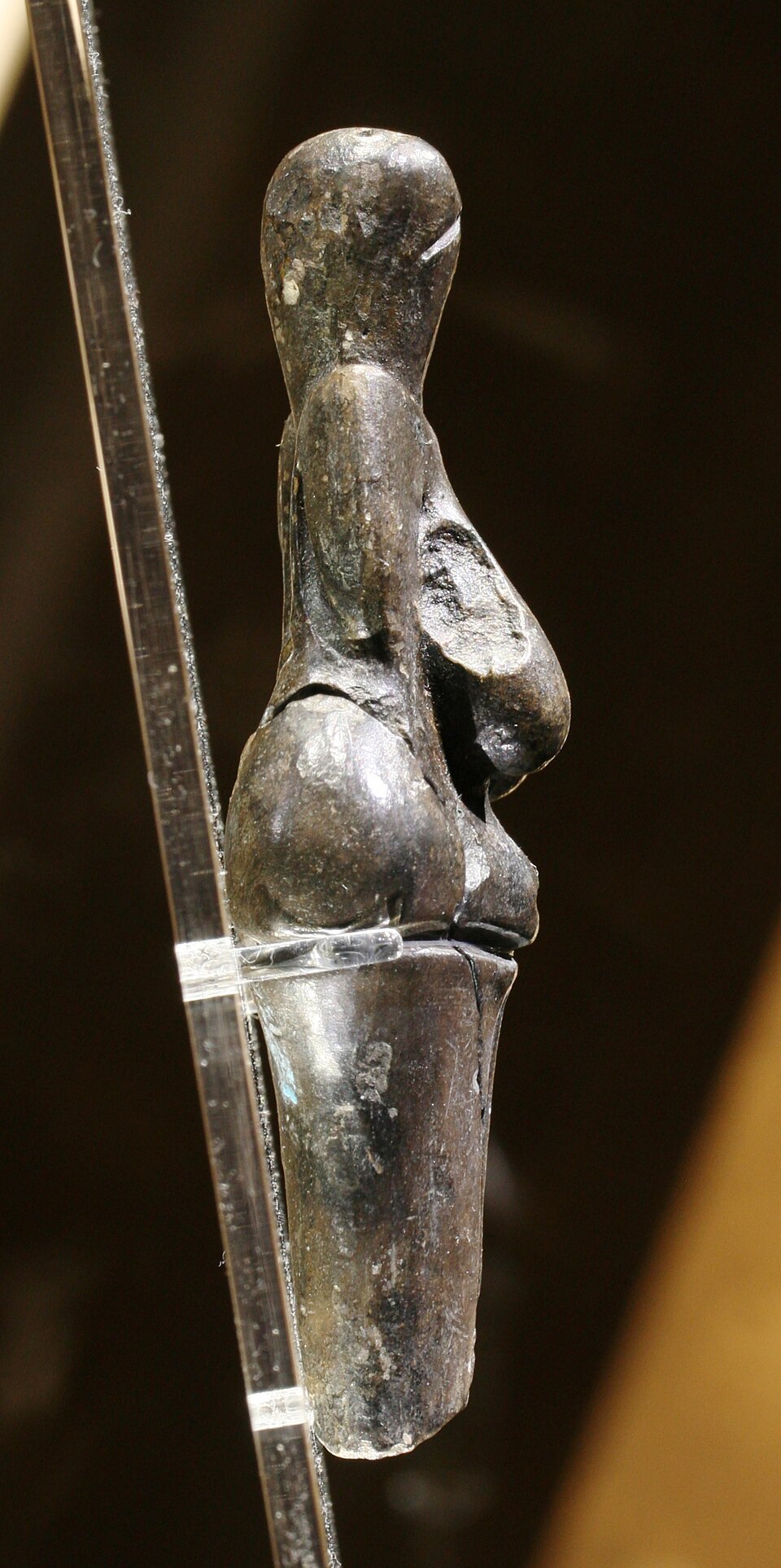
The Woman Made of Fire and Earth
Buried in ash for tens of thousands of years, a fist-sized clay woman would turn out to be older than pottery itself was thought to exist — and she still bears the fingerprint of a child.