El Dorado: The Gold That Was Never Where They Looked
A ruler dusted in gold, sinking into a mountain lake — one ceremony, half-remembered and half-invented, sent armies chasing a city that never existed.
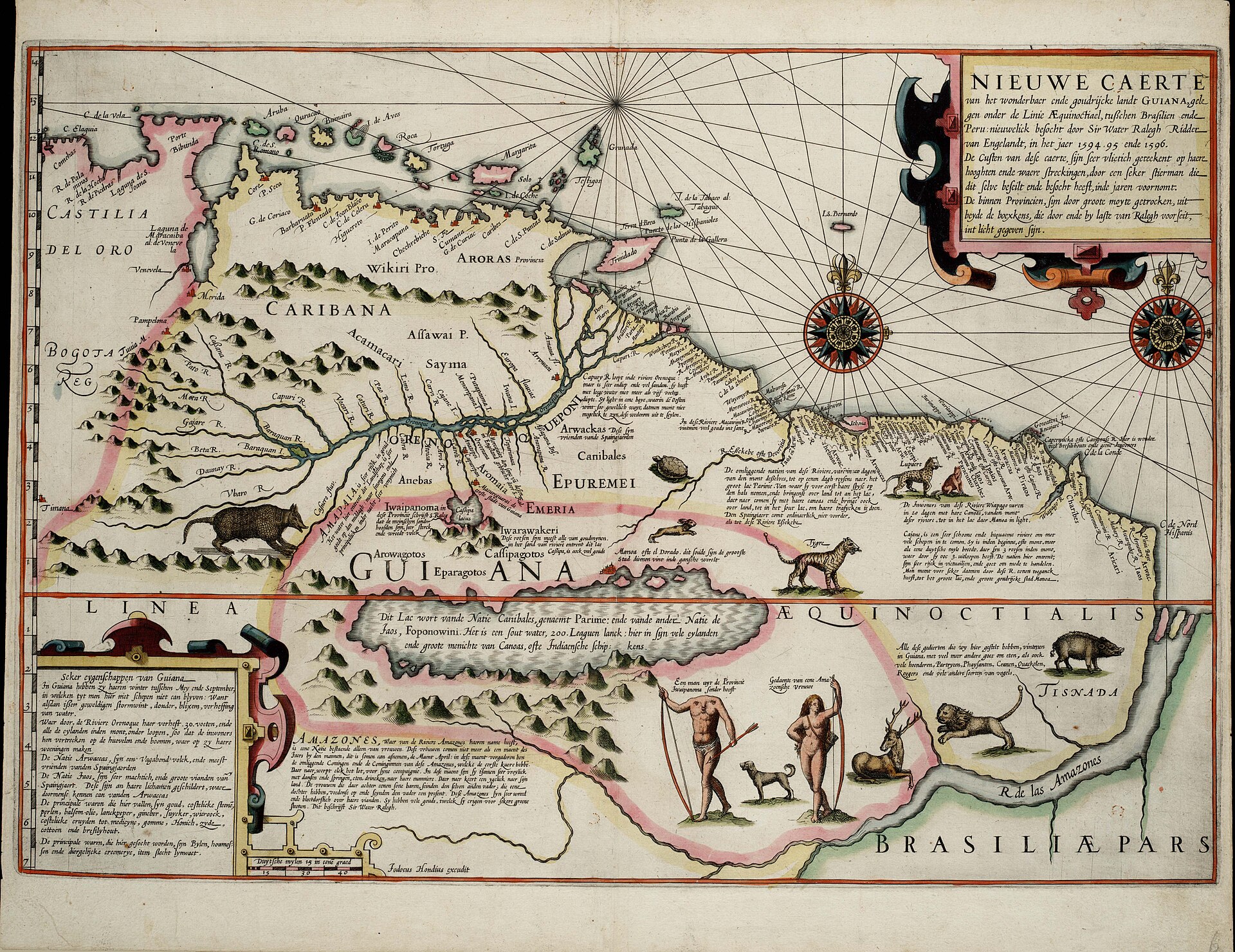
When Christopher Columbus made landfall in the Caribbean in 1492, he saw golden ornaments on the bodies of the people he encountered and became certain he had reached a land of fabulous wealth. He found no mines, but the conviction never left him; he told the Catholic monarchs who had sponsored his voyage that he could give them 'as much gold as they have need of.' That promise, made on the strength of a few trinkets, set in motion a search that would consume the ambitions of explorers for over a century.
The hunger for gold was fed by older European stories. The ancient Greeks spoke of the Isles of the Blessed, an earthly paradise where, according to the writer Lucian, cities were built of gold, ivory, and emeralds. The Atlantic Ocean also carried the legend of Atlantis, a lost civilization rich in gold, silver, and orichalcum. Medieval maps depicted an Isle of Seven Cities, and Columbus himself hoped to find the biblical lands of Ophir and Tarshish, from which King Solomon had supposedly drawn his treasures. When the Spanish conquered the wealthy Aztec and Inca empires, these old dreams seemed suddenly plausible.
The legend's true origin lay with the Muisca, an Indigenous people of the Altiplano Cundiboyacense in present-day Colombia. The Muisca were accomplished goldsmiths, though they did not mine gold themselves — they acquired it through trade, exchanging salt mined from their highlands for gold and other goods with neighboring tribes. In the 1530s, an expedition led by Gonzalo Jiménez de Quesada reached and conquered Muisca territory, seizing villages and treasures with startling speed.
The ceremony that gave the legend its name was recorded much later, in 1636, by Juan Rodríguez Freyle in his chronicle El Carnero. According to his account, a newly chosen Muisca ruler withdrew into a cave in isolation, avoiding women and salt, before being carried to Lake Guatavita. There, stripped naked and coated with sticky resin, his body was covered entirely in gold dust. He and four attending chiefs were floated out on a raft laden with gold and jewels; at the lake's center, offerings were cast into the water in silence, and the ruler himself dove in, letting the gold dust and treasures sink to the bottom.
This single rite, filtered through the accounts of Sebastián de Belalcázar's men, spread by word of mouth as far as Quito, growing with each retelling until 'the Golden One' became not just a ruler but an entire golden city or kingdom. Expeditions multiplied in pursuit of it. Ambrosius Dalfinger, governor of the Spanish settlement of Coro under the German Welser banking family, led an expedition to Lake Maracaibo in 1529 searching for a passage to the Pacific and returned with looted golden trinkets and rumors of a wealthy mountain tribe. His deputy, Nikolaus Federmann, launched his own expedition soon after, hearing further tales of gold, pearls, and gemstones inland.
More from Treasures

The Legend of the Nazi Gold Train
Somewhere beneath the hills of Poland, rumor insists, a train loaded with looted treasure vanished into a tunnel and was never seen again. The story survives because the plunder behind it was terrifyingly real.

The Treasure List Carved in Copper
While every other Dead Sea Scroll was written on parchment or papyrus, one was hammered into metal — a list of buried gold and silver that no one has ever found.

The Diamond That Vanished for a Century
For decades, treasure hunters and novelists spun theories about a lost 137-carat gem — sold, recut, melted into legend. It was sitting in a Quebec bank vault the entire time.

Gold, Ghosts, and the Mountain That Keeps Its Secret
For over a century, treasure hunters have vanished into a jagged Arizona range chasing a fortune that may never have existed at all. What they left behind was not gold, but one of America's most enduring legends.

The King Who Buried a River
When Rome finally cornered the Dacian king, it wasn't a sword that gave up his secret — it was a traitor's whisper about a riverbed.

The Fortune Dutch Schultz Took to His Grave
He asked New York's mob bosses for permission to kill a federal prosecutor — and when they said no, he disobeyed them anyway. It was a decision that would end his life and leave behind a fortune that has never been found.