The Diamond That Vanished for a Century
For decades, treasure hunters and novelists spun theories about a lost 137-carat gem — sold, recut, melted into legend. It was sitting in a Quebec bank vault the entire time.

In November 2025, in a quiet bank in Quebec, three grandsons of the last Empress of Austria-Hungary opened a safe deposit box that had not been touched in living memory. Inside lay a pale yellow stone of extraordinary intricacy: the Florentine Diamond, 137.27 carats, cut into an irregular nine-sided form with 126 facets. Journalists from The New York Times watched as jeweler Christoph Köchert of the Viennese firm A.E. Köchert confirmed what the family already knew — the stone the world had given up for lost was real, and it had never left their hands.
The diamond's earliest history is tangled in competing legends. One account holds that it was cut by Lodewyk van Bercken for Charles the Bold, Duke of Burgundy, and was on his body when he fell in the Battle of Nancy on 5 January 1477 — supposedly plucked off by a peasant who sold it for two francs, thinking it mere glass. From there it allegedly passed through the hands of a Bern merchant, Genoese traders, Ludovico Sforza, the Fuggers, and even Pope Julius II before landing in the Medici treasury of Florence.
A second, more documented version traces the rough stone to southern India, acquired in the late 16th century from the King of Vijayanagar by D. Luis de Castro, Count of Monsanto, the Portuguese Governor of Goa. After sitting with Jesuits in Rome, it was bought by Ferdinando I de' Medici, Grand Duke of Tuscany, for 35,000 Portuguese scudi crocati. His son Cosimo II had it cut by the Venetian craftsman Pompeo Studentoli, who delivered the finished gem on 10 October 1615 — a piece an inventory later described as faceted on both sides and ringed with diamonds.
The stone's documented life truly begins in 1657, when the French traveller and jeweller Jean Baptiste Tavernier recorded seeing it among the possessions of Ferdinando II de' Medici. When the Medici line died out in 1737, the diamond passed to the House of Habsburg through the marriage of Francis Stephan of Lorraine to Empress Maria Theresa, joining the Habsburg Crown Jewels in Vienna's Hofburg. Set in a hat aigrette, it was displayed in the Imperial Treasury, its weight and details formally recorded in 1865 by Dr. Moritz Hoernes, with a rhinestone replica made in Paris to match its colour, described at the time as resembling wine mixed tenfold with water — a copy still held at Vienna's Natural History Museum.
The diamond's public story ends abruptly in 1918. As the Austro-Hungarian Empire collapsed, Emperor Charles I ordered it removed from the Imperial Treasury and carried it to Switzerland himself. Charles died in 1922, and afterward the stone stayed with his widow, Empress Zita. By 1921, rumors already swirled that the Florentine had disappeared. Italy tried to claim it under the Treaty of Saint-Germain-en-Laye, arguing it had entered Habsburg hands via Tuscany, but the Inter-Allied Reparation Commission ruled in 1923 that it was Habsburg private property.
More from Treasures

The Legend of the Nazi Gold Train
Somewhere beneath the hills of Poland, rumor insists, a train loaded with looted treasure vanished into a tunnel and was never seen again. The story survives because the plunder behind it was terrifyingly real.

The Treasure List Carved in Copper
While every other Dead Sea Scroll was written on parchment or papyrus, one was hammered into metal — a list of buried gold and silver that no one has ever found.

Gold, Ghosts, and the Mountain That Keeps Its Secret
For over a century, treasure hunters have vanished into a jagged Arizona range chasing a fortune that may never have existed at all. What they left behind was not gold, but one of America's most enduring legends.

The King Who Buried a River
When Rome finally cornered the Dacian king, it wasn't a sword that gave up his secret — it was a traitor's whisper about a riverbed.

The Fortune Dutch Schultz Took to His Grave
He asked New York's mob bosses for permission to kill a federal prosecutor — and when they said no, he disobeyed them anyway. It was a decision that would end his life and leave behind a fortune that has never been found.
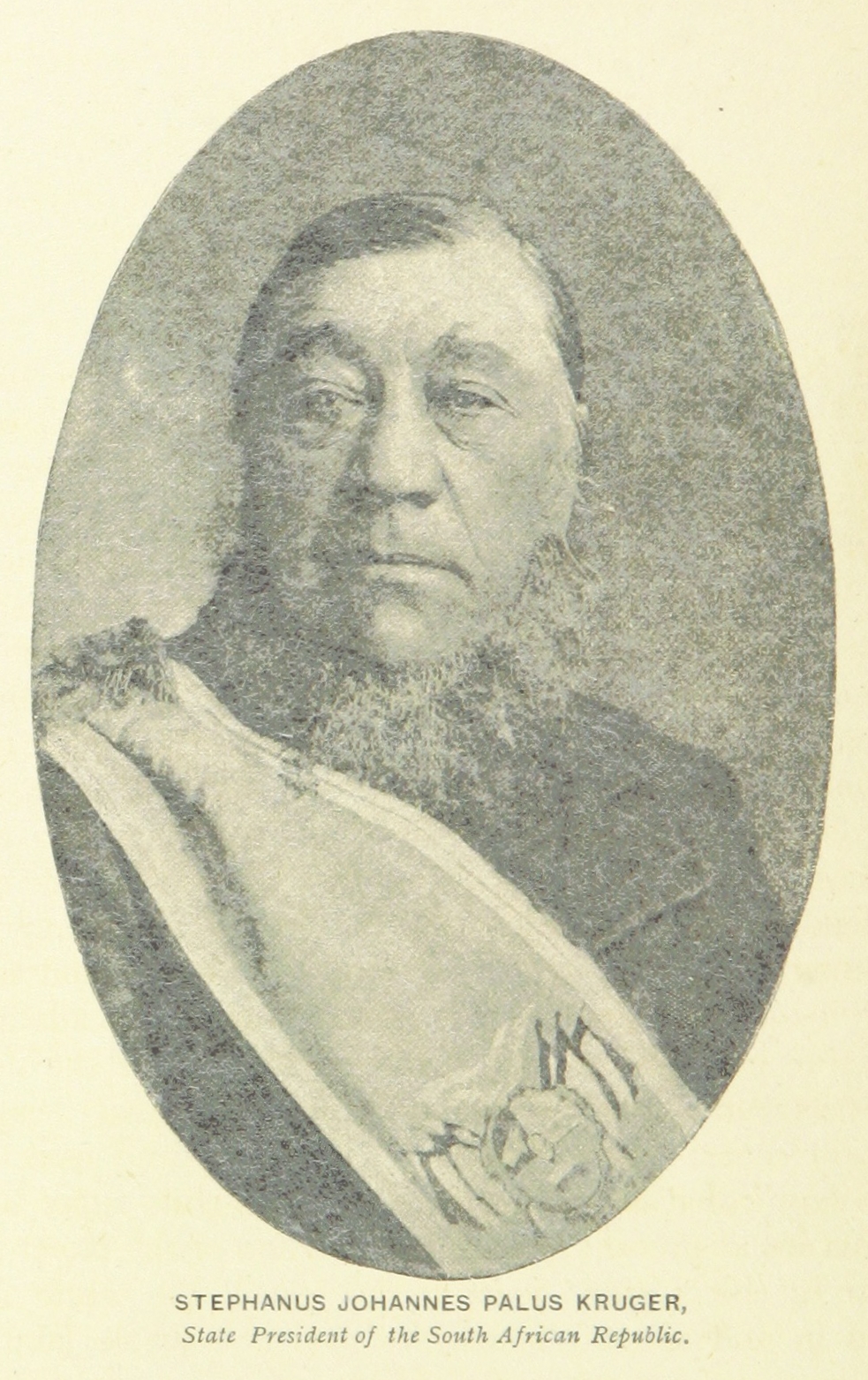
The Vanishing Gold of President Kruger
As British troops marched on Pretoria in 1900, wagons of gold vanished from the capital's streets in broad daylight — and more than a century later, no one can fully account for where it all went.