Flint and Fortress: The Word That Became a Nation's Heart
Long before it meant Russian power itself, the word simply meant a wall of wood and clay guarding a hilltop town. How did a humble fortification term come to stand for an empire?
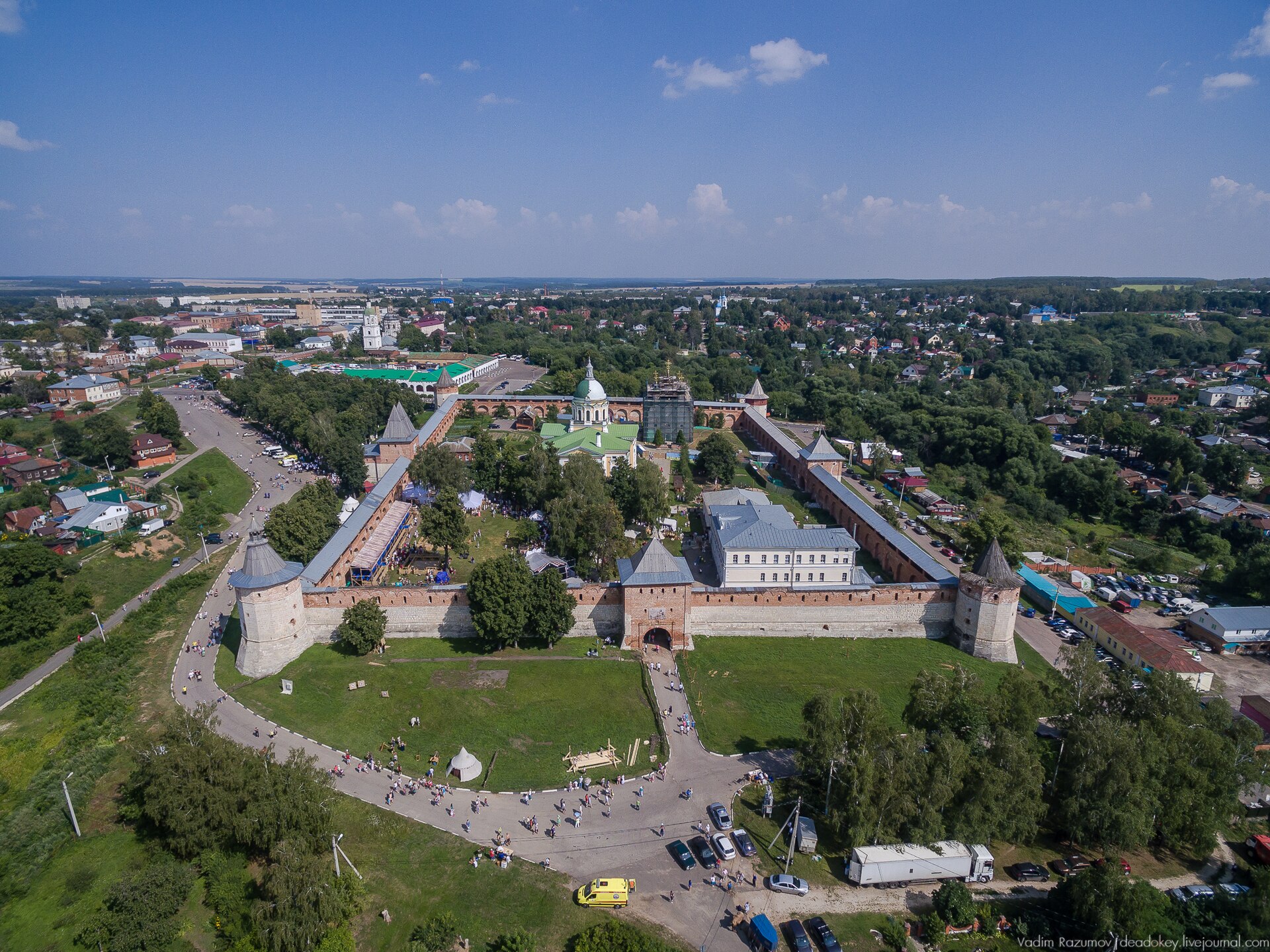
In 1317, a chronicler recorded the raising of a new fortress in the city of Tver: a wooden citadel, its timber walls plastered with clay and whitewashed pale against the sky. The scribe called it a kremlin, or kremnik — and with that single entry, a word entered history that would eventually become shorthand for the government of the world's largest country.
No one is entirely certain where the word came from. Some trace it to Turkic roots, others to Greek, still others to Baltic languages. One appealing theory links it to kremen', the Russian word for flint, as if the fortress itself were named for the hard stone at the center of a spark. Whatever its origin, the term spread outward from Tver, gradually replacing older regional names. In Novgorod, people still called their citadel a detinets; in Pskov, a krom. But across Moscow, Tver, and beyond, kremlin became the word of choice by the 14th and 15th centuries.
These were not idle constructions. Wooden kremlins rose across the Russian lands, from the far eastern frontiers to the border with Sweden, and they proliferated especially in the south, where they formed defensive lines against raids by Crimean Tatars. Speed mattered as much as strength. In 1638, builders at Mtsensk erected nearly three kilometers of fortress wall, thirteen towers, and a hundred-meter bridge over the Zusha River — in just twenty days. In 1551, during the Kazan campaign, the town of Sviyazhsk was thrown up in a single month: two and a half kilometers of walls, along with churches and houses, all raised at astonishing speed to support a military campaign.
Wood, however, burns and rots. Many kremlins were eventually rebuilt in brick or stone. The most famous transformation happened in Moscow itself, where Ivan III reconstructed the Kremlin using brick, setting the template for the fortress that still dominates Red Square today. Between the 16th and 17th centuries, roughly thirty stone fortresses rose across the Russian state. Some of these later kremlins, like those at Zaraysk and Tula, were built with regular, geometric plans — a departure from the organic shapes of earlier wooden strongholds. Tula's kremlin stands out for an unusual reason: it was built in a valley, a vulnerability that was tolerable only because the nomadic Tatar forces of the era lacked the siege artillery to exploit low ground.
The age of kremlin-building did not last forever. It stretched from the early 14th century to the turn of the 18th, and its final chapter closed far from Moscow, in Siberia. Between 1699 and 1717, the town of Tobolsk completed the last kremlin structure built of stone — the easternmost kremlin in Russia, and the only stone kremlin in Siberia. After Tobolsk, the great wave of fortress-building receded, leaving behind a scattered legacy across the Russian landscape.
More from Architecture

Stonehenge: The Stones That Refuse to Explain Themselves
For more than 4,500 years, a ring of leaning giants has watched the sun rise and set on the same two days each year — and no one alive can say for certain why.

The Dome That Refused to Fall
Two thousand years ago, Roman engineers poured a dome so vast that no one has dared build a bigger one from unreinforced concrete since. It still stands, open to the sky.

A Minaret Rising Over Kingsland Road
On a busy London street better known for shops and buses, the tallest minaret in Britain quietly reaches into the sky. Its story began not in Sinan's sixteenth-century Istanbul, but in 1990s Hackney.

The Bridge That Was Killed Twice
For 427 years it arched over the Neretva like a stone rainbow. Then, in a matter of days in 1993, it simply ceased to exist.

Hoover Dam: The Concrete That Tamed a River
In the scorched depths of Black Canyon, thousands of men built the largest concrete structure the world had ever seen — and finished it two years early, at a cost of over a hundred lives.

Neuschwanstein: The Castle Built for a Ghost
A king who despised his own palace built the most famous fairy-tale castle on earth — and died before he ever truly lived in it.