The Bridge That Was Killed Twice
For 427 years it arched over the Neretva like a stone rainbow. Then, in a matter of days in 1993, it simply ceased to exist.

On the day the scaffolding finally came down from his completed masterpiece, the architect Mimar Hayruddin reportedly prepared for his own funeral. He had been charged, under pain of death, with building something the world had never seen: an arch of unprecedented span, thrown across the wild gorge of the Neretva River in the Ottoman town of Mostar. Sultan Suleiman the Magnificent had commissioned the bridge in 1557, to replace a rickety wooden suspension crossing that, according to the geographer Katip Çelebi, swayed so violently that people crossed it in mortal fear.
Hayruddin, a student of the great imperial architect Mimar Sinan, succeeded beyond anyone's expectations. His single-arch bridge, completed in 1566 and built with mortar reportedly mixed with egg whites, rose 24 metres above the river, stretched 30 metres long, and measured just 4 metres wide. Upon completion it was the widest human-made arch in the world. The 17th-century traveler Evliya Çelebi, who claimed to have passed through sixteen countries, wrote that he had never seen a bridge thrown so high, 'like a rainbow arch soaring up to the skies.'
The bridge did more than span a river — it named a city. Mostar took its title from the mostari, the bridge keepers who once guarded the crossing from two fortified towers, Halebija and Tara. For generations, the Old Bridge connected the Muslim and Croat quarters of the town, and young men reportedly leapt from its parapet before their weddings to prove their courage to their brides-to-be, a tradition that made the bridge a stage as much as a crossing.
That centuries-old symbol of coexistence became, in the early 1990s, a casualty of war. As the Croat–Bosniak conflict engulfed Bosnia and Herzegovina, the Army of the Republic of Bosnia and Herzegovina used the bridge as a military supply line. The Croatian Defence Council, commanded by Slobodan Praljak, shelled it relentlessly. More than sixty shells reportedly struck the structure before it finally gave way on 9 November 1993, its massive stones tumbling into the waters below.
The destruction reverberated far beyond military logic. Scholars such as András Riedlmayer described it as an act of memoricide — the deliberate killing of shared cultural memory, since the bridge symbolized the bond between Mostar's different communities rather than any strategic asset. Praljak later argued that an explosive charge had also been planted beneath the bridge, a claim most historians reject. In 2017, the International Criminal Tribunal for the former Yugoslavia ruled that the bridge had, in fact, been a legitimate military target.
More from Architecture

Stonehenge: The Stones That Refuse to Explain Themselves
For more than 4,500 years, a ring of leaning giants has watched the sun rise and set on the same two days each year — and no one alive can say for certain why.

The Dome That Refused to Fall
Two thousand years ago, Roman engineers poured a dome so vast that no one has dared build a bigger one from unreinforced concrete since. It still stands, open to the sky.

A Minaret Rising Over Kingsland Road
On a busy London street better known for shops and buses, the tallest minaret in Britain quietly reaches into the sky. Its story began not in Sinan's sixteenth-century Istanbul, but in 1990s Hackney.

Hoover Dam: The Concrete That Tamed a River
In the scorched depths of Black Canyon, thousands of men built the largest concrete structure the world had ever seen — and finished it two years early, at a cost of over a hundred lives.

Neuschwanstein: The Castle Built for a Ghost
A king who despised his own palace built the most famous fairy-tale castle on earth — and died before he ever truly lived in it.
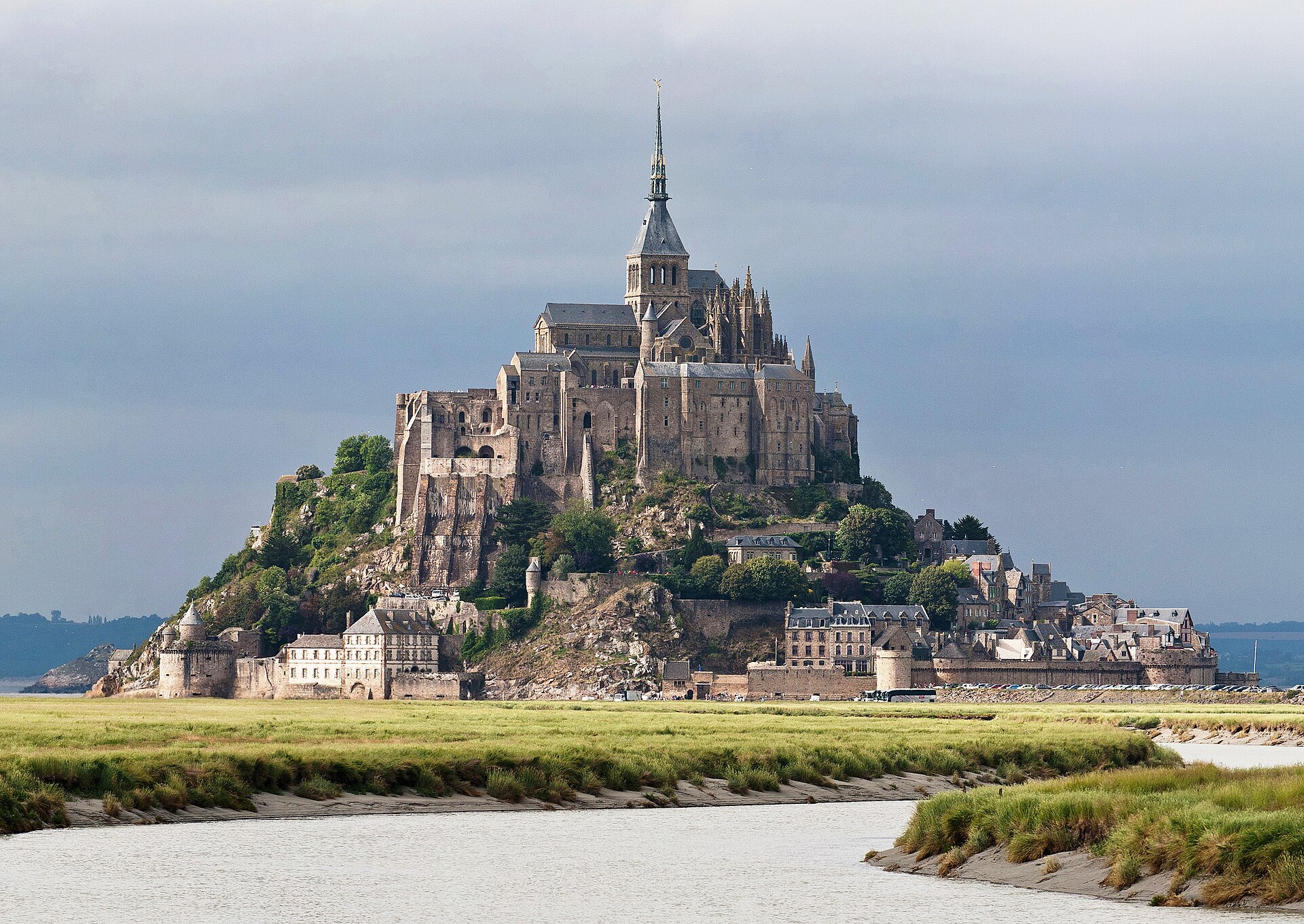
The Rock That Refused to Drown
Twice a day, the sea swallows the causeway whole — and for over a thousand years, that fact alone kept an island fortress unconquered.