Guernica: The Painting of a Massacre
For three uninterrupted hours on a spring market day, the sky over a small Basque town became an instrument of terror — and gave the twentieth century one of its most enduring images of horror.
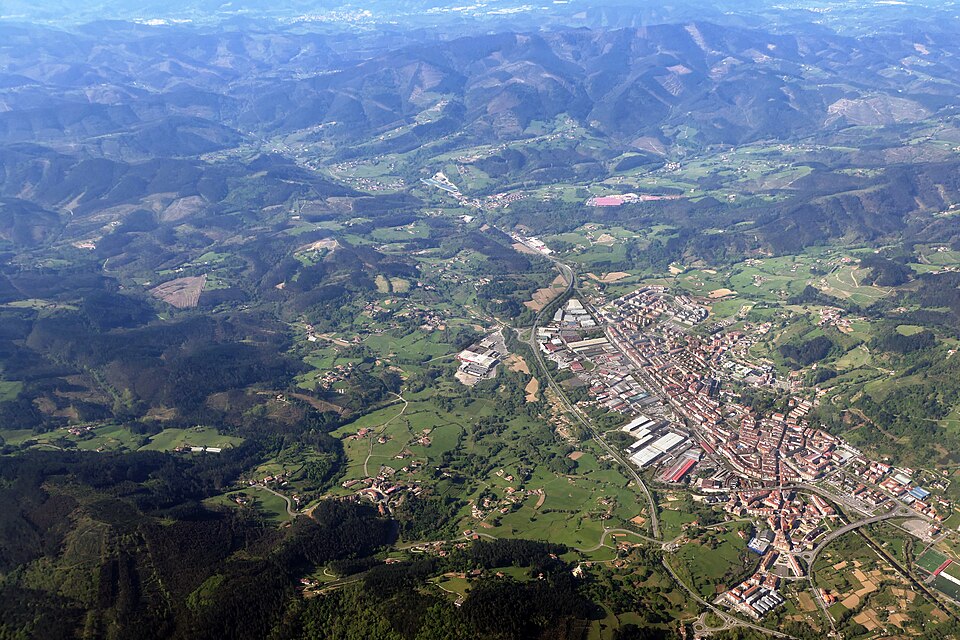
Long before the world knew its name for tragedy, Guernica was known for something else entirely: an oak tree. Founded on April 28, 1366, by Tello Alfonso, Lord of Biscay, the town grew at the crossing of ancient roads linking Bermeo, Durango, Bilbao, and Lekeitio, its position on the Oka River estuary making it a natural site for trade and assembly. It took the classic form of a Basque town — parallel streets named Goienkale, Azokekale, Artekale, and Barrenkale, crossed by Santa María street, with churches anchoring each end.
On a small hillock stood the Tree of Gernika, beside the Meeting House, where representatives from every town and village in Biscay gathered for centuries to draft the province's laws. This early democratic tradition drew the attention of thinkers and artists far beyond Spain: the philosopher Rousseau, the poet William Wordsworth, the playwright Tirso de Molina, and the composer Iparragirre, who immortalized the tree in his piece Gernikako Arbola. Kings themselves came to swear oaths beneath its branches — Ferdinand the Catholic Monarch did so on June 30, 1476, an event later painted by Francisco de Mendieta, and the Carlist pretender Don Carlos repeated the ritual on July 3, 1875.
By the 18th century, Guernica had a proper town square, with a town hall, a public jail holding prisoners from across Biscay, a hospital, and a poor-house. Life revolved around farming, small crafts, and trade. A long-running dispute with the neighboring parish of Lumo over land was only resolved in 1882, when the two merged into Gernika-Lumo. Industry arrived in the early twentieth century, and the population swelled from 4,500 in 1920 to roughly 7,000 by 1936 — a modest, historic town on the cusp of catastrophe.
That catastrophe arrived on April 26, 1937, during the Spanish Civil War. Acting on a request from Francisco Franco, who sought to overthrow the Basque and Republican governments, Nazi Germany's Condor Legion and Fascist Italy's Aviazione Legionaria unleashed a massive aerial assault on the town. The bombing continued without pause for three hours. According to official Basque figures, 1,654 civilians were killed. It is considered one of the first aerial bombings of its kind in modern warfare, and is widely regarded as the origin point of the Luftwaffe's doctrine of terror bombing — the deliberate targeting of civilians to break the enemy's will.
The town itself was devastated. Yet, remarkably, both the Biscayan assembly building and the ancient Oak of Guernica survived the destruction, standing amid the ruins as a strange and stubborn symbol of continuity.
More from Art

The Painting With No Foreground
A single robed figure stares out at an empty grey sea — and the emptiness itself became a scandal. When it was unveiled in Berlin in 1810, no one knew quite what to do with it.

The Painter Who Chased the Light
For a few purple minutes each evening, an American exile knelt in an English garden and raced the dying sun to paint two little girls lighting lanterns. It took him two years to finish.

When a President Became a God
Look straight up inside the U.S. Capitol dome and you will find George Washington enthroned among the clouds, surrounded by goddesses — the founding father transformed into myth.

Marble Brought Back to Life
A corpse asleep, a wing barely brushing her skin — and marble somehow learns to breathe. This is the moment Antonio Canova dared to carve.

The World Turned Upside Down
Look closely at a sixteenth-century Flemish village and you'll find a man biting a pillar, another carrying daylight in a basket, and a wife slipping a blue cloak over her husband's shoulders. Every gesture is a joke — if you know the language.

The Girl in the Glass Case
She stood two-thirds life size, dressed in a real tutu and human hair — and the critics who saw her in 1881 recoiled as if she were something obscene.