Les Demoiselles d'Avignon: The Painting That Broke the Mirror
Five nude women stare out from a canvas like an accusation. What Picasso unleashed in his cramped Paris studio would fracture centuries of painting in a single, brutal stroke.
In 1907, in a ramshackle Montmartre studio known as the Bateau-Lavoir, Pablo Picasso set to work on a canvas unlike anything he had painted before. He had arrived in Paris from Spain years earlier, restless and ambitious, cycling between Barcelona, Madrid and the French capital before finally settling into the city's bohemian circles. By then he had already lived through his Blue Period, painting the poor and the blind with a mournful palette, and his Rose Period, full of acrobats and circus performers rendered in warmer, more hopeful tones. Both phases had won him admirers, including the American collectors Gertrude and Leo Stein, who filled their Paris salon with his work and introduced him to Henri Matisse — a man who would soon become both rival and, eventually, friend.
The painting Picasso began that year would take its title from Carrer d'Avinyó, a street in Barcelona lined with brothels, though the scene itself belonged to no single place. Five nude women confront the viewer directly, their bodies rendered in angular, disjointed shapes that abandon the smooth curves of conventional femininity. Picasso made hundreds of preparatory sketches before settling on the final composition, and an earlier canvas, Two Nudes, is considered a study leading toward it. The original version, according to Turkish accounts of the work, even included two male figures — a student and a sailor — who were eventually cut from the final painting.
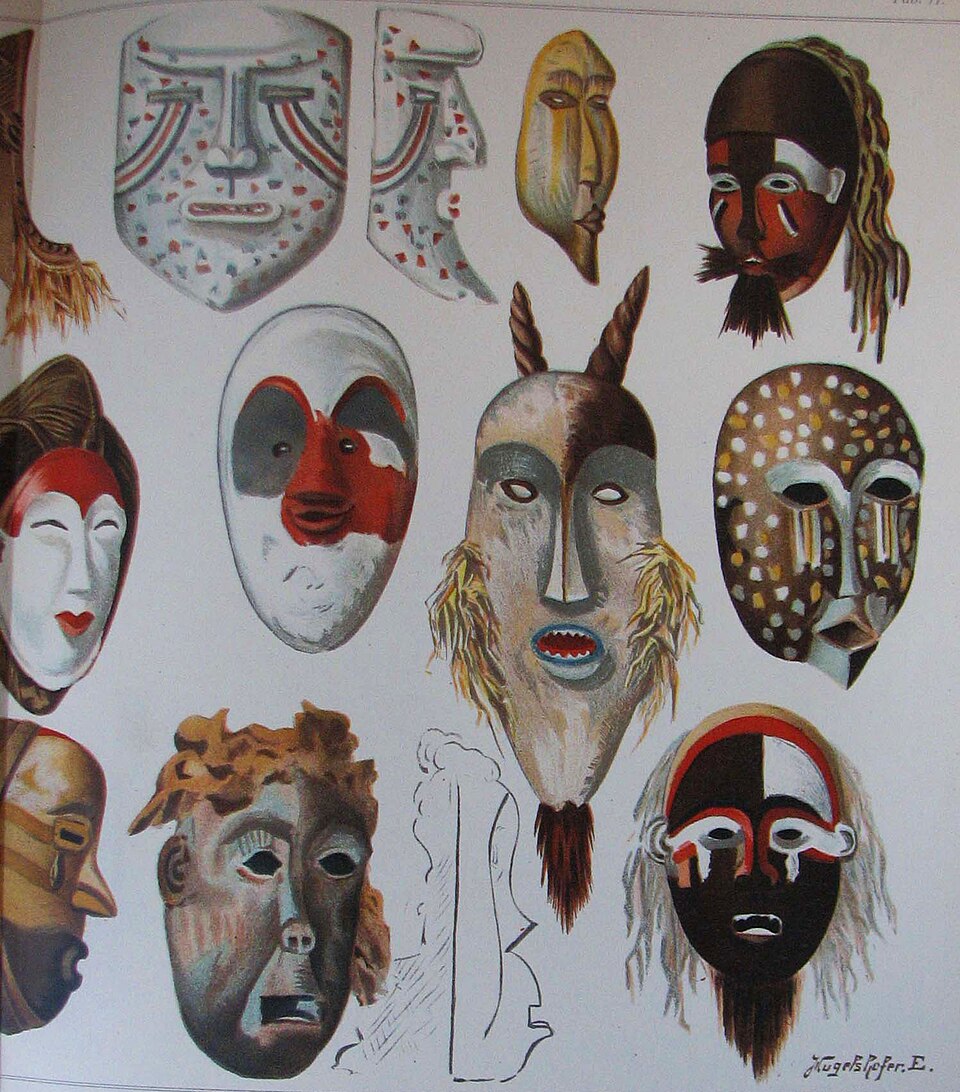
What unsettled viewers was not the brothel setting itself but the fracturing of form. The far-left figure carries an Egyptian or South Asian cast to her face and dress; the two figures beside her echo the Iberian sculpture Picasso knew from his native Spain; and the two on the right wear faces modeled after African masks, their features split and reassembled into something almost violent. Picasso later said the ethnic primitivism embodied in these masks moved him to liberate an artistic style of savage, compelling force, giving the whole composition a shamanistic undertone he hadn't intended at the outset.
He was, by his own competitive instincts, trying to seize the avant-garde crown from Matisse. Drawing on tribal art while discarding Renaissance perspective, Picasso compressed the picture plane into something closer to Baroque density, borrowing the confrontational stare of Velázquez's Las Meninas. The critic John Richardson later argued that this single canvas made Picasso the most consequential figure in Western painting since Giotto, opening the path he and Georges Braque would soon walk together into Cubism.
The reaction from his own circle was not admiration but discomfort. Matisse reportedly considered it something of a bad joke, though he responded to it — however obliquely — in his own 1908 painting Bathers with a Turtle. Braque, too, disliked it on first sight, yet he studied it obsessively, and that scrutiny eventually blossomed into the collaboration that produced Cubism itself. Critics would later trace echoes of Cézanne's Bathers, Gauguin's sculpture Oviri, and El Greco's Opening of the Fifth Seal within its jagged geometry.
More from Art

The Painting With No Foreground
A single robed figure stares out at an empty grey sea — and the emptiness itself became a scandal. When it was unveiled in Berlin in 1810, no one knew quite what to do with it.

The Painter Who Chased the Light
For a few purple minutes each evening, an American exile knelt in an English garden and raced the dying sun to paint two little girls lighting lanterns. It took him two years to finish.

When a President Became a God
Look straight up inside the U.S. Capitol dome and you will find George Washington enthroned among the clouds, surrounded by goddesses — the founding father transformed into myth.

Marble Brought Back to Life
A corpse asleep, a wing barely brushing her skin — and marble somehow learns to breathe. This is the moment Antonio Canova dared to carve.

The World Turned Upside Down
Look closely at a sixteenth-century Flemish village and you'll find a man biting a pillar, another carrying daylight in a basket, and a wife slipping a blue cloak over her husband's shoulders. Every gesture is a joke — if you know the language.

The Girl in the Glass Case
She stood two-thirds life size, dressed in a real tutu and human hair — and the critics who saw her in 1881 recoiled as if she were something obscene.