Machu Picchu: The Citadel Above the Clouds
For a century it sat forgotten on a Peruvian ridge, hidden in plain sight above a river gorge — until one American explorer's 1911 announcement made it famous around the world.
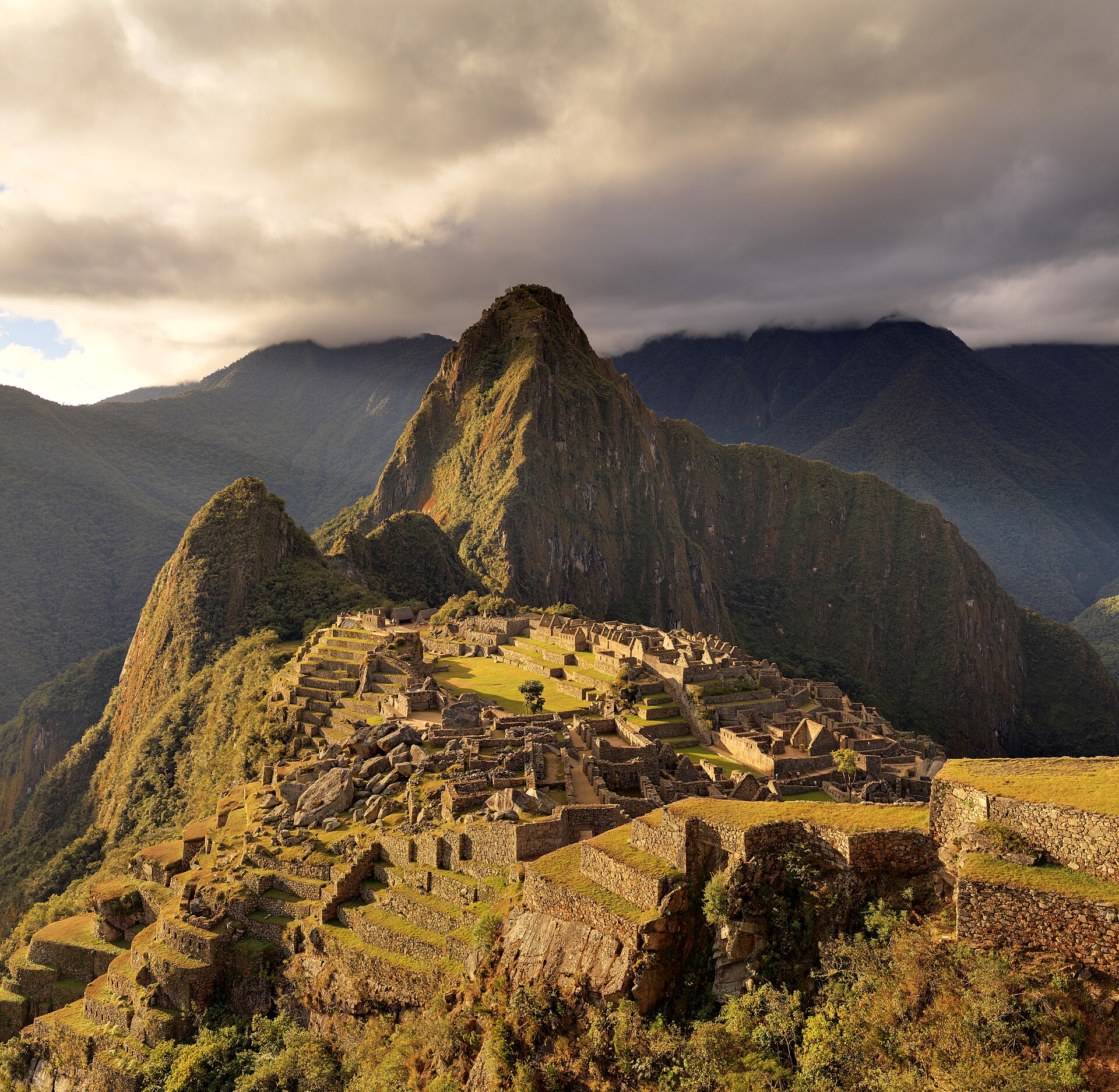
High in the Eastern Cordillera of southern Peru, on a narrow saddle 2,430 meters above the Urubamba River, stands a citadel of stone that has come to symbolize an entire vanished empire. Machu Picchu sits about 80 kilometers northwest of Cusco, above the Sacred Valley, where the river carves a deep canyon through a subtropical mountain climate. Its walls, fitted together in the precise dry-stone style of Inca masons, have survived more than five centuries of earthquakes, rain, and jungle growth.
The citadel is believed to have been built around 1450 as an estate for the Inca emperor Pachacuti, though no written record from the time confirms this directly. Radiocarbon dating of human remains, conducted in a 2021 study led by Yale anthropologist Richard L. Burger, places its occupation between roughly 1420 and 1530. Construction likely spanned two rulers, Pachacutec Inca Yupanqui and his successor Túpac Inca Yupanqui, as part of a broader Inca practice of building royal estates along the Urubamba River.
Life at Machu Picchu was not the life of a permanent capital but of a seasonal retreat. Around 750 people are thought to have lived there at its peak, most of them yanaconas — permanent support staff — alongside religious specialists and temporary workers called mayocs who served the ruler's comfort and rites. In winter, the harsher season, the population shrank to a few hundred, mostly servants and a handful of religious caretakers maintaining the site.
Who these people were has become clearer through genetic and skeletal study. Analysis of remains found at the site shows the retainer community was strikingly diverse — people of Andean, coastal, Ecuadorian, and Amazonian ancestry lived, had children, and were buried together. Bone damage from water parasites native to different regions of Peru, along with varying chemical markers tied to long-term diet, suggests many residents were immigrants who had spent much of their lives elsewhere before settling at Machu Picchu, where their diets shifted toward more corn and less fish.
The citadel's most striking structures — the Temple of the Sun, the Temple of the Three Windows, and the Intihuatana ritual stone — reflect the ceremonial as much as the residential character of the site. It was, by all evidence, an estate meant for the emperor's well-being and enjoyment, not a place passed down through a line of succession. After roughly 80 years of use, it was abandoned, likely as Spanish conquest upended the empire elsewhere — and possibly because smallpox, introduced by travelers, had already devastated its inhabitants before conquistadors ever reached the region.
More from Architecture

Stonehenge: The Stones That Refuse to Explain Themselves
For more than 4,500 years, a ring of leaning giants has watched the sun rise and set on the same two days each year — and no one alive can say for certain why.

The Dome That Refused to Fall
Two thousand years ago, Roman engineers poured a dome so vast that no one has dared build a bigger one from unreinforced concrete since. It still stands, open to the sky.

A Minaret Rising Over Kingsland Road
On a busy London street better known for shops and buses, the tallest minaret in Britain quietly reaches into the sky. Its story began not in Sinan's sixteenth-century Istanbul, but in 1990s Hackney.

The Bridge That Was Killed Twice
For 427 years it arched over the Neretva like a stone rainbow. Then, in a matter of days in 1993, it simply ceased to exist.

Hoover Dam: The Concrete That Tamed a River
In the scorched depths of Black Canyon, thousands of men built the largest concrete structure the world had ever seen — and finished it two years early, at a cost of over a hundred lives.

Neuschwanstein: The Castle Built for a Ghost
A king who despised his own palace built the most famous fairy-tale castle on earth — and died before he ever truly lived in it.