Nessie: The Beast That Broke the Surface
For a full minute, a body like a whale's rolled and churned the water into a boiling cauldron — and a legend was born.
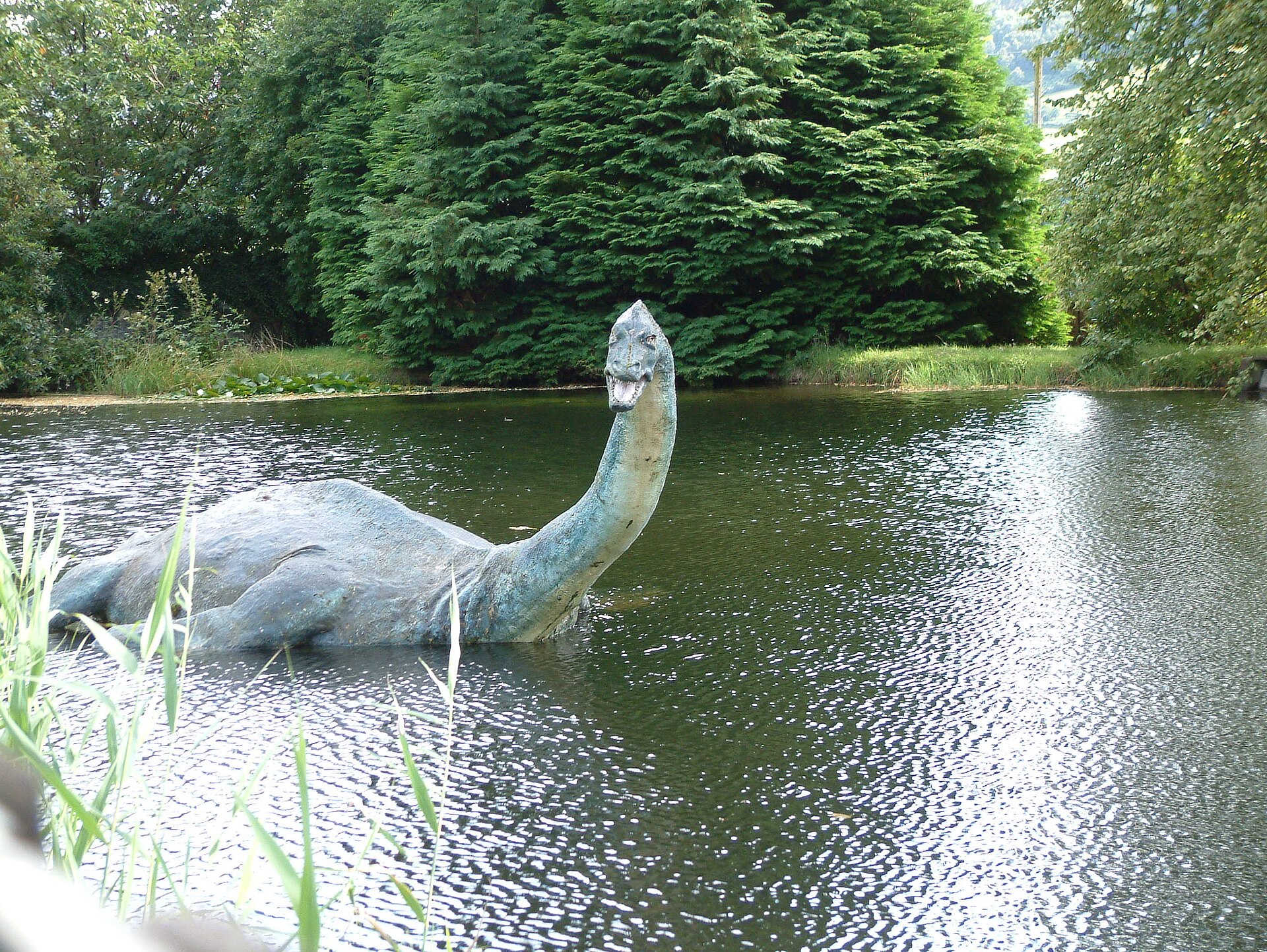
On 15 April 1933, Aldie Mackay and her husband John were driving along the A82 when something enormous surfaced in Loch Ness. Mackay reportedly shouted, 'Stop! The Beast!' The creature disported itself, rolling and plunging for a full minute, its body resembling that of a whale, the water cascading and churning like a simmering cauldron before it vanished in a boiling mass of foam. Both witnesses said there was something uncanny about it — this was no ordinary denizen of the depths.
The account was written up by Alex Campbell, the Loch Ness water bailiff and part-time journalist, and published in The Inverness Courier on 2 May 1933 under the headline 'Strange Spectacle in Loch Ness.' It was reportedly Campbell's article that first applied the word 'monster' to the creature, though some accounts credit editor Evan Barron with coining it. Public interest exploded. In August that year, the Courier published George Spicer's alleged sighting, and letters poured in describing a 'monster fish,' a 'sea serpent,' or a 'dragon.' Eventually the name settled: the Loch Ness monster. Since the 1940s it has carried an affectionate nickname — Nessie, from the Scottish Gaelic Niseag.
Believers trace the creature's lineage far earlier than 1933. The oldest known account comes from Adomnán's seventh-century Life of St. Columba. Around a century after the fact, Adomnán wrote that the Irish monk Columba, staying among the Picts, came upon locals burying a man who had been attacked and dragged underwater by a 'water beast' while swimming in the River Ness. Columba ordered a follower, Luigne moccu Min, to swim across the river as bait. When the creature approached, Columba made the sign of the cross and commanded it to go no further and touch no one. The beast reportedly stopped as if pulled back by ropes and fled, and the onlookers gave thanks for what they took to be a miracle.
Skeptics caution that water-beast tales were a common motif in medieval hagiography, and that Adomnán's story — set in the River Ness rather than the loch itself — may have simply attached itself to the modern legend through geographic proximity and eager believers. Scholar Ronald Binns called it the most serious of the pre-1933 claims, while still judging that no genuine monster tradition existed before that year. Researcher Christopher Cairney went further, separating Adomnán's tale from the modern myth entirely, tracing it instead to older Celtic 'water beast' folklore and even earlier Irish myths about the Caoránach and the Oilliphéist.
Other sightings surfaced in the decades before Mackay's, though none reached the public until much later. In October 1871 or 1872, a man named D. Mackenzie of Balnain reportedly saw an object like a log or an upturned boat wriggling and churning the water before speeding off and vanishing. His account wasn't published until 1934, when he wrote to researcher Rupert Gould after the monster craze had already taken hold. In 1888, a mason named Alexander Macdonald of Abriachan claimed to see a large, stubby-legged animal surface and swim within 50 yards of the shore where he stood, describing it as resembling a salamander. He reported the sighting to none other than Alex Campbell, the same water bailiff who would later write the 1933 article that made the monster famous.
More from Mythology

The Doctor Who Sang a Nation Into Being
A country doctor rode into the forests of Karelia armed with nothing but a notebook — and rode out with the soul of a nation.

The Boat That Carried the Sun
Every sunset, the ancient Egyptians believed, the sun climbed into a boat and sailed straight into the realm of the dead — only to fight a monstrous serpent before dawn could return.

The Wild Man of the Snows
At 21,000 feet, a colonel found tracks in the snow that he blamed on a wolf — but his guides knew better, and gave the world a name that would echo for a century.

The Knight Who Went Mad for Love: Orlando Furioso
A hero so devoted to duty he was Charlemagne's greatest paladin loses his mind—not to a sword wound, but to heartbreak. To cure him, a friend must ride a flying horse to the Moon.

The Book That Turned the World Into Myth
A poet condemned to exile spent his final years in Rome finishing a poem that would outlive empires—a poem about nothing standing still, not gods, not lovers, not even the shape of a man.

Paradise Lost: Milton's Rebel Angel
A blind poet, dictating verses in the dark, dared to explain the ways of God to men — and in doing so, made Hell's ruler unforgettable.