Oğuz Kağan Destanı: The Manuscripts That Chased a Legend
A single fragile scroll in Paris, written in a script few can read, may hold the oldest surviving trace of a legend that claims to explain where the Turks came from. Piecing it together took a century of philologists, forgers of verse, and one determined historian chasing echoes across Persian chronicles.
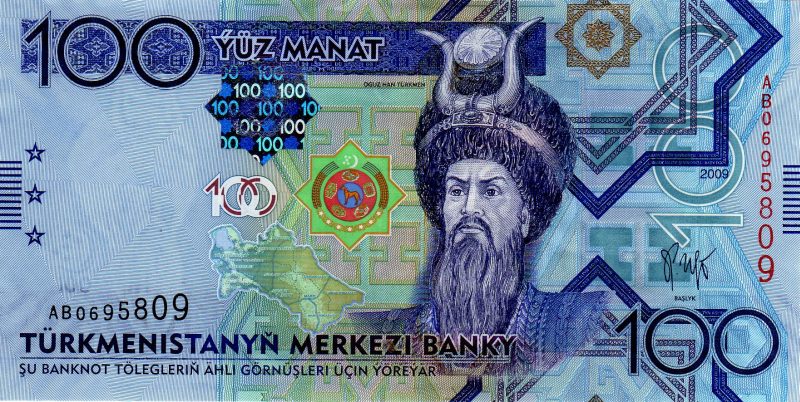
In the Bibliothèque nationale in Paris sits a manuscript written in Uyghur script, unassuming in appearance yet treated by scholars as the oldest surviving copy of the Oğuz Kağan Destanı — the epic that tells the life of Oğuz Kağan, the figure regarded as the legendary forefather of the Turks. No one knows precisely who copied it, where, or exactly when. The researcher Ferruh Ağca has argued that its linguistic features point to the late 14th or early 15th century, composed in the Chagatai linguistic zone under Mongol rule, blending Oghuz and Kipchak dialects.
The story the manuscript preserves reaches back further still. The Uyghur version of the Oğuz Kağan Destanı is connected to the Xiongnu, the great nomadic empire that dominated Inner Asia between 201 and 126 BCE, with some scholars suggesting that Oğuz Kağan corresponds to the historical ruler Mete. Zeki Velidi Togan pushed the epic's roots even earlier, tracing them to the Saka peoples of Central Asia in the 7th century BCE and, a few centuries later, to the Scythians — a lineage stretching across a millennium of steppe history before the tale was ever written down.
The Paris manuscript itself did not reach a wide audience until 1891, when the German Turkologist W. Radloff published its transcription alongside an edition of the Kutadgu Bilig. It was the first time modern scholarship could examine the epic's Uyghur text directly, though the mysteries of its origin remained unsolved.
Decades later, in the political and intellectual ferment of the early Turkish Republic, the physician and politician Rıza Nur took the epic in a different direction. He wove fragments of other legends into an expanded 6,100-line verse work titled Oğuznâme, published in Cairo in 1928. Among its passages was the text later known as 'Oğuz Kağan's Prayer,' which — through Rıza Nur's authorship — eventually came to be regarded by many as part of the Oğuz Kağan Destanı itself, blurring the line between ancient tradition and modern literary creation.
A more rigorous philological treatment arrived in 1932, when Willi Bang Kauf and Reşid Rahmeti Arat produced a fresh transcription of the Uyghur manuscript, published in Germany. Arat later translated the text into modern Turkish, publishing it in Istanbul in 1936. The epic reached an even broader Turkish readership in 1970, when Turkey's Ministry of National Education included it in its '100 Temel Eser' series, with Muharrem Ergin supplying an explanatory preface and the original Uyghur text alongside Ergin's edition, which was based on the Bang and Arat work.
More from Mythology

The Doctor Who Sang a Nation Into Being
A country doctor rode into the forests of Karelia armed with nothing but a notebook — and rode out with the soul of a nation.

The Boat That Carried the Sun
Every sunset, the ancient Egyptians believed, the sun climbed into a boat and sailed straight into the realm of the dead — only to fight a monstrous serpent before dawn could return.

The Wild Man of the Snows
At 21,000 feet, a colonel found tracks in the snow that he blamed on a wolf — but his guides knew better, and gave the world a name that would echo for a century.

The Knight Who Went Mad for Love: Orlando Furioso
A hero so devoted to duty he was Charlemagne's greatest paladin loses his mind—not to a sword wound, but to heartbreak. To cure him, a friend must ride a flying horse to the Moon.

The Book That Turned the World Into Myth
A poet condemned to exile spent his final years in Rome finishing a poem that would outlive empires—a poem about nothing standing still, not gods, not lovers, not even the shape of a man.

Paradise Lost: Milton's Rebel Angel
A blind poet, dictating verses in the dark, dared to explain the ways of God to men — and in doing so, made Hell's ruler unforgettable.