Ophelia: The Tragedy That Floats
A drowned Shakespearean heroine, painted with obsessive precision, would become the defining image of an entire artistic rebellion.
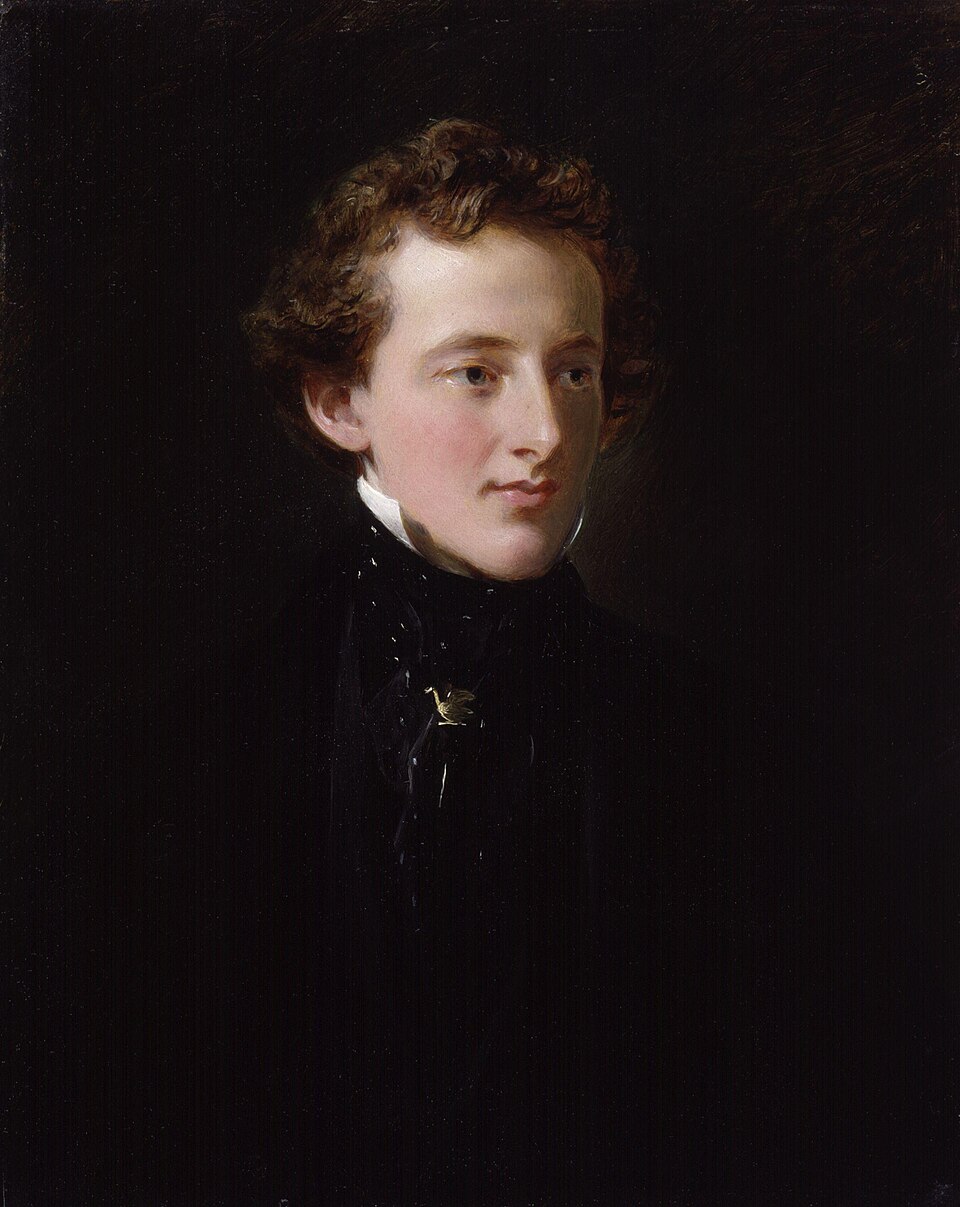
In 1851, a young English painter set out to capture a moment that Shakespeare only described in a messenger's report: the death of Ophelia in Hamlet, drifting downstream among flowers, singing until the water closed over her. John Everett Millais, not yet twenty-five, chose this fleeting, secondhand scene and gave it a physical, almost unbearable presence on canvas.
Millais was no newcomer to ambition. Born in Southampton in 1829 to a prominent Jersey family, he had displayed such precocious talent that at eleven he became the youngest student ever admitted to the Royal Academy Schools. There he met William Holman Hunt and Dante Gabriel Rossetti, and in September 1847, in his family's home on Gower Street, the three young men founded the Pre-Raphaelite Brotherhood — a movement determined to reject the loose, idealized conventions of academic painting in favor of intense naturalism and historical seriousness.
Ophelia, painted in 1851–1852, became the picture that most fully embodied that mission. Millais filled the canvas with dense, meticulously observed plant life — a kind of pictorial ecosystem surrounding the drowning figure. Every leaf and blossom was rendered with the same reverence usually reserved for the human subject, a hallmark of the Pre-Raphaelite insistence that nature deserved unflinching attention rather than idealized shorthand.
This was not Millais's first brush with controversy. His earlier Christ in the House of His Parents (1849–50) had scandalized viewers with its unflinchingly working-class, cluttered depiction of the Holy Family in a carpentry workshop. A Huguenot (1851–52), painted around the same time as Ophelia, found gentler success, portraying a young couple pulled apart by religious conflict — a theme of doomed love and separation Millais would return to repeatedly.
The critic John Ruskin championed this style publicly, defending the Pre-Raphaelites against hostile critics. It was through his friendship with Ruskin that Millais met Ruskin's wife, Effie. She modeled for Millais's painting The Order of Release, and during their work together the two fell in love — despite Effie having been married to Ruskin for years. Her marriage was annulled, and in 1855 she married Millais instead, eventually bearing him eight children.
More from Art

The Painting With No Foreground
A single robed figure stares out at an empty grey sea — and the emptiness itself became a scandal. When it was unveiled in Berlin in 1810, no one knew quite what to do with it.

The Painter Who Chased the Light
For a few purple minutes each evening, an American exile knelt in an English garden and raced the dying sun to paint two little girls lighting lanterns. It took him two years to finish.

When a President Became a God
Look straight up inside the U.S. Capitol dome and you will find George Washington enthroned among the clouds, surrounded by goddesses — the founding father transformed into myth.

Marble Brought Back to Life
A corpse asleep, a wing barely brushing her skin — and marble somehow learns to breathe. This is the moment Antonio Canova dared to carve.

The World Turned Upside Down
Look closely at a sixteenth-century Flemish village and you'll find a man biting a pillar, another carrying daylight in a basket, and a wife slipping a blue cloak over her husband's shoulders. Every gesture is a joke — if you know the language.

The Girl in the Glass Case
She stood two-thirds life size, dressed in a real tutu and human hair — and the critics who saw her in 1881 recoiled as if she were something obscene.