Pangu: The Giant Who Split the Sky from the Earth
Before there was heaven or earth, there was only an egg drifting in the dark — and inside it, something was slowly waking up.
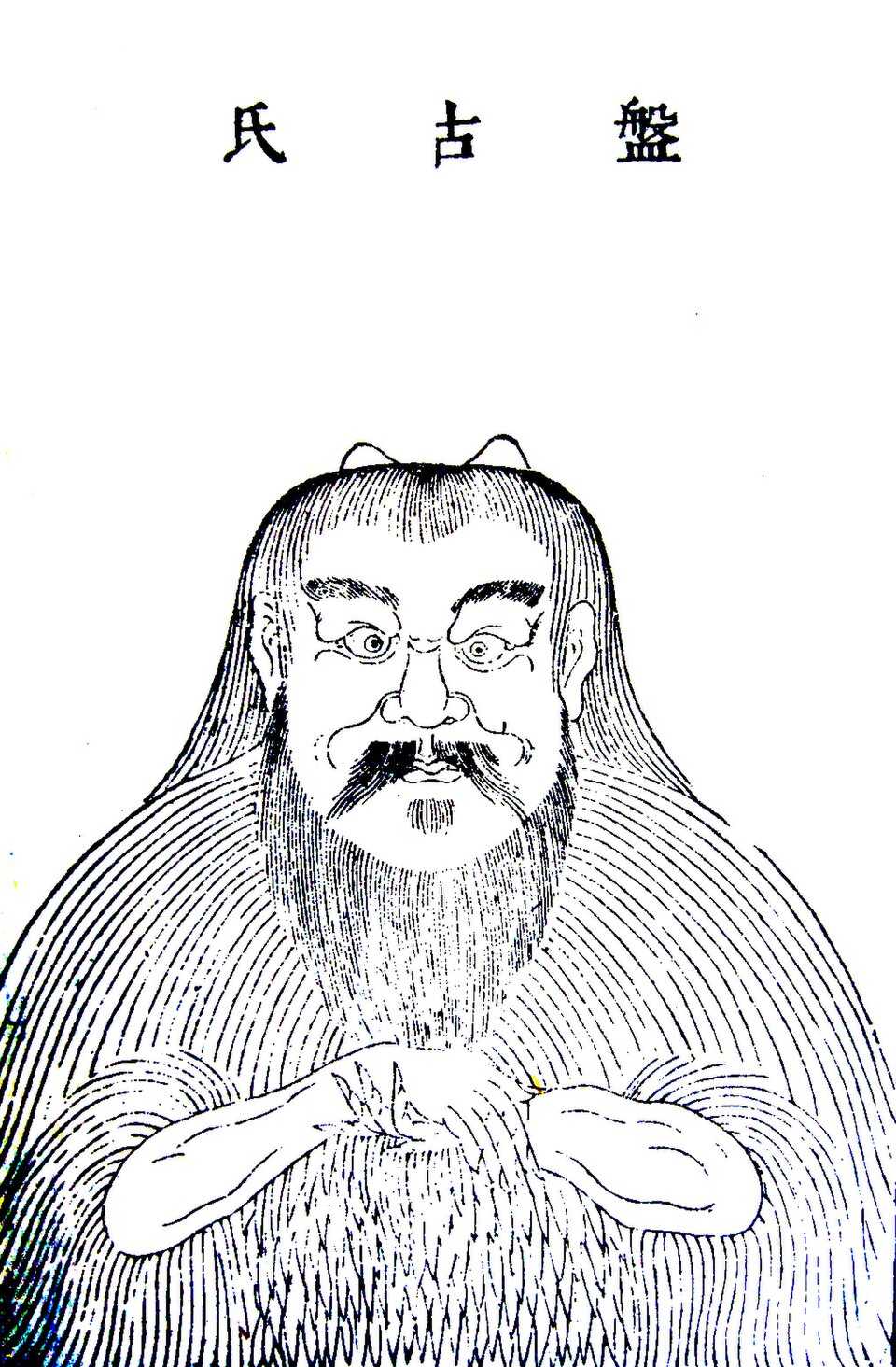
For eighteen thousand years, nothing existed but formlessness: no light, no ground, no direction. The primordial chaos of the universe had no shape at all, yet within that shapelessness the opposing forces of yin and yang were quietly gathering, condensing, folding into each other until they took the form of a cosmic egg. Inside this egg, in perfect balance, something stirred. It was Pangu.
When Pangu finally woke, he was already a giant — hairy, horned, primitive in form, and cramped inside the shell that had held him for millennia. With a swing of his giant hammer he split the egg apart; in another version of his origin, he is said to have shaped heaven and earth afterward with a hammer and chisel. The murky, heavy yin fell away to become the earth; the clear, light yang rose to become the sky. For the first time, heaven and earth existed as two separate things.
But they did not want to stay apart. Sky and earth, freshly divided, strained to collapse back into each other, to return to the chaos from which they came. So Pangu planted himself between them and pushed. Some tellings say he was helped in this labor by four holy beasts — the Turtle, the Qilin, the Phoenix, and the Dragon — steadying the work of keeping the world open.
And so began an age of unimaginable patience. Each day, the sky rose ten feet higher. Each day, the earth grew ten feet thicker. And each day, Pangu himself grew ten feet taller, straining upward and downward at once, holding the two halves of the universe apart by sheer growth. Accounts differ on how long this went on — eighteen thousand years by some counts, millions of years by others — but eventually Pangu judged that heaven and earth were fixed far enough apart that they would never again fall into each other. His work was done.
What happened next depends on which telling you follow. In one version, Pangu did not vanish from the world at all: he built a home called the Jade Terrace of the Mysterious City atop a mountain named Seven Treasures Peak, met a wandering Jade Maiden, and their union produced the Emperor of the East, the Empress of the West, and a line of celestial and terrestrial lords leading eventually to the Lord of Humanity.
More from Mythology

The Doctor Who Sang a Nation Into Being
A country doctor rode into the forests of Karelia armed with nothing but a notebook — and rode out with the soul of a nation.

The Boat That Carried the Sun
Every sunset, the ancient Egyptians believed, the sun climbed into a boat and sailed straight into the realm of the dead — only to fight a monstrous serpent before dawn could return.

The Wild Man of the Snows
At 21,000 feet, a colonel found tracks in the snow that he blamed on a wolf — but his guides knew better, and gave the world a name that would echo for a century.

The Knight Who Went Mad for Love: Orlando Furioso
A hero so devoted to duty he was Charlemagne's greatest paladin loses his mind—not to a sword wound, but to heartbreak. To cure him, a friend must ride a flying horse to the Moon.

The Book That Turned the World Into Myth
A poet condemned to exile spent his final years in Rome finishing a poem that would outlive empires—a poem about nothing standing still, not gods, not lovers, not even the shape of a man.

Paradise Lost: Milton's Rebel Angel
A blind poet, dictating verses in the dark, dared to explain the ways of God to men — and in doing so, made Hell's ruler unforgettable.