Primavera: Botticelli's Blooming Riddle
A garden full of gods, painted for reasons no one wrote down — and five centuries later, we are still trying to decode it.
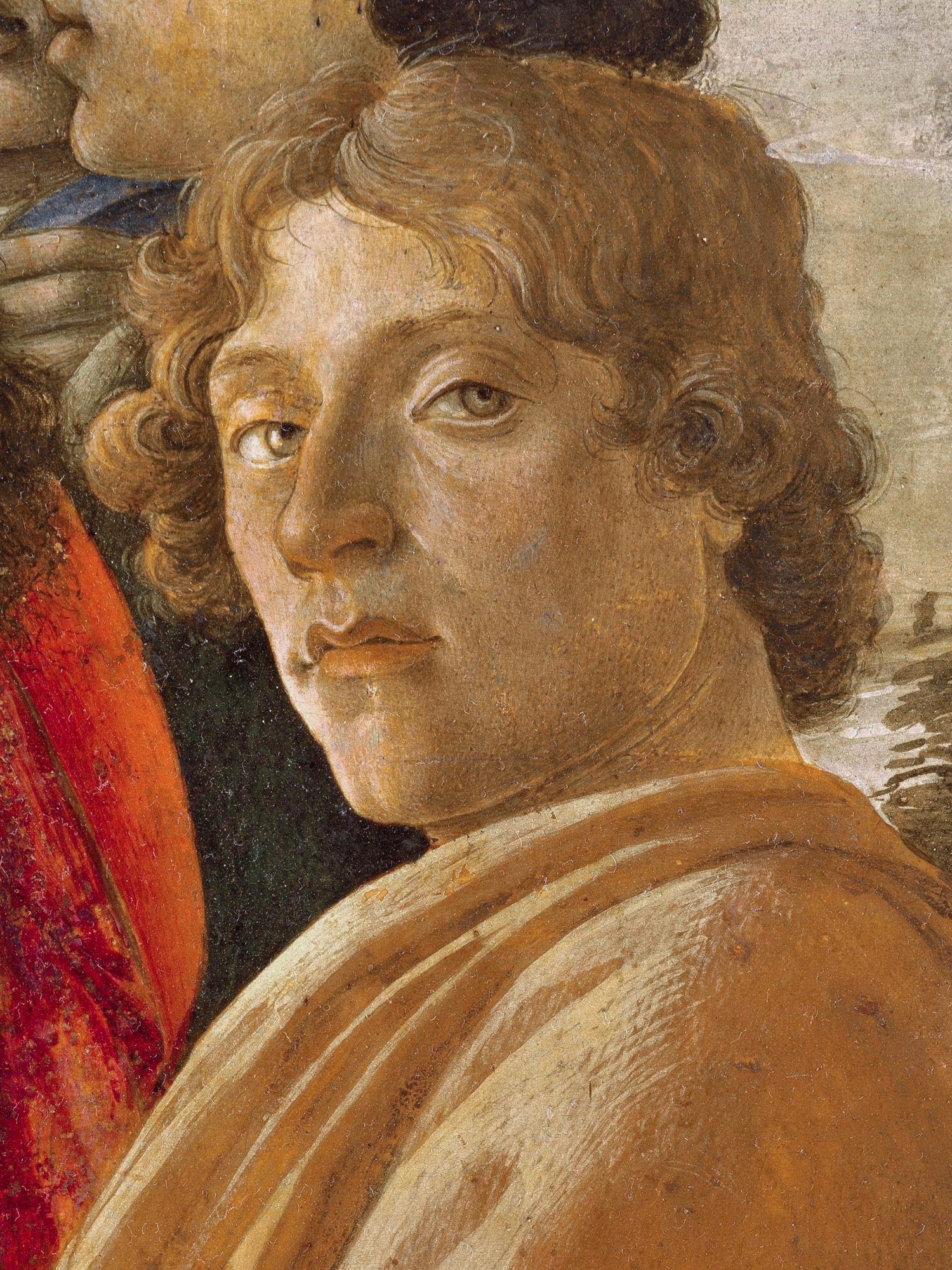
In the Uffizi Gallery in Florence hangs a large panel painted around 1482, showing a grove of orange trees where nine figures drawn from classical mythology stand and move among flowers. It is called Primavera — Spring — and it is one of the two works, alongside The Birth of Venus, for which Sandro Botticelli is best remembered today, though in his own lifetime he was known for a far wider range of religious and portrait work.
Botticelli was born in Florence around 1445, the son of a tanner, and he lived his entire life within the same small stretch of the city near the church of Ognissanti, where he was eventually buried. His nickname, meaning 'little barrel', is remembered in different ways across accounts: some trace it to his goldsmith brother Antonio, others to a round-statured brother named Giovanni, with Sandro himself picking it up during an early apprenticeship before he ever touched a paintbrush. By 1470 a document already refers to him as Sandro Botticelli, the name fully absorbed.
His training came from Fra Filippo Lippi, one of the leading painters in Florence and a favorite of the Medici family, whose workshop Botticelli likely joined around 1461 or 1462. From Lippi he learned to build intimate compositions with graceful, faintly melancholic figures, drawn with clean contours and gentle contrasts of light and shadow — qualities that would later define the floating figures of Primavera. The influence of the Pollaiuolo brothers and Andrea del Verrocchio is also visible in his development, though the exact nature of his time in their circles remains uncertain.
When Lippi died in 1469, Botticelli was already running his own workshop, and the 1470s saw his reputation grow rapidly as an independent master. But it was the 1480s that proved his most successful decade — the years in which his large mythological paintings, including Primavera, were completed, alongside many of his most celebrated Madonnas. This was also the period in which he worked in Florence under the protection of Lorenzo de' Medici, whose court fostered the philosophical current of Neo-Platonism, an influence often traced through the symbolic, allegorical arrangement of figures in works like Primavera.
More from Art

The Painting With No Foreground
A single robed figure stares out at an empty grey sea — and the emptiness itself became a scandal. When it was unveiled in Berlin in 1810, no one knew quite what to do with it.

The Painter Who Chased the Light
For a few purple minutes each evening, an American exile knelt in an English garden and raced the dying sun to paint two little girls lighting lanterns. It took him two years to finish.

When a President Became a God
Look straight up inside the U.S. Capitol dome and you will find George Washington enthroned among the clouds, surrounded by goddesses — the founding father transformed into myth.

Marble Brought Back to Life
A corpse asleep, a wing barely brushing her skin — and marble somehow learns to breathe. This is the moment Antonio Canova dared to carve.

The World Turned Upside Down
Look closely at a sixteenth-century Flemish village and you'll find a man biting a pillar, another carrying daylight in a basket, and a wife slipping a blue cloak over her husband's shoulders. Every gesture is a joke — if you know the language.

The Girl in the Glass Case
She stood two-thirds life size, dressed in a real tutu and human hair — and the critics who saw her in 1881 recoiled as if she were something obscene.