Richard III: The King Beneath the Car Park
He died on a muddy field, was buried without ceremony, and vanished for over five centuries — only to be found under a parking lot.
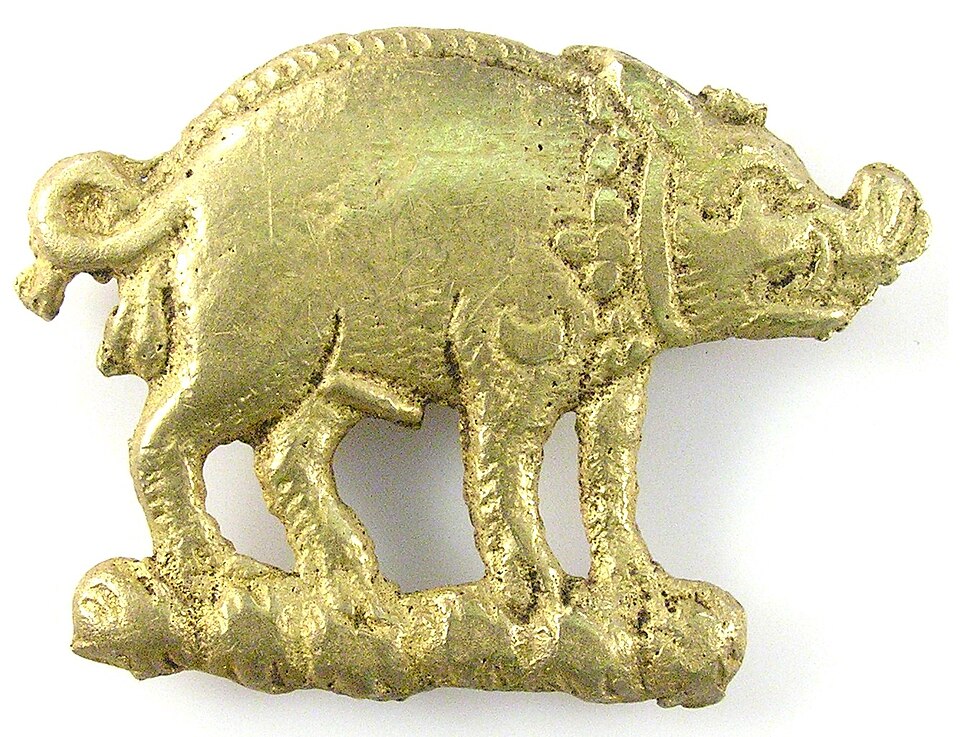
Richard was born on 2 October 1452 at Fotheringhay Castle in Northamptonshire, the eleventh of twelve children of Richard, 3rd Duke of York, and Cecily Neville. He came into the world during the opening years of the Wars of the Roses, the long, bitter struggle between the Yorkist and Lancastrian branches of the royal family. When his father and elder brother Edmund were killed at the Battle of Wakefield in December 1460, young Richard and his brother George were sent abroad for safety, returning only after the Lancastrians were defeated at Towton.
Richard's fortunes rose quickly. Around the time of his eldest brother's coronation as Edward IV on 28 June 1461, Richard was created Duke of Gloucester, a Knight of the Garter and a Knight of the Bath — remarkable honors for a child. He spent formative years at Middleham Castle in Yorkshire under the guardianship of his cousin Richard Neville, Earl of Warwick, known as 'the Kingmaker.' There he trained as a knight and likely first met Anne Neville, Warwick's younger daughter, whom he would marry in 1472.
As an adult, Richard proved a capable administrator and soldier, governing northern England on his brother's behalf and taking part in the 1482 invasion of Scotland. But everything changed when Edward IV died suddenly in April 1483. Richard was named Lord Protector for his nephew, the twelve-year-old Edward V, whose coronation was set for 22 June. Before it could happen, Edward IV's marriage was declared bigamous, making his children illegitimate and unable to inherit the throne.
On 25 June 1483, an assembly of lords and commoners proclaimed Richard the rightful king, and he was crowned on 6 July. Around August that year, the young Edward V and his brother Richard, Duke of York — the so-called 'Princes in the Tower' — disappeared from the Tower of London, never to be seen again.
Richard's brief reign was marked by rebellion. In October 1483, former allies including the Duke of Buckingham rose against him, unsuccessfully. Two years later, Henry Tudor landed in Wales with French troops, gathering support as he marched inland. The two armies met near Market Bosworth in Leicestershire in August 1485. Richard was killed in the fighting, becoming the last English king to die in battle. Henry Tudor took the throne as Henry VII.
More from Archaeology

The Bronze Disc That Rewrote the Sky
Two looters with a metal detector dug up something illegal, invisible in value, and older than Stonehenge's final stones — a map of the heavens buried for over three thousand years.

The Faceless Women of the Ice Age
Long before writing, before cities, before the wheel, someone carved a woman's body into stone and ivory — and left no name, no face, no explanation.

The Pebble That Might Be Human
A palm-sized stone found on a Moroccan riverbank may be humanity's oldest attempt to see itself — or simply a trick of erosion.

The Crown That Vanished: Deshret and the Red Land
A crown worn by kings for three thousand years has never once been found in a tomb — not one. So where did it go?

The Face That Traveled Between Empires
A farm worker's shovel struck stone in 1897 and unearthed a face so striking it would be sold to France, seized as war booty, and finally traded back for a Velázquez.

The Boy in the Dark Tunnel
A schoolboy fell into black water inside an ancient tunnel and surfaced with his fingers brushing letters no one had noticed for 2,600 years.