Shahmaran: The Queen of Serpents
Deep beneath Tarsus, seven layers into the earth, a woman with a snake's tail once ruled a garden no living man was meant to see — until one poor boy climbed down for honey and never fully climbed back out.
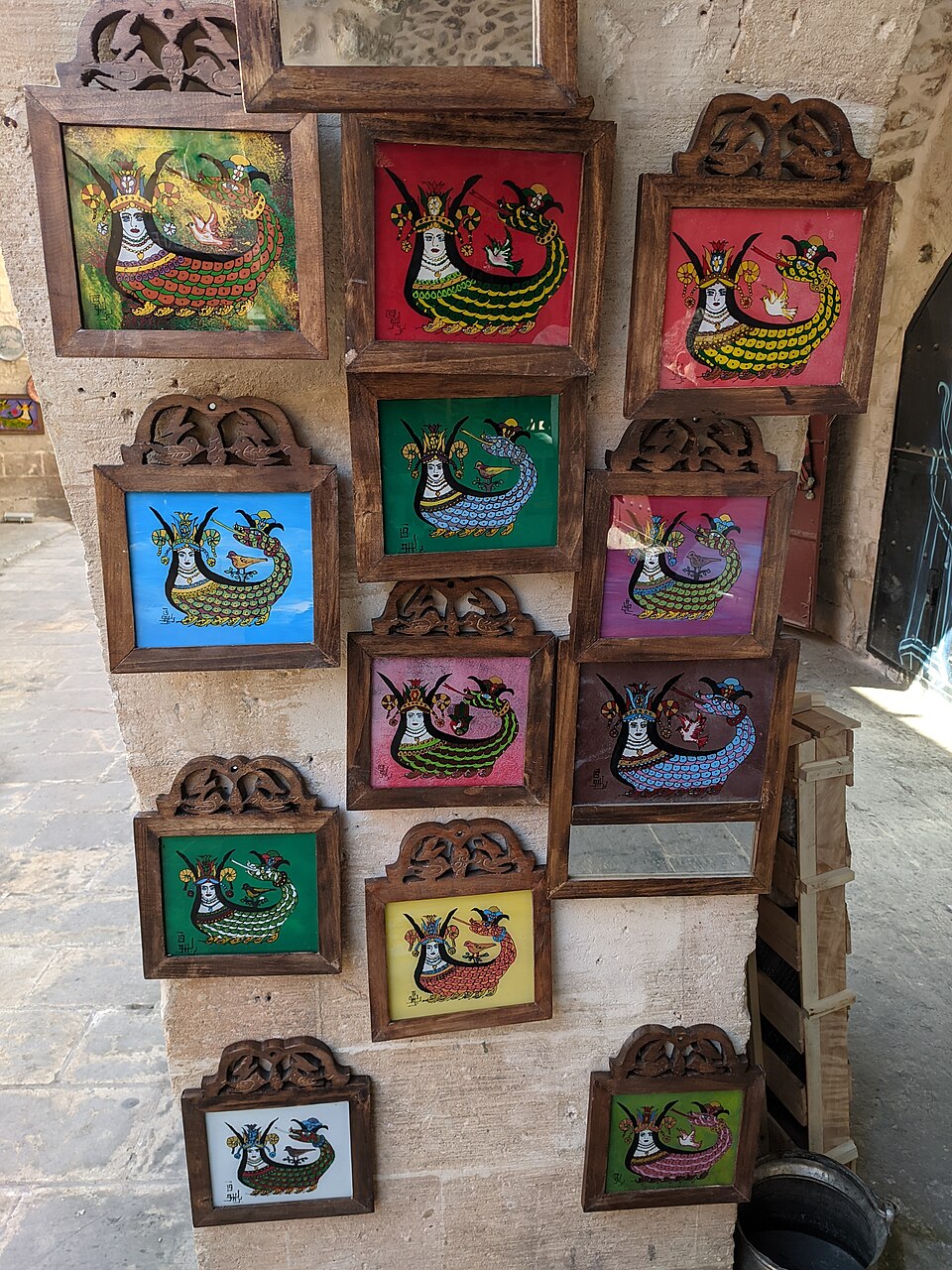
The name itself is a clue to her power: Shahmaran, from the Persian shah and maran, literally 'the king of snakes,' though every legend insists the ruler beneath that crown was always a woman. Depicted with two heads — one human, crowned and draped in a heavy necklace, the other a serpent's, also crowned — she stood at the crossroads of Indo-Iranian and Turkic folklore, half-woman, half-snake, and wholly wise.
Her story survives in more than one telling across the Middle East. She appears in the Jamasp-Name, sometimes called the Camasb-name, and separately in a very different narrative from the One Thousand and One Nights called 'The Story of Yemliha: An Underground Queen,' also known as 'The Queen of the Serpents.' These are not siblings of one tale but distinct attestations, with different names for hero and queen alike, that scholars have nonetheless connected across centuries of retelling.
In the Jamasp-Name, a young man named Jamasp — recorded elsewhere as Camasb, Jambs, or Jamisav — gets stranded on a honey-hunting expedition gone wrong, abandoned in a cave by friends eager for a bigger share. Alone, he finds a passage into an underground world: a lush, otherworldly garden filled with thousands of pale, gentle snakes living in harmony with their ruler, Shahmaran.
The Turkish version of the tale gives the hero a name closer to home: Cemşab, the poor son of a wood-seller from Tarsus. Lowered into the honey cave by his friends, he is left behind out of greed, only to discover a lit crack in the rock. Widening it with his knife, he steps into a garden unlike anything he has known — flowers beyond description, a pool, and upon a throne beside it, a snake with a body white as milk: Shahmaran herself.
Cemşab wins her trust and lives for years in that hidden garden, where Shahmaran teaches him the secrets of medicine, knowledge no human yet possessed. Eventually homesickness overtakes him, and he begs to return to his family. She lets him go on one condition: he must never reveal where she lives. He promises, and for years he keeps his word.
More from Mythology

The Doctor Who Sang a Nation Into Being
A country doctor rode into the forests of Karelia armed with nothing but a notebook — and rode out with the soul of a nation.

The Boat That Carried the Sun
Every sunset, the ancient Egyptians believed, the sun climbed into a boat and sailed straight into the realm of the dead — only to fight a monstrous serpent before dawn could return.

The Wild Man of the Snows
At 21,000 feet, a colonel found tracks in the snow that he blamed on a wolf — but his guides knew better, and gave the world a name that would echo for a century.

The Knight Who Went Mad for Love: Orlando Furioso
A hero so devoted to duty he was Charlemagne's greatest paladin loses his mind—not to a sword wound, but to heartbreak. To cure him, a friend must ride a flying horse to the Moon.

The Book That Turned the World Into Myth
A poet condemned to exile spent his final years in Rome finishing a poem that would outlive empires—a poem about nothing standing still, not gods, not lovers, not even the shape of a man.

Paradise Lost: Milton's Rebel Angel
A blind poet, dictating verses in the dark, dared to explain the ways of God to men — and in doing so, made Hell's ruler unforgettable.