Sisyphus and the Boulder That Never Stayed
He outwitted Death itself and walked free from the Underworld — but the gods always collect their debts.
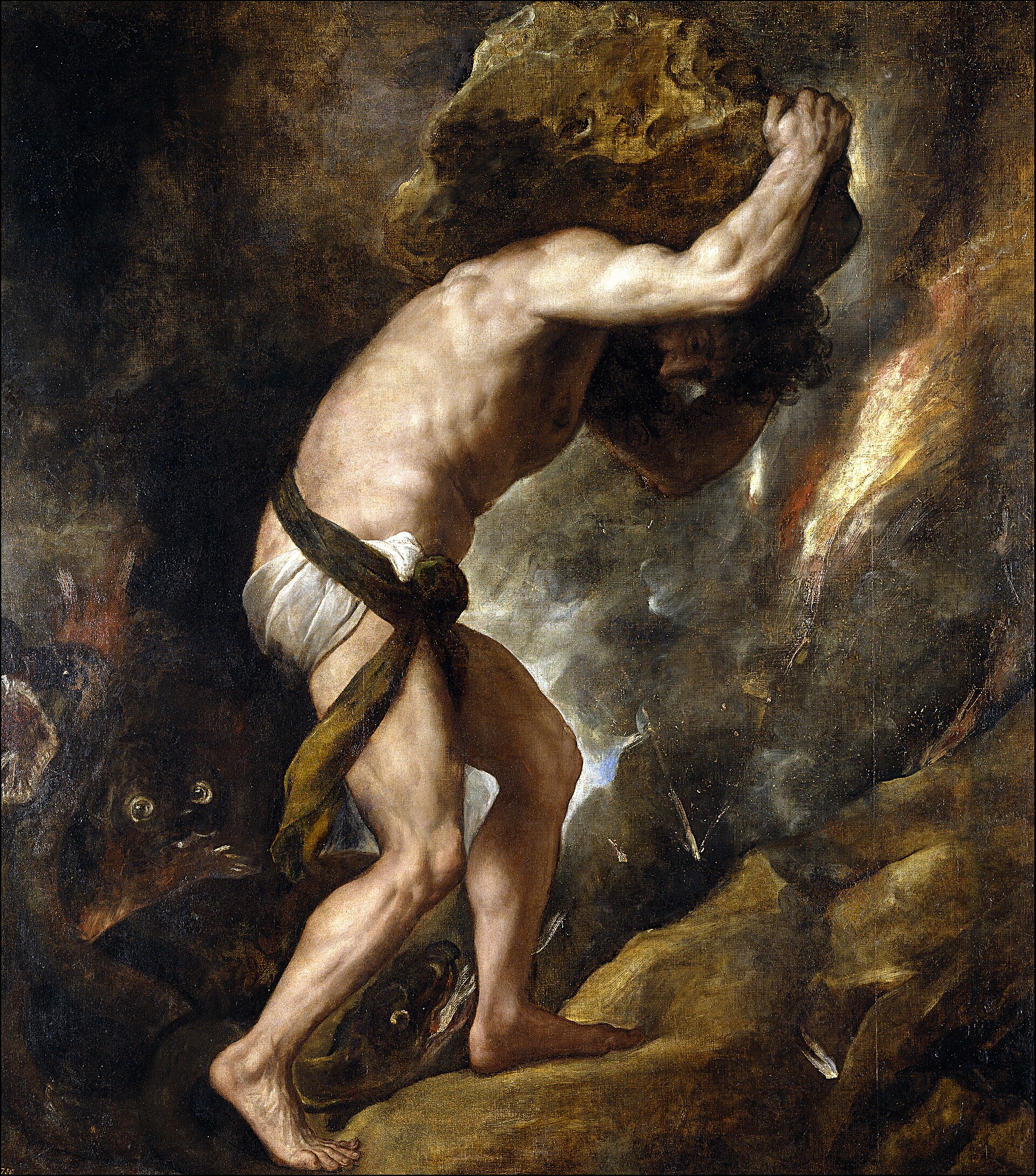
On a hillside in Tartaros, a man pushes a boulder toward a summit he will never reach. Just before it crests the ridge, the stone slips from his grip and thunders back down, and he descends after it to begin again. This is Sisyphus, founder and first king of Ephyra, the city later known as Corinth, and the most notoriously clever man in Greek myth.
As a ruler, Sisyphus was said to have built Corinth's prosperity through its ports and trade routes, and Pausanias credits him with founding the Isthmian Games in honor of Melicertes, a boy whose body washed ashore on a dolphin's back. But his fame rested less on statecraft than on his talent for deception — a talent that eventually brought him into direct conflict with the gods.
The trouble began when Zeus abducted the river-nymph Aegina and carried her off to the island that now bears her name. Her father, the river god Asopus, searched for her in vain until Sisyphus offered him a trade: in exchange for a permanent spring atop the Corinthian acropolis, later linked to the famous Peirene fountain, Sisyphus revealed where Zeus had taken her. Betraying the king of the gods for personal gain marked Sisyphus as an enemy of the divine order.
Zeus dispatched Thanatos, the personification of Death, to drag Sisyphus down to the Underworld in chains. But Sisyphus, ever cunning, tricked Thanatos into demonstrating how the chains worked — and bound him in his own shackles instead. With Death immobilized, no one on earth could die. Wars dragged on without casualties, the sick could not pass, and the natural order collapsed until Ares, frustrated that his battles no longer had consequences, intervened, freed Thanatos, and delivered Sisyphus to his fate.
Even then, Sisyphus was not finished. Before he died, he instructed his wife to leave his body unburied in the public square, denying him the customary funeral rites. Once in the Underworld, he complained to Persephone that his wife's disrespect demanded he return briefly to the world above to set things right. Persephone granted his request — and Sisyphus simply refused to go back, living out many more years before death finally claimed him again, whether by old age or by Hermes dragging him back by force.
More from Mythology

The Doctor Who Sang a Nation Into Being
A country doctor rode into the forests of Karelia armed with nothing but a notebook — and rode out with the soul of a nation.

The Boat That Carried the Sun
Every sunset, the ancient Egyptians believed, the sun climbed into a boat and sailed straight into the realm of the dead — only to fight a monstrous serpent before dawn could return.

The Wild Man of the Snows
At 21,000 feet, a colonel found tracks in the snow that he blamed on a wolf — but his guides knew better, and gave the world a name that would echo for a century.

The Knight Who Went Mad for Love: Orlando Furioso
A hero so devoted to duty he was Charlemagne's greatest paladin loses his mind—not to a sword wound, but to heartbreak. To cure him, a friend must ride a flying horse to the Moon.

The Book That Turned the World Into Myth
A poet condemned to exile spent his final years in Rome finishing a poem that would outlive empires—a poem about nothing standing still, not gods, not lovers, not even the shape of a man.

Paradise Lost: Milton's Rebel Angel
A blind poet, dictating verses in the dark, dared to explain the ways of God to men — and in doing so, made Hell's ruler unforgettable.