Ten Minutes That Made a Face for the Great Depression
A rain-soaked highway sign for a 'Pea-Pickers Camp' almost slipped past her window. Dorothea Lange turned the car around anyway — and the next ten minutes produced the most reproduced photograph in American history.
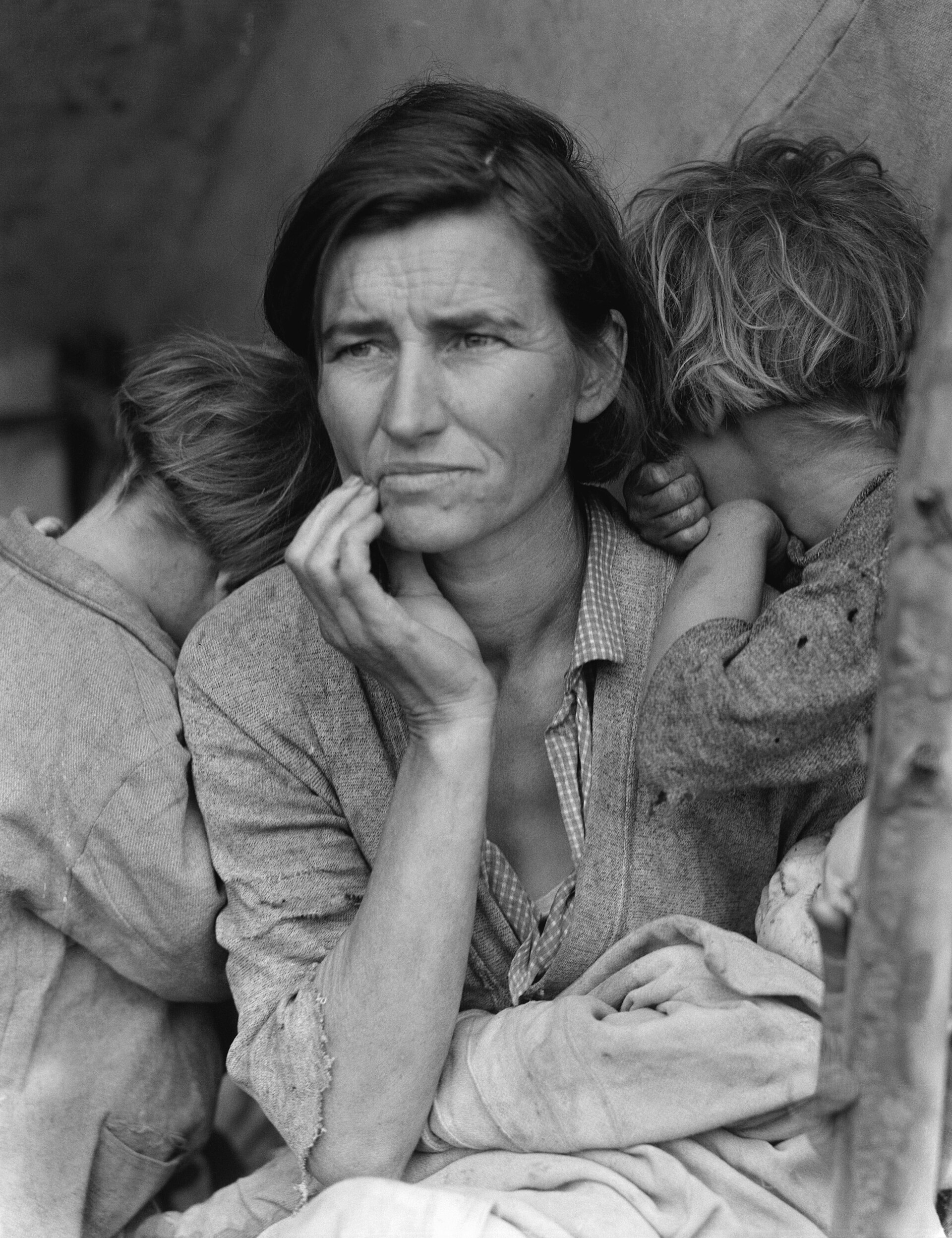
In March 1936, Dorothea Lange was driving home through Nipomo, California, cold and tired, working for the federal Resettlement Administration. She passed a crude roadside sign reading 'Pea-Pickers Camp' and kept driving. For twenty miles she told herself she had seen enough for the day. Then, almost without deciding to, she made a U-turn on the empty highway and went back.
At the camp she found a mother sitting in a makeshift tent with her teenage daughter and three younger children. Lange began, as she often did, with two exploratory snapshots of the tent and the children, but sensed they lacked a center. She moved closer and isolated the mother and infant, asking the older children to step out of frame. In that shot the mother was nursing her baby, eyes cast down — a tender image, but one Lange felt looked too guarded, as if the woman were shielding herself from the camera.
Lange tried again. She brought one daughter back into frame, chin resting on her mother's shoulder, and this time the mother looked up and into the distance. The expression finally satisfied her. Still unhappy with the cluttered background, Lange shifted left and turned her camera from horizontal to vertical, framing mother, child, and infant tightly with room above their heads and no distracting scenery behind them.
For her final frame, Lange brought a second child into the picture, positioning both children with their backs to the lens and their hands resting on their mother's shoulders. This removed any competing faces or gazes, leaving the mother's anxious expression as the photograph's undeniable focus. By her own account, Lange spent only ten minutes at the camp before closing her camera case and driving on.
The finished 28.3 by 21.8 centimeter gelatin silver print shows the mother staring into the distance, an infant on her lap, two children burying their faces in her shoulders. Even after the shutter closed, the image was shaped further — a thumb visible at the edge of the frame was retouched out, a flaw Lange apparently removed without hesitation.
More from Art

The Painting With No Foreground
A single robed figure stares out at an empty grey sea — and the emptiness itself became a scandal. When it was unveiled in Berlin in 1810, no one knew quite what to do with it.

The Painter Who Chased the Light
For a few purple minutes each evening, an American exile knelt in an English garden and raced the dying sun to paint two little girls lighting lanterns. It took him two years to finish.

When a President Became a God
Look straight up inside the U.S. Capitol dome and you will find George Washington enthroned among the clouds, surrounded by goddesses — the founding father transformed into myth.

Marble Brought Back to Life
A corpse asleep, a wing barely brushing her skin — and marble somehow learns to breathe. This is the moment Antonio Canova dared to carve.

The World Turned Upside Down
Look closely at a sixteenth-century Flemish village and you'll find a man biting a pillar, another carrying daylight in a basket, and a wife slipping a blue cloak over her husband's shoulders. Every gesture is a joke — if you know the language.

The Girl in the Glass Case
She stood two-thirds life size, dressed in a real tutu and human hair — and the critics who saw her in 1881 recoiled as if she were something obscene.