The Blind Man's Son: Köroğlu and the Legend of the Avenger
A father's eyes are put out for the crime of gifting two scrawny horses — and from that cruelty rises one of the most enduring rebel-heroes of the Turkic world.
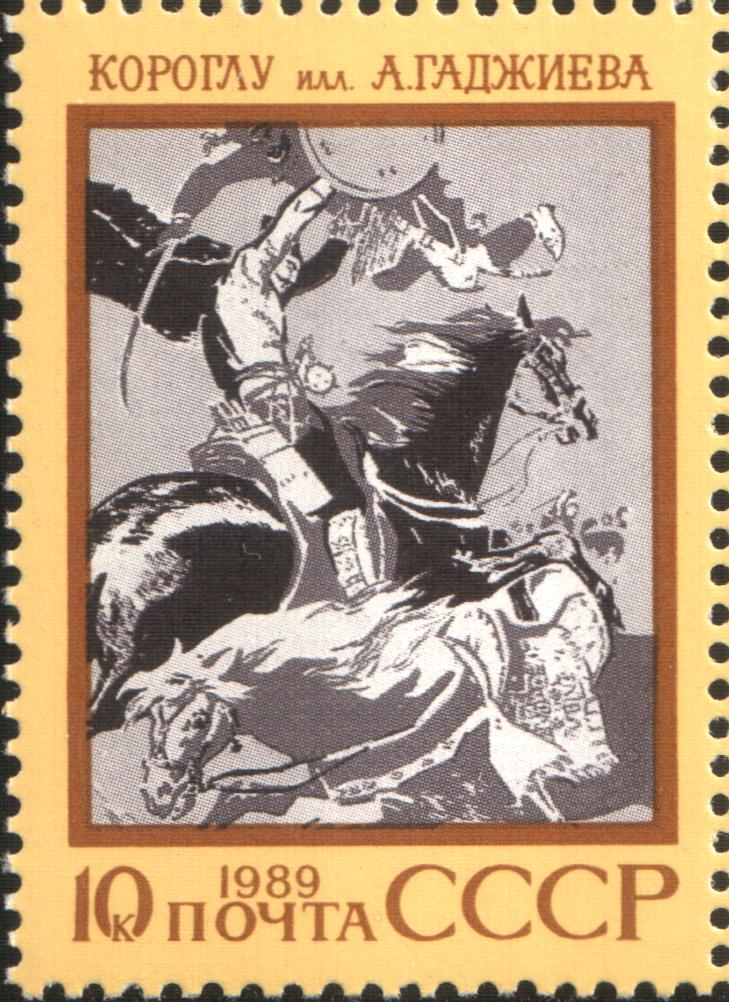
Somewhere in the mountains between Bolu and Erzurum, a story took root centuries ago that would travel farther than any single traveler could carry it — from East Turkistan to the Balkans, from Siberia to southwest Anatolia. At its center stands Köroğlu, a name that means 'son of the blind,' 'son of ember,' or 'son of clay,' depending on how one reads the old Turkic words. Nearly 500 versions of his tale exist across this vast geography, and in almost all of them he is the same figure: a man who defends the weak and rises against sultans, viziers, and unjust rulers.
The story usually begins with his father. In most Anatolian tellings, the father works for a bey or a padişah — as a horse-keeper, a farrier, a trusted servant. He offers his lord a gift: two horses, thin and scarred. The lord, enraged by the insult, has the father's eyes put out with a hot iron. Blinded and wronged, the father asks his son to take revenge in this world for the darkness done to him. That son, later known as Köroğlu, begins his life as an outlaw not from cruelty but from inherited injustice, taking to the hills around a place called Çamlıbel to waylay travelers and defy the powerful.
No one agrees on where Çamlıbel actually was. Some say it stood in Turkistan, others point to the Bolu mountains, to areas near Malatya, Bingöl, or the Arpaçay region. It is entirely possible the place never existed at all — that it lives only in the geography of story, a symbolic refuge for a man who could no longer live under any lord's roof.
Köroğlu himself is described in almost superhuman terms. At fifteen, storytellers say, he had the strength to uproot a tree; he could chew and spit out steel. His mustache was so magnificent it had to be wound seven times around his ears with beeswax to keep it from touching his food. His appetite matched his legend — in one sitting he could eat seven batman of rice pilaf, the meat of seven sheep, and drink seven skins of wine. His horse, Kırat, was said in most versions to have been born of a sea-stallion and a noble mare, a creature as extraordinary as its rider.
Who Köroğlu actually was remains genuinely disputed. The Polish diplomat Alexander Chodzko, who in the 19th century recorded the epic as told among Turks in Iranian Azerbaijan and introduced it to Western readers, believed Köroğlu was one of the bandits of the Kula Turkmen who, in the 17th century under Shah Abbas II, raided Silk Road caravans between Hoy and Erzurum. Ziya Gökalp argued he was actually Mahmud of Ghazni. Zeki Velidi Togan placed him centuries earlier, as a Turkmen bey of the 7th or 8th century in Turkmenistan. Others, like Pertev Naili Boratav, doubted the search for a single historical man made sense at all, identifying him instead with a Celali rebel who first appeared near Bolu.
More from Mythology

The Doctor Who Sang a Nation Into Being
A country doctor rode into the forests of Karelia armed with nothing but a notebook — and rode out with the soul of a nation.

The Boat That Carried the Sun
Every sunset, the ancient Egyptians believed, the sun climbed into a boat and sailed straight into the realm of the dead — only to fight a monstrous serpent before dawn could return.

The Wild Man of the Snows
At 21,000 feet, a colonel found tracks in the snow that he blamed on a wolf — but his guides knew better, and gave the world a name that would echo for a century.

The Knight Who Went Mad for Love: Orlando Furioso
A hero so devoted to duty he was Charlemagne's greatest paladin loses his mind—not to a sword wound, but to heartbreak. To cure him, a friend must ride a flying horse to the Moon.

The Book That Turned the World Into Myth
A poet condemned to exile spent his final years in Rome finishing a poem that would outlive empires—a poem about nothing standing still, not gods, not lovers, not even the shape of a man.

Paradise Lost: Milton's Rebel Angel
A blind poet, dictating verses in the dark, dared to explain the ways of God to men — and in doing so, made Hell's ruler unforgettable.