The Blond Dervish Who Was Buried in Seven Coffins
A wandering dervish died once, but legend insisted he was buried seven times over — in towns scattered across lands he never technically conquered. How does a single man become a saint claimed by Muslims and Christians alike, from Crete to Crimea?
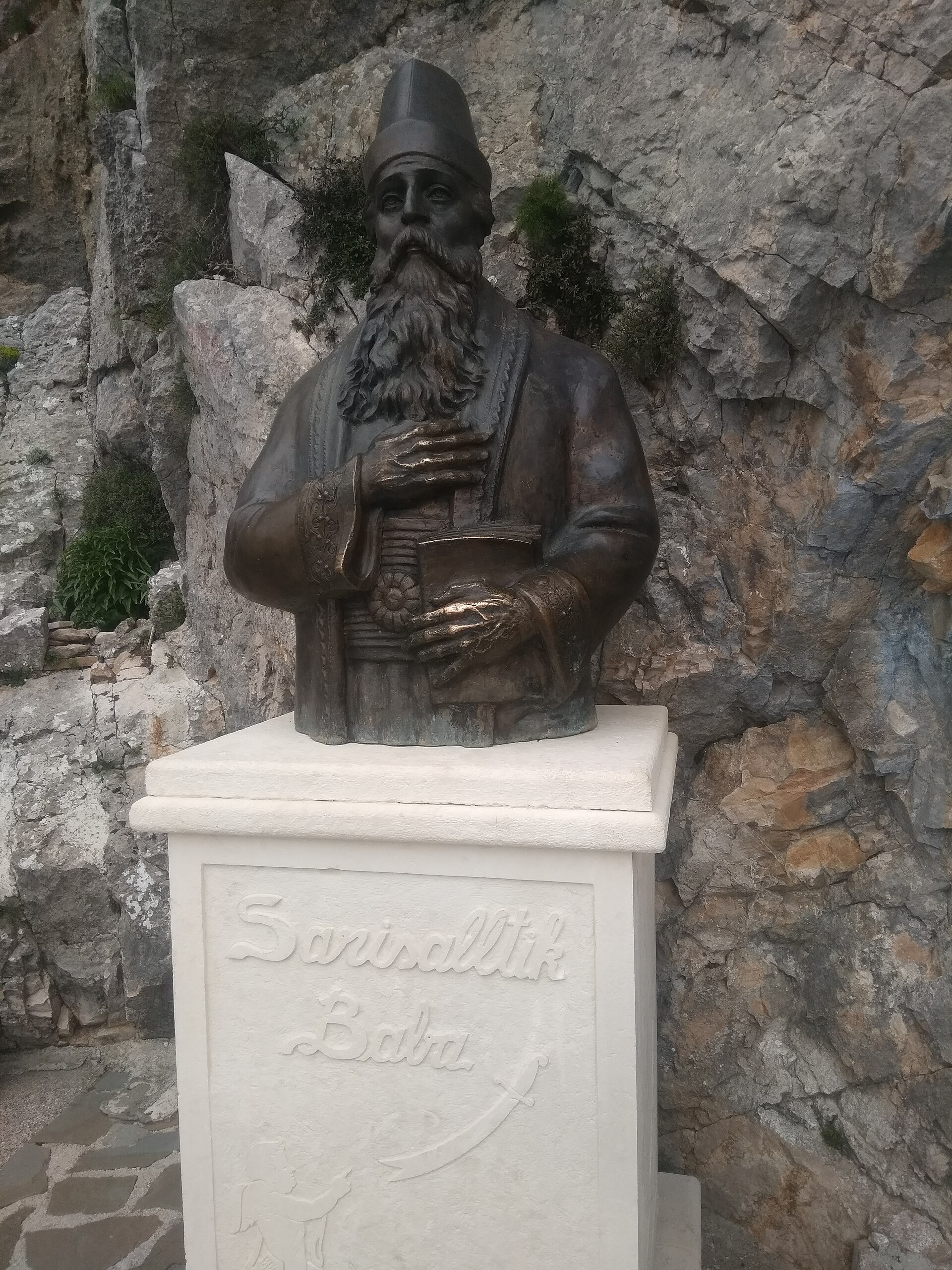
When the Moroccan traveler Ibn Battuta passed through the Balkans in the 1330s, he heard of a man already decades dead but still very much alive in the mouths of the faithful: Sarı Saltık, the 'ecstatic devotee' whose deeds, Battuta noted carefully, sometimes ran afoul of religious law. That tension — between orthodoxy and something wilder — defined the man from the start.
The historical outline is thin and contested. Some call him a disciple of Mahmud Hayran, others tie him to Haji Bektash Veli or to a successor of Ahmed ar-Rifa'i. Evliya Çelebi, writing three centuries later, claimed his real name was Mehmed and that he hailed from Bukhara. Frederick Hasluck, an early 20th-century historian, thought him a saint of a Tatar tribe from Crimea, his cult carried into Dobruja and spread onward by Bektashi dervishes.
A 15th-century narrative called the Oghuzname gives the fullest — if shakiest — account of events said to have unfolded two centuries earlier. In 1261, it says, Saltık led Anatolian Turkomans into Dobruja, settled there supposedly under the protection of Byzantine Emperor Michael VIII to guard the empire's northern frontier. The trouble is that Byzantium didn't actually hold Dobruja then — it was part of Bulgaria — and had no shared border with the Tatars to make such an arrangement plausible. The same source later places him in Crimea after 1265, among Turkomans transferred there by the Tatar khan Berke, and has him leading nomads back to Dobruja after 1280. Scholars have long noted the story reads like a folk epic, a destan, rather than a chronicle — and many doubt its historicity outright.
Whatever the truth, something happened to the Turkomans after Saltık's death around 1297 or 1298. Some drifted back to Anatolia. Others stayed, converted to Christianity, and became, by tradition, ancestors of the Gagauz people — a quiet, strange footnote to a life already thick with contradiction.
His memory settled most durably in Babadag, a Romanian town whose name literally means 'Mountain of the Baba.' The town is identified with a settlement called Baba Saltuq that Ibn Battuta visited in 1331 or 1332, and the oldest sources about Saltık place his tomb in that same area. In 1484 or 1485, Ottoman Sultan Bayezid II visited the tomb during a military campaign and, after a reported victory, ordered a religious and educational complex built around it, including a mausoleum finished in 1488. Evliya Çelebi later claimed a marble sarcophagus bearing a Tatar inscription was unearthed during construction — though curiously, no other source mentions this discovery.
More from Mythology

The Doctor Who Sang a Nation Into Being
A country doctor rode into the forests of Karelia armed with nothing but a notebook — and rode out with the soul of a nation.

The Boat That Carried the Sun
Every sunset, the ancient Egyptians believed, the sun climbed into a boat and sailed straight into the realm of the dead — only to fight a monstrous serpent before dawn could return.

The Wild Man of the Snows
At 21,000 feet, a colonel found tracks in the snow that he blamed on a wolf — but his guides knew better, and gave the world a name that would echo for a century.

The Knight Who Went Mad for Love: Orlando Furioso
A hero so devoted to duty he was Charlemagne's greatest paladin loses his mind—not to a sword wound, but to heartbreak. To cure him, a friend must ride a flying horse to the Moon.

The Book That Turned the World Into Myth
A poet condemned to exile spent his final years in Rome finishing a poem that would outlive empires—a poem about nothing standing still, not gods, not lovers, not even the shape of a man.

Paradise Lost: Milton's Rebel Angel
A blind poet, dictating verses in the dark, dared to explain the ways of God to men — and in doing so, made Hell's ruler unforgettable.