The Book That Vanished: Aristotle's Treatise on Comedy
Somewhere in antiquity, a second half of Aristotle's Poetics disappeared — the half devoted to laughter. What was lost has haunted scholars, monks, and novelists for centuries.
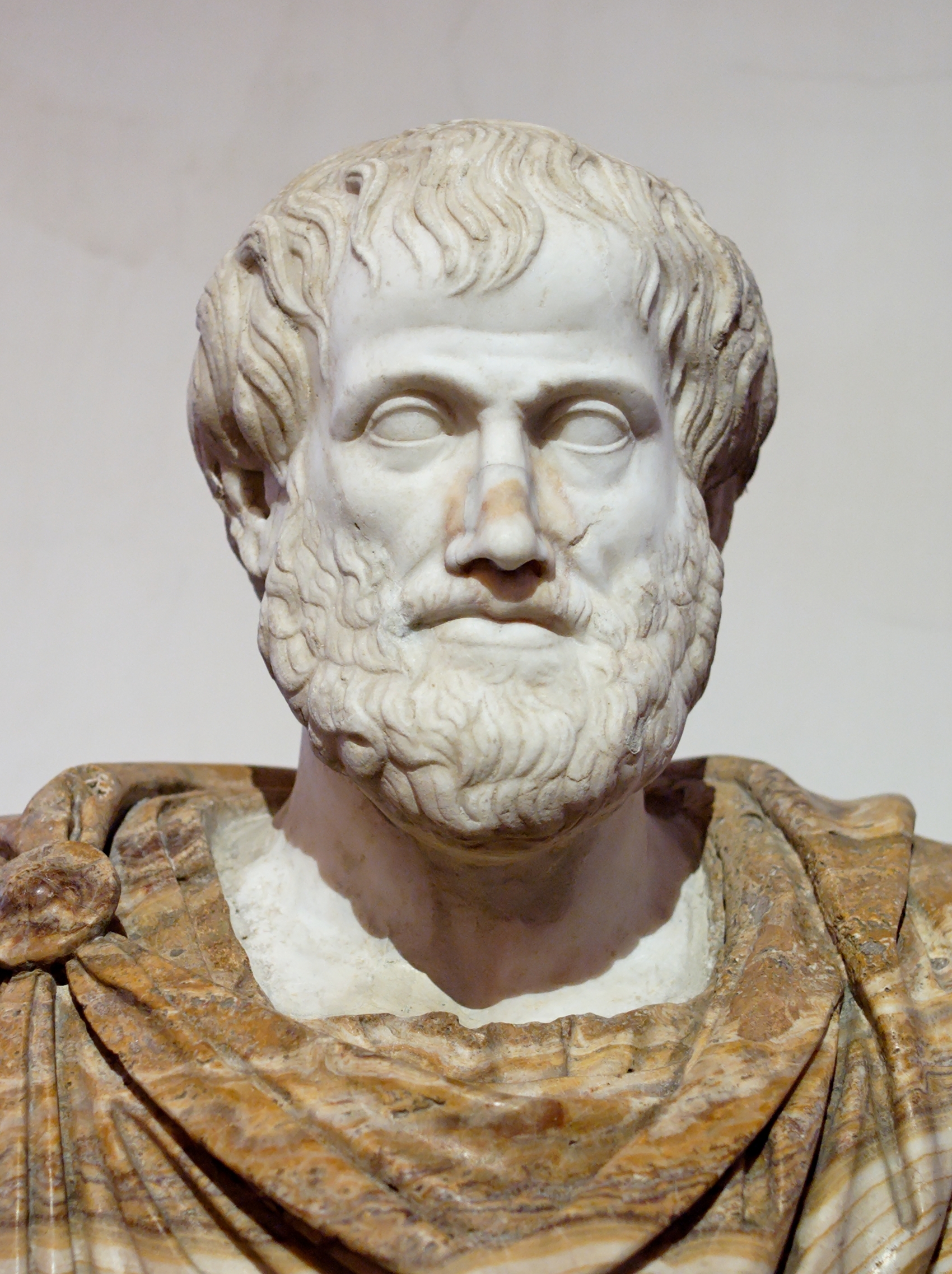
Aristotle wrote hundreds of works on papyrus scrolls, produced across decades at the Lyceum in Athens, the school he founded after leaving Plato's Academy. His output ranged across logic, biology, ethics, politics, and the arts, and among his surviving treatises is the Poetics, a short but influential study of tragedy, plot, and dramatic structure. Yet only around a third of what Aristotle actually wrote has survived into the present day, and none of what remains was ever polished for publication — these are lecture notes and drafts, not finished books.
The Poetics as we have it deals almost entirely with tragedy. But ancient tradition and the structure of the text itself suggest that Aristotle originally intended a companion discussion of comedy, treating laughter and comic plots with the same systematic rigor he applied to tragic ones. That second portion — if it ever existed as a completed, circulated text — is gone. No manuscript of it has ever been recovered.
Aristotle's habit of producing paired or complementary treatises was not unusual for him; his surviving corpus is full of works that address opposite ends of a single subject. Given his methodical mind — the same one that catalogued animals, plants, and forms of government — a treatise on comedy would have been a natural extension of his interest in poetry as a craft with rules, causes, and effects.
What we know for certain is bound tightly by what has survived. Aristotle's library at the Lyceum was vast, and his manuscripts passed through many hands after his death in 322 BC. The transmission of ancient texts depended on copying, recopying, and the survival of monasteries, private collections, and later Islamic and Christian scholarly networks. Any given work could vanish simply because no one thought to recopy it before the last scroll crumbled.
More from Art

The Painting With No Foreground
A single robed figure stares out at an empty grey sea — and the emptiness itself became a scandal. When it was unveiled in Berlin in 1810, no one knew quite what to do with it.

The Painter Who Chased the Light
For a few purple minutes each evening, an American exile knelt in an English garden and raced the dying sun to paint two little girls lighting lanterns. It took him two years to finish.

When a President Became a God
Look straight up inside the U.S. Capitol dome and you will find George Washington enthroned among the clouds, surrounded by goddesses — the founding father transformed into myth.

Marble Brought Back to Life
A corpse asleep, a wing barely brushing her skin — and marble somehow learns to breathe. This is the moment Antonio Canova dared to carve.

The World Turned Upside Down
Look closely at a sixteenth-century Flemish village and you'll find a man biting a pillar, another carrying daylight in a basket, and a wife slipping a blue cloak over her husband's shoulders. Every gesture is a joke — if you know the language.

The Girl in the Glass Case
She stood two-thirds life size, dressed in a real tutu and human hair — and the critics who saw her in 1881 recoiled as if she were something obscene.