The Book Too Rich to Read
A prince's obsession with beauty produced 206 pages so lavish they took over a century to finish — and three more centuries to be seen.
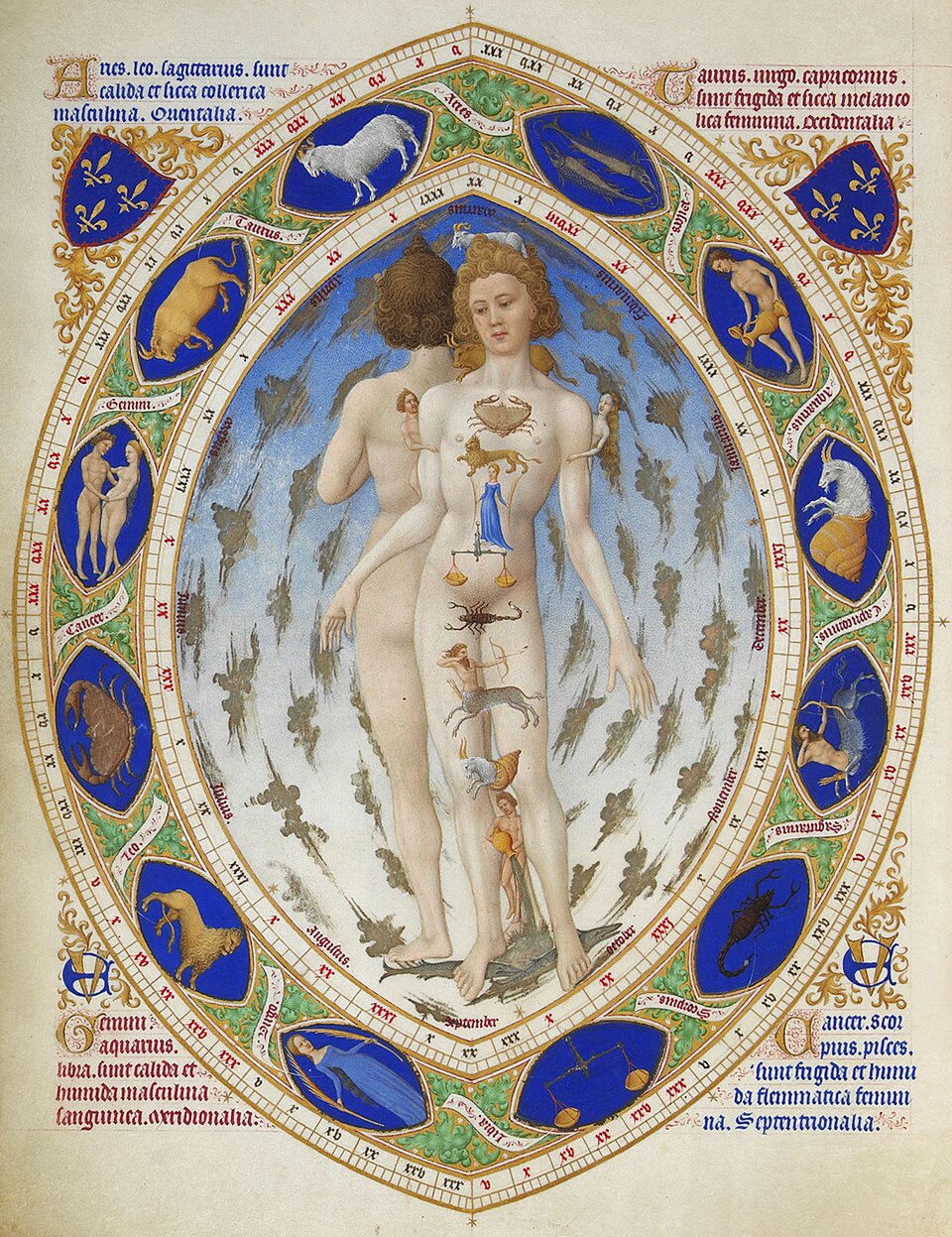
In the last years of his life, John, Duke of Berry, sat in his mansion beside the Sainte-Chapelle surrounded by the art he could never stop collecting. Brother and uncle to kings of France, he had spent his adolescence steeped in art and literature, and his adulthood spending far beyond his means to gather it. Among his fifteen books of hours — including the modestly named Belles Heures and Petites Heures — one project would outshine them all in ambition, cost, and unfinished glory: the Très Riches Heures.
Commissioned sometime before 1412, the manuscript was entrusted to three brothers from the Low Countries — Paul, Johan, and Herman Limbourg. Working with rare pigments and gold leaf, they filled the parchment pages, each roughly 30 by 21.5 centimeters, with 66 large miniatures and 65 small ones. The book of hours itself was a familiar Christian form, a devotional collection of prayers for canonical hours that had spread to laypeople since the 13th century. But what the Limbourg brothers made of it was something else entirely — one of the most lavish illuminated manuscripts of the late medieval world, painted in the final flowering of the International Gothic style.
The work was never completed as planned. In 1416, the Limbourg brothers and their patron the Duke all died — possibly victims of plague — leaving the gatherings of parchment unbound and incomplete. When Berry's estate was inventoried after his death, the unfinished pages were recorded under the name that has stuck ever since: the 'très riches heures,' the very rich hours, distinguishing it from the duke's many other, lesser books of prayer.
What happened next is murky. Berry died deeply in debt, and the long, chaotic settling of his estate — tangled further by the king's madness and the Burgundian and English occupation of Paris — left no clear paper trail for the manuscript. Scholars believe it stayed in Paris for decades; the border styles suggest links to the workshop of the Bedford Master, and later artists seem to have copied designs from its pages well into the 1440s. Around that same decade, an anonymous painter — many now believe it was Barthélemy d'Eyck — added further work to the unfinished book.
More from Art

The Painting With No Foreground
A single robed figure stares out at an empty grey sea — and the emptiness itself became a scandal. When it was unveiled in Berlin in 1810, no one knew quite what to do with it.

The Painter Who Chased the Light
For a few purple minutes each evening, an American exile knelt in an English garden and raced the dying sun to paint two little girls lighting lanterns. It took him two years to finish.

When a President Became a God
Look straight up inside the U.S. Capitol dome and you will find George Washington enthroned among the clouds, surrounded by goddesses — the founding father transformed into myth.

Marble Brought Back to Life
A corpse asleep, a wing barely brushing her skin — and marble somehow learns to breathe. This is the moment Antonio Canova dared to carve.

The World Turned Upside Down
Look closely at a sixteenth-century Flemish village and you'll find a man biting a pillar, another carrying daylight in a basket, and a wife slipping a blue cloak over her husband's shoulders. Every gesture is a joke — if you know the language.

The Girl in the Glass Case
She stood two-thirds life size, dressed in a real tutu and human hair — and the critics who saw her in 1881 recoiled as if she were something obscene.