The Boss Who Never Lost a Man
When his ship was crushed by ice a thousand miles from safety, Ernest Shackleton didn't chase the pole anymore — he fought only for one thing: to bring every man home alive.
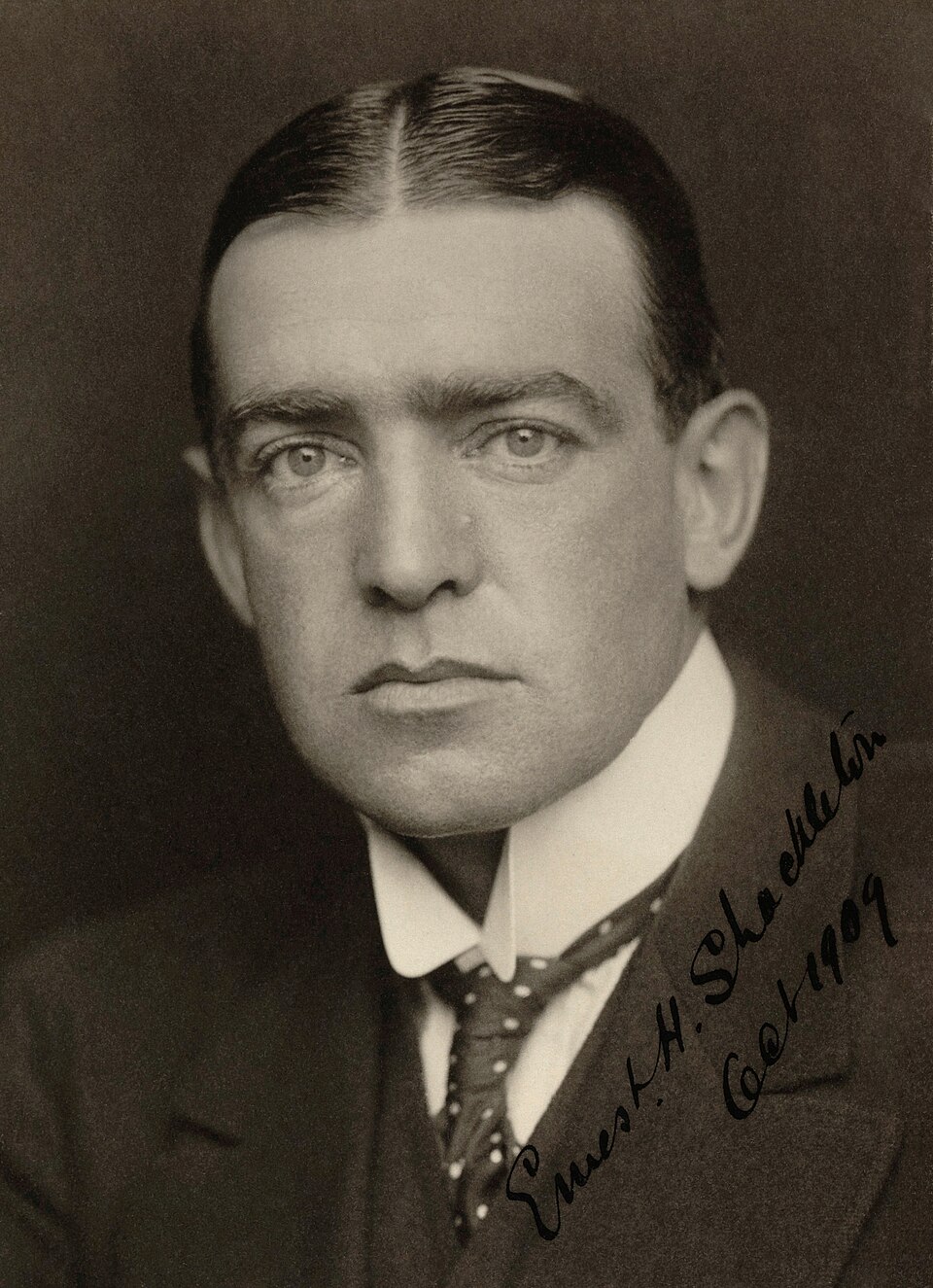
On 8 August 1914, as Europe slid into war, a ship called Endurance slipped out of England carrying twenty-seven men and one man's obsession: to walk across Antarctica, pole included, a trek of some 3,300 kilometers. That man was Ernest Shackleton, already famous for two earlier expeditions, and already twice denied the ultimate prize of reaching the South Pole first.
Shackleton had been chasing the ice since 1901, when as third officer on Robert Falcon Scott's Discovery expedition he helped set a new farthest-south record at 82°16' S before scurvy sent him home early. He returned in 1907 with his own expedition, the Nimrod, and came agonizingly close — 88°23'S, a mere 97 geographical miles (112 statute miles, or 180 kilometres) from the pole — before turning back to save his men. He came home a hero and was knighted. Then, in December 1911, Roald Amundsen beat everyone to the pole, and the record books closed on that particular race.
So Shackleton aimed higher: a full crossing of the continent. It was never to be. The Endurance became trapped in pack ice in the Weddell Sea, drifted for months, and was finally crushed and sank on 21 November 1915. Shackleton's ambition for exploration ended there — his new mission was survival. He and his men camped on the drifting ice until it broke apart beneath them, then took to open boats.
They rowed and sailed to the desolate, ice-bound Elephant Island. It offered no hope of rescue, so Shackleton made an extraordinary decision: he chose five men, reinforced one lifeboat — the James Caird — with help from the ship's carpenter, and set out across 720 nautical miles (1,330 km) of the most violent ocean on Earth to reach South Georgia, leaving twenty-two men behind to wait.
More from Explorations

Humboldt: The Man Who Measured the World
A Prussian noble's son, once mocked as a sickly child, would climb a volcano to a world-record height and rewrite how humanity understood nature itself.

The Man Who Named Canada
A Breton mariner planted a wooden cross on a foreign shore and claimed a kingdom he did not understand — then spent a winter frozen into its river, praying a stranger's remedy would save his men.

Sixty Ships Into the Unknown: Hanno's Voyage Down the African Coast
A Carthaginian fleet of sixty ships and thousands of settlers vanished past the Pillars of Hercules to found cities on an unmapped coast — and came home with the skins of hairy, hostile 'gorillas' as proof of how far they had gone.

HMS Challenger: The Voyage That Charted the Deep
A stripped-down warship, its guns torn out to make room for microscopes, set sail from Portsmouth to answer a question no one had ever properly asked: what lies at the bottom of the sea?

Scott's Last Expedition: The Letters Written at the End of the World
Five men reached the bottom of the world only to find a Norwegian flag already planted there. What followed was not glory, but a slow, frozen unraveling that the world would remember for a century.

Marco Polo: In the Court of Kublai Khan
A fifteen-year-old boy meets the father he barely knew — and is soon swept toward the richest court on Earth. Twenty-four years later, he returns home with tales so vast that Venice simply calls him 'Mister Millions'.