Marco Polo: In the Court of Kublai Khan
A fifteen-year-old boy meets the father he barely knew — and is soon swept toward the richest court on Earth. Twenty-four years later, he returns home with tales so vast that Venice simply calls him 'Mister Millions'.

In 1269, a ship docked at Venice carrying two merchants long thought lost to distant trade routes: Niccolò Polo and his brother Maffeo. Niccolò had left Venice years earlier, before the birth of his son, and had spent the intervening years crossing Asia, even meeting the Mongol ruler Kublai Khan. Now, returning home, he discovered his wife had died, leaving behind a fifteen-year-old boy named Marco — the son he had never met.
Marco had grown up largely in the shadow of that absence, raised in part by an aunt and uncle, schooled not in Latin but in the practical arts of commerce: foreign currency, appraisal, the handling of cargo ships. It was an education built for a merchant's life, and it would prove essential. In 1271, at seventeen, Marco set off with his father and uncle on a journey that would consume nearly a quarter-century of his life.
They sailed first to Acre, then rode camels across Persian deserts to the port of Hormuz, tracing a path deep into the heart of Asia along what would later be called the Silk Road. Their destination was Cathay — the Mongol Empire under Kublai Khan, founder of the Yuan dynasty in China. When they finally reached the royal court, the Khan was struck by young Marco's intelligence and humility. It was the beginning of an extraordinary seventeen-year residence in the emperor's domains.
Kublai Khan did not merely host the young Venetian — he put him to work. Marco was appointed as a foreign emissary, dispatched on diplomatic missions across the vast empire and into Southeast Asia. He travelled to lands corresponding to today's Myanmar, India, Indonesia, Sri Lanka, and Vietnam, absorbing details of geography, custom, and government that no European before him had recorded so thoroughly.
Around 1291, the Polos took on one final mission before departing Asia: escorting the Mongol princess Kököchin to Persia, where they arrived around 1293, roughly two years later. Their task complete, they turned west, travelling overland to Constantinople and then on to Venice — twenty-four years after they had left.
More from Explorations

Humboldt: The Man Who Measured the World
A Prussian noble's son, once mocked as a sickly child, would climb a volcano to a world-record height and rewrite how humanity understood nature itself.

The Man Who Named Canada
A Breton mariner planted a wooden cross on a foreign shore and claimed a kingdom he did not understand — then spent a winter frozen into its river, praying a stranger's remedy would save his men.

Sixty Ships Into the Unknown: Hanno's Voyage Down the African Coast
A Carthaginian fleet of sixty ships and thousands of settlers vanished past the Pillars of Hercules to found cities on an unmapped coast — and came home with the skins of hairy, hostile 'gorillas' as proof of how far they had gone.

HMS Challenger: The Voyage That Charted the Deep
A stripped-down warship, its guns torn out to make room for microscopes, set sail from Portsmouth to answer a question no one had ever properly asked: what lies at the bottom of the sea?

Scott's Last Expedition: The Letters Written at the End of the World
Five men reached the bottom of the world only to find a Norwegian flag already planted there. What followed was not glory, but a slow, frozen unraveling that the world would remember for a century.
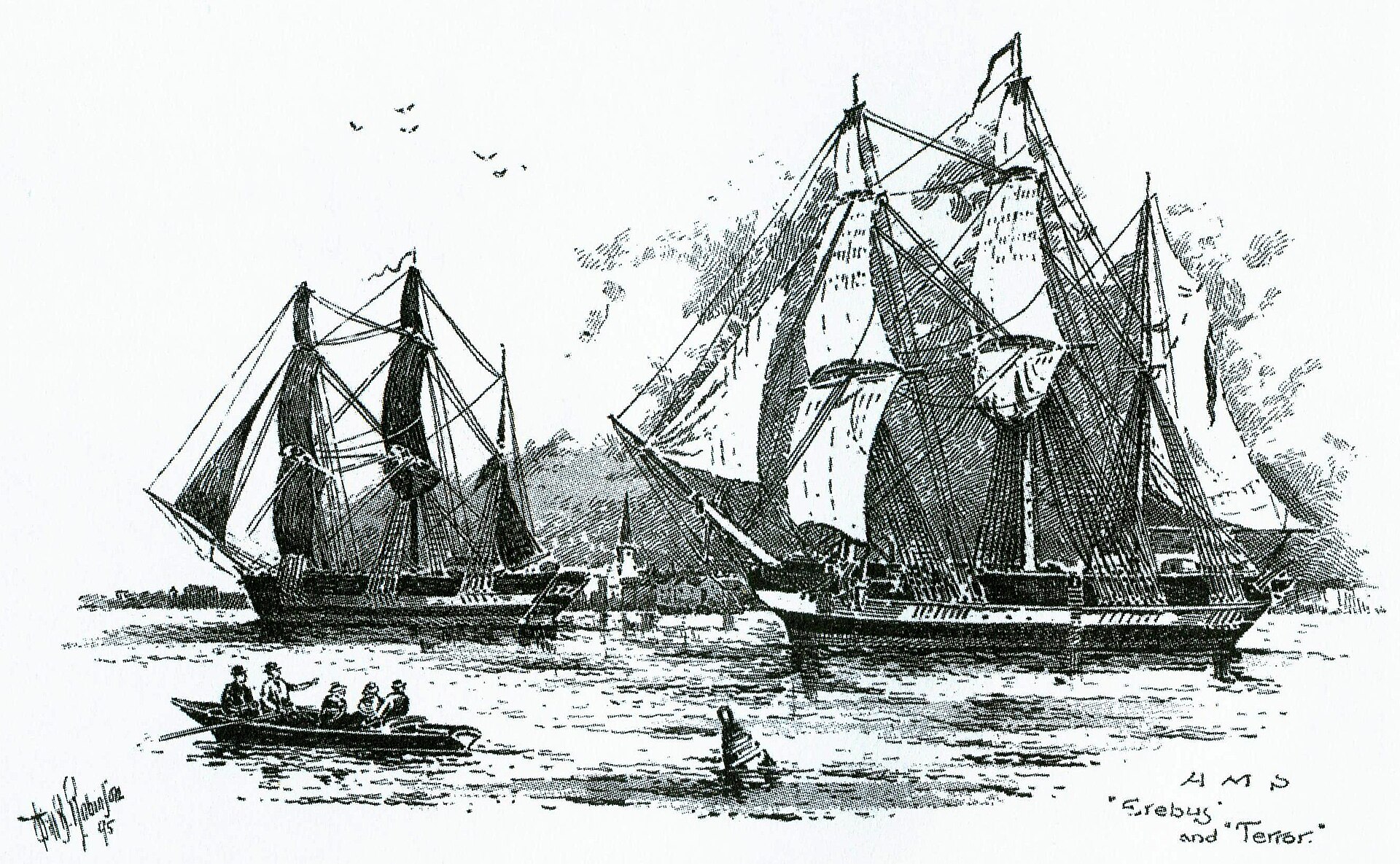
The Ships That Vanished Into the Ice
Two ships, 129 men, and a mission to conquer the last blank space on the map of the Arctic — none of them came home.