The Ships That Vanished Into the Ice
Two ships, 129 men, and a mission to conquer the last blank space on the map of the Arctic — none of them came home.
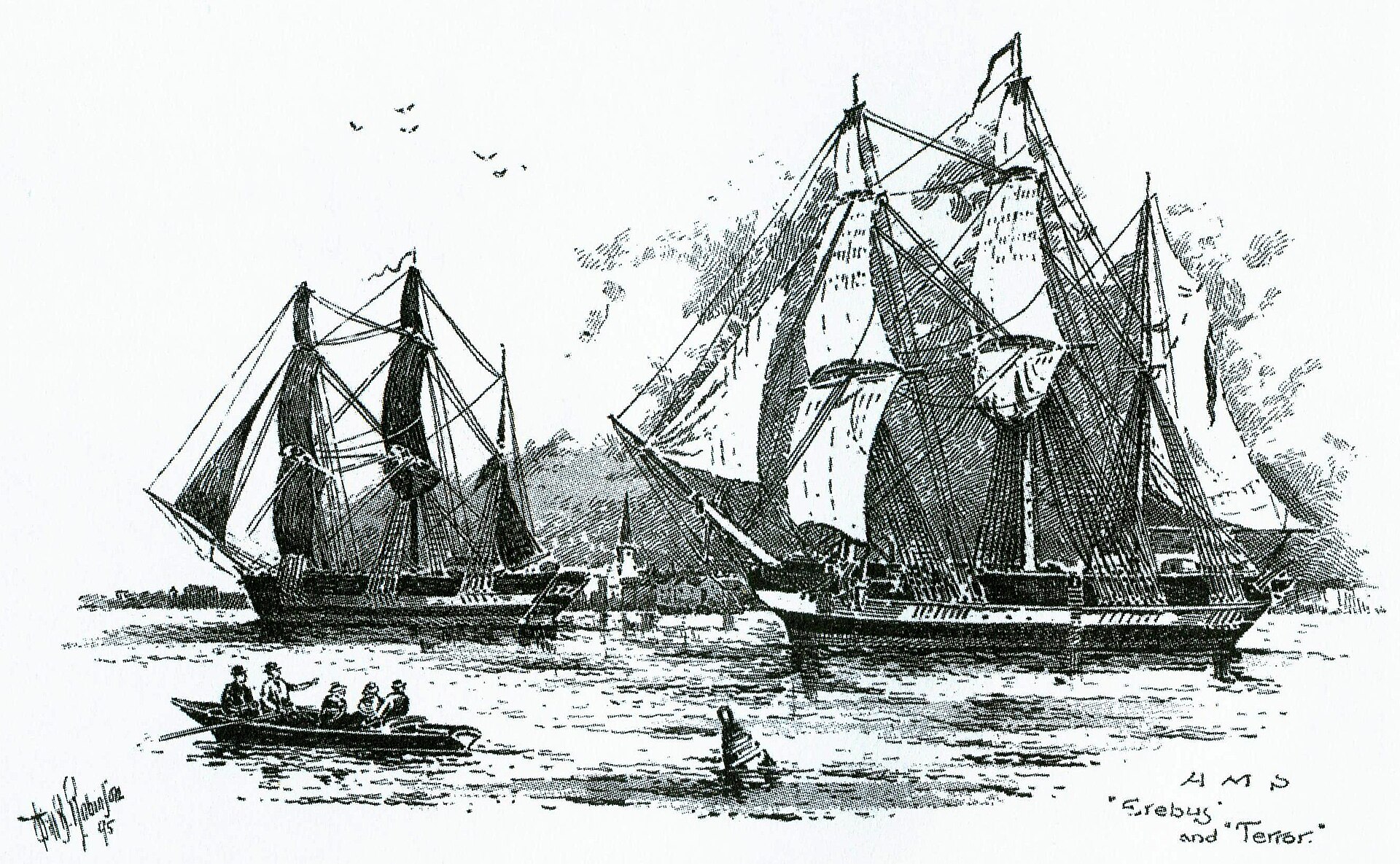
On 19 May 1845, HMS Erebus and HMS Terror slipped out of the mouth of the Thames, their holds packed with supplies meant to last for years. Under the command of Sir John Franklin, a veteran of Arctic and naval service, the expedition carried 129 officers and men on a mission that had obsessed the British Admiralty for decades: to find and finally navigate the Northwest Passage across the top of Canada, while also gathering magnetic data that might aid future navigation.
Franklin was no stranger to the far north. He had sailed toward Spitsbergen early in his career, served at the Battle of Trafalgar, and led two overland expeditions along the Canadian Arctic coast in the 1820s. Beneath him were two capable officers, Francis Crozier and James Fitzjames. The ships themselves had been reinforced for ice — double-hulled in wood, sheathed in iron — and equipped with steam engines meant not for propulsion but for churning through ice-choked water.
The voyage began smoothly enough. The ships sailed down Britain's east coast, past the Orkney Islands, and out into the Atlantic, where Crozier's surviving letters describe punishing weather. Once in Arctic waters, they passed through Lancaster Sound without much trouble and wintered at Beechey Island. In the following season, favorable conditions let them push south along the west coast of Cornwallis Island, into Peel Sound and what would later be named Franklin Strait. It was here, off King William Island in Victoria Strait, that the ice closed in and never let go.
Three young sailors died early on and were buried at Beechey Island — the first casualties of what would become a slow catastrophe. The ice did not release the ships in the spring of 1846, and Erebus and Terror remained trapped for a year and a half while provisions dwindled. Franklin himself died in June 1847, still icebound. By 22 April 1848, the surviving crew abandoned the ships and set out on foot and by boat toward the Canadian mainland, dragging their supplies behind them.
Inuit testimony gathered years later described gaunt, uniformed men begging local hunters for food and material, men who did not know the land and had no way to survive it. None of them made it home. Autopsies on remains found on King William Island in 1933 documented evidence of cannibalism among the crew after the ships were abandoned — a grim detail later corroborated by searcher John Rae's 1854 reports, which scandalized Victorian Britain.
More from Explorations

Humboldt: The Man Who Measured the World
A Prussian noble's son, once mocked as a sickly child, would climb a volcano to a world-record height and rewrite how humanity understood nature itself.

The Man Who Named Canada
A Breton mariner planted a wooden cross on a foreign shore and claimed a kingdom he did not understand — then spent a winter frozen into its river, praying a stranger's remedy would save his men.

Sixty Ships Into the Unknown: Hanno's Voyage Down the African Coast
A Carthaginian fleet of sixty ships and thousands of settlers vanished past the Pillars of Hercules to found cities on an unmapped coast — and came home with the skins of hairy, hostile 'gorillas' as proof of how far they had gone.

HMS Challenger: The Voyage That Charted the Deep
A stripped-down warship, its guns torn out to make room for microscopes, set sail from Portsmouth to answer a question no one had ever properly asked: what lies at the bottom of the sea?

Scott's Last Expedition: The Letters Written at the End of the World
Five men reached the bottom of the world only to find a Norwegian flag already planted there. What followed was not glory, but a slow, frozen unraveling that the world would remember for a century.

Marco Polo: In the Court of Kublai Khan
A fifteen-year-old boy meets the father he barely knew — and is soon swept toward the richest court on Earth. Twenty-four years later, he returns home with tales so vast that Venice simply calls him 'Mister Millions'.