Scott's Last Expedition: The Letters Written at the End of the World
Five men reached the bottom of the world only to find a Norwegian flag already planted there. What followed was not glory, but a slow, frozen unraveling that the world would remember for a century.

In 1904, Captain Robert Falcon Scott returned from the Antarctic aboard the RRS Discovery, having pushed south to 82°17' without crossing the Great Ice Barrier. He resumed his naval career, but the ice had not let go of him. When news arrived in 1909 that Ernest Shackleton's Nimrod expedition had been forced to turn back at 88°23' S — less than 100 geographical miles (112 statute miles, or 180 km) from the Pole — Scott felt both alarm and provocation. Shackleton had used McMurdo Sound, territory Scott considered his own field of work, and the breach of trust sharpened Scott's resolve to finish what Shackleton had nearly achieved.
Scott was not alone in his ambitions. A German expedition under Wilhelm Filchner was preparing to attempt a crossing of Antarctica, and the two men met in May 1910 to avoid overlapping routes. A Japanese expedition was rumored, Douglas Mawson was organizing an Australasian venture for 1911, and, most ominously, the Norwegian Roald Amundsen had announced plans for an Arctic voyage — plans that would later, without warning, turn south.
To build his team, Scott sifted through 8,000 applicants, ultimately choosing 65 men for the ship and shore parties. Seven had served with him on Discovery; five had been with Shackleton. Lieutenant Edward Evans, who had once navigated the Discovery Expedition's relief ship Morning, gave up his own expedition plans and his financial backers to become Scott's second-in-command. The Admiralty released other officers too: Harry Pennell as navigator, and surgeons George Murray Levick and Edward Atkinson. Victor Campbell, nicknamed 'The Wicked Mate', was chosen to lead an exploration of King Edward VII Land, while Henry 'Birdie' Bowers and Lawrence 'Titus' Oates — an Army captain who personally donated £1,000 to the cause — rounded out the officer corps.
Below decks were seasoned polar hands: Edgar Evans, Tom Crean, and William Lashly, all veterans of earlier Antarctic work, alongside seamen Patrick Keohane and Robert Forde, cook Thomas Clissold, and steward Frederick Hooper. A Russian dog driver, Dimitri Gerov, and a Ukrainian groom, Anton Omelchenko, also joined the shore party — a reminder of how international the enterprise, on the ground, actually was.
At the scientific heart of the expedition stood Edward 'Bill' Wilson, Scott's closest confidant since their Farthest South march on the Discovery Expedition. A physician, zoologist, and gifted illustrator, Wilson assembled a team that Scott's biographer David Crane called one of the most impressive scientific groups ever taken to the poles, including meteorologist George Simpson. Their programme was ambitious: exploring Victoria Land and the Western Mountains, attempting a landing on King Edward VII Land, and in June–July 1911, undertaking the first extended sledging journey ever made in the depths of the Antarctic winter, to Cape Crozier.
More from Explorations

Humboldt: The Man Who Measured the World
A Prussian noble's son, once mocked as a sickly child, would climb a volcano to a world-record height and rewrite how humanity understood nature itself.

The Man Who Named Canada
A Breton mariner planted a wooden cross on a foreign shore and claimed a kingdom he did not understand — then spent a winter frozen into its river, praying a stranger's remedy would save his men.

Sixty Ships Into the Unknown: Hanno's Voyage Down the African Coast
A Carthaginian fleet of sixty ships and thousands of settlers vanished past the Pillars of Hercules to found cities on an unmapped coast — and came home with the skins of hairy, hostile 'gorillas' as proof of how far they had gone.

HMS Challenger: The Voyage That Charted the Deep
A stripped-down warship, its guns torn out to make room for microscopes, set sail from Portsmouth to answer a question no one had ever properly asked: what lies at the bottom of the sea?

Marco Polo: In the Court of Kublai Khan
A fifteen-year-old boy meets the father he barely knew — and is soon swept toward the richest court on Earth. Twenty-four years later, he returns home with tales so vast that Venice simply calls him 'Mister Millions'.
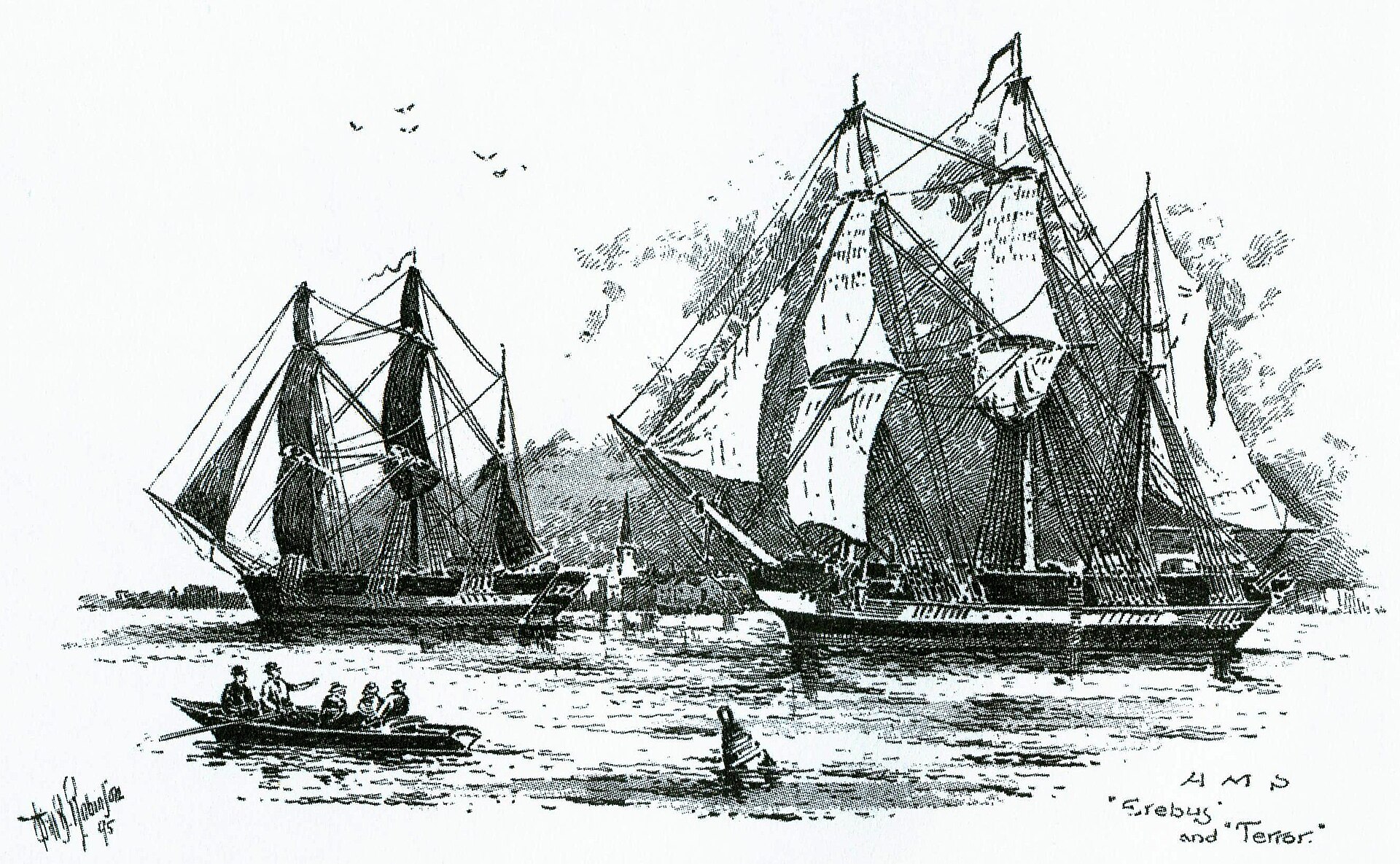
The Ships That Vanished Into the Ice
Two ships, 129 men, and a mission to conquer the last blank space on the map of the Arctic — none of them came home.