Humboldt: The Man Who Measured the World
A Prussian noble's son, once mocked as a sickly child, would climb a volcano to a world-record height and rewrite how humanity understood nature itself.

Alexander von Humboldt was born in Berlin on 14 September 1769, the younger son of a Prussian army major who had earned a royal chamberlain's post for his service in the Seven Years' War. As a boy he showed little promise of health or brilliance, but he obsessively collected and labeled plants, shells, and insects, earning the teasing nickname 'the little apothecary.' His father died in 1779, leaving Alexander and his older brother Wilhelm in the care of their mother, who hired Enlightenment tutors and pushed both boys toward careers as Prussian civil servants.
Humboldt studied finance briefly at the University of Frankfurt (Oder) before enrolling at the University of Göttingen on 25 April 1789, drawn by the lectures of C. G. Heyne and anatomist J. F. Blumenbach. There he met Steven Jan van Geuns, a Dutch medical student, with whom he traveled to the Rhine in the fall of 1789; in Mainz they met Georg Forster, who had sailed with Captain James Cook on his second voyage, and the friendship crystallized Humboldt's long-held ambition to become a scientific explorer. Travels with Forster to the Rhine, England, the Netherlands, and France followed, including a 1790 treatise on the basalts along the Rhine and a meeting with Sir Joseph Banks, president of the Royal Society, whose friendship and vast herbarium of South Sea specimens left a lasting mark.
In the years that followed, Humboldt trained relentlessly to prepare himself: commerce and languages in Hamburg, geology under Abraham Gottlob Werner in Freiberg, anatomy under Justus Christian Loder in Jena, and astronomy and instrumentation under Franz Xaver von Zach and Johann Gottfried Koehler. He published Florae Fribergensis Specimen in 1793 on the flora of the Freiberg mines, and in 1797 a study on the newly discovered phenomenon of muscular and nerve irritability inspired by Luigi Galvani's experiments. In 1792 he took an official post as a mining assessor in Berlin, treating the state work as an apprenticeship for science while quietly rising to head his department.
His mother's death on 19 November 1796 freed him from official duty and, crucially, left him an inheritance—derived largely from the estate of her first husband, Baron von Holwede—that would fund more than seventy percent of his private income and, with it, his coming expeditions. After a planned voyage with Nicolas Baudin fell through, Humboldt and French botanist Aimé Bonpland set out instead for Spanish America, sailing from A Coruña aboard the Pizarro on 5 June 1799 with letters of introduction secured through the Spanish minister Mariano Luis de Urquijo.
More from Explorations

The Man Who Named Canada
A Breton mariner planted a wooden cross on a foreign shore and claimed a kingdom he did not understand — then spent a winter frozen into its river, praying a stranger's remedy would save his men.

Sixty Ships Into the Unknown: Hanno's Voyage Down the African Coast
A Carthaginian fleet of sixty ships and thousands of settlers vanished past the Pillars of Hercules to found cities on an unmapped coast — and came home with the skins of hairy, hostile 'gorillas' as proof of how far they had gone.

HMS Challenger: The Voyage That Charted the Deep
A stripped-down warship, its guns torn out to make room for microscopes, set sail from Portsmouth to answer a question no one had ever properly asked: what lies at the bottom of the sea?

Scott's Last Expedition: The Letters Written at the End of the World
Five men reached the bottom of the world only to find a Norwegian flag already planted there. What followed was not glory, but a slow, frozen unraveling that the world would remember for a century.

Marco Polo: In the Court of Kublai Khan
A fifteen-year-old boy meets the father he barely knew — and is soon swept toward the richest court on Earth. Twenty-four years later, he returns home with tales so vast that Venice simply calls him 'Mister Millions'.
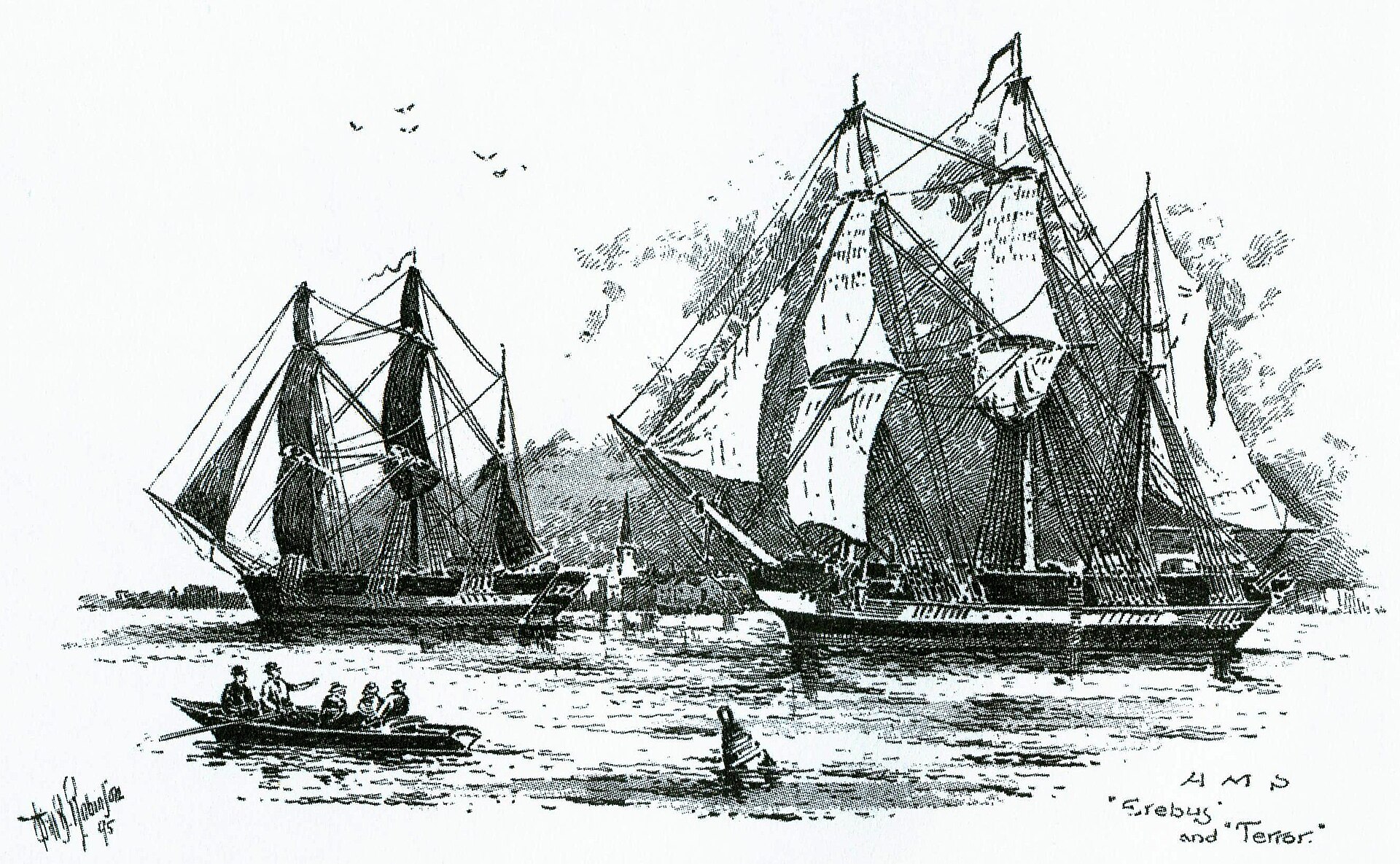
The Ships That Vanished Into the Ice
Two ships, 129 men, and a mission to conquer the last blank space on the map of the Arctic — none of them came home.