HMS Challenger: The Voyage That Charted the Deep
A stripped-down warship, its guns torn out to make room for microscopes, set sail from Portsmouth to answer a question no one had ever properly asked: what lies at the bottom of the sea?

On 21 December 1872, HMS Challenger slipped out of Portsmouth harbour, not bound for battle but for the unmapped darkness of the ocean floor. Fifteen of its seventeen guns had been removed, its cabins converted into laboratories for chemistry and natural history, its hold packed with specimen jars, thermometers, sounding leads and 181 miles of Italian hemp rope. The expedition had been proposed by Sir Charles Wyville Thomson of the University of Edinburgh, who submitted the idea to the Royal Society in 1871 and then took charge of its scientific work himself, while the Royal Society secured the ship from the Royal Navy and Captain George Nares took command.
Aboard were six civilian scientists, including John Murray, along with a secretary-artist, John James Wild, and naval officers such as Commander John Maclear and Thomas Henry Tizard. The ship's original complement numbered 21 officers and around 216 crew. Sailing mainly under canvas to conserve coal, with steam reserved for dredging and manoeuvring in port, Challenger set off on a journey that would eventually cover roughly 68,890 nautical miles and last 713 days.
The route wound from Lisbon and Gibraltar to Madeira and the Canary Islands, then west across the Atlantic to the Virgin Islands, north to Bermuda, over to the Azores, and south again to the Cape Verde Islands, with a detour to Halifax that crossed the Gulf Stream twice. From Cape Verde the ship pressed on to St Paul's Rocks, across the equator to Fernando de Noronha, and on to Bahia in Brazil — each leg accompanied by the same painstaking routine of soundings, dredges and water sampling.
By the time the voyage ended, the crew had taken 492 deep-sea soundings, 133 bottom dredges, 151 open-water trawls and 263 serial temperature readings, working at stations as deep as 8,000 metres. One officer, William James Joseph Spry, later described the daily rhythm: waking at four in the morning, scrubbing the deck, breakfasting on cocoa and biscuit by six, then preparing instruments for measurements that could take up to eight hours to complete.
The expedition was not without loss. Rudolf von Willemoes-Suhm died during the voyage to Tahiti and was buried at sea. In Hong Kong in December 1874, Nares and officer Pelham Aldrich departed to join the British Arctic Expedition, with Frank Tourle Thomson taking over as captain while Maclear remained the most senior officer present throughout. By the voyage's end in 1876, the original complement of roughly 243 had shrunk to 144 through death, desertion, illness and reassignment.
More from Explorations

Humboldt: The Man Who Measured the World
A Prussian noble's son, once mocked as a sickly child, would climb a volcano to a world-record height and rewrite how humanity understood nature itself.

The Man Who Named Canada
A Breton mariner planted a wooden cross on a foreign shore and claimed a kingdom he did not understand — then spent a winter frozen into its river, praying a stranger's remedy would save his men.

Sixty Ships Into the Unknown: Hanno's Voyage Down the African Coast
A Carthaginian fleet of sixty ships and thousands of settlers vanished past the Pillars of Hercules to found cities on an unmapped coast — and came home with the skins of hairy, hostile 'gorillas' as proof of how far they had gone.

Scott's Last Expedition: The Letters Written at the End of the World
Five men reached the bottom of the world only to find a Norwegian flag already planted there. What followed was not glory, but a slow, frozen unraveling that the world would remember for a century.

Marco Polo: In the Court of Kublai Khan
A fifteen-year-old boy meets the father he barely knew — and is soon swept toward the richest court on Earth. Twenty-four years later, he returns home with tales so vast that Venice simply calls him 'Mister Millions'.
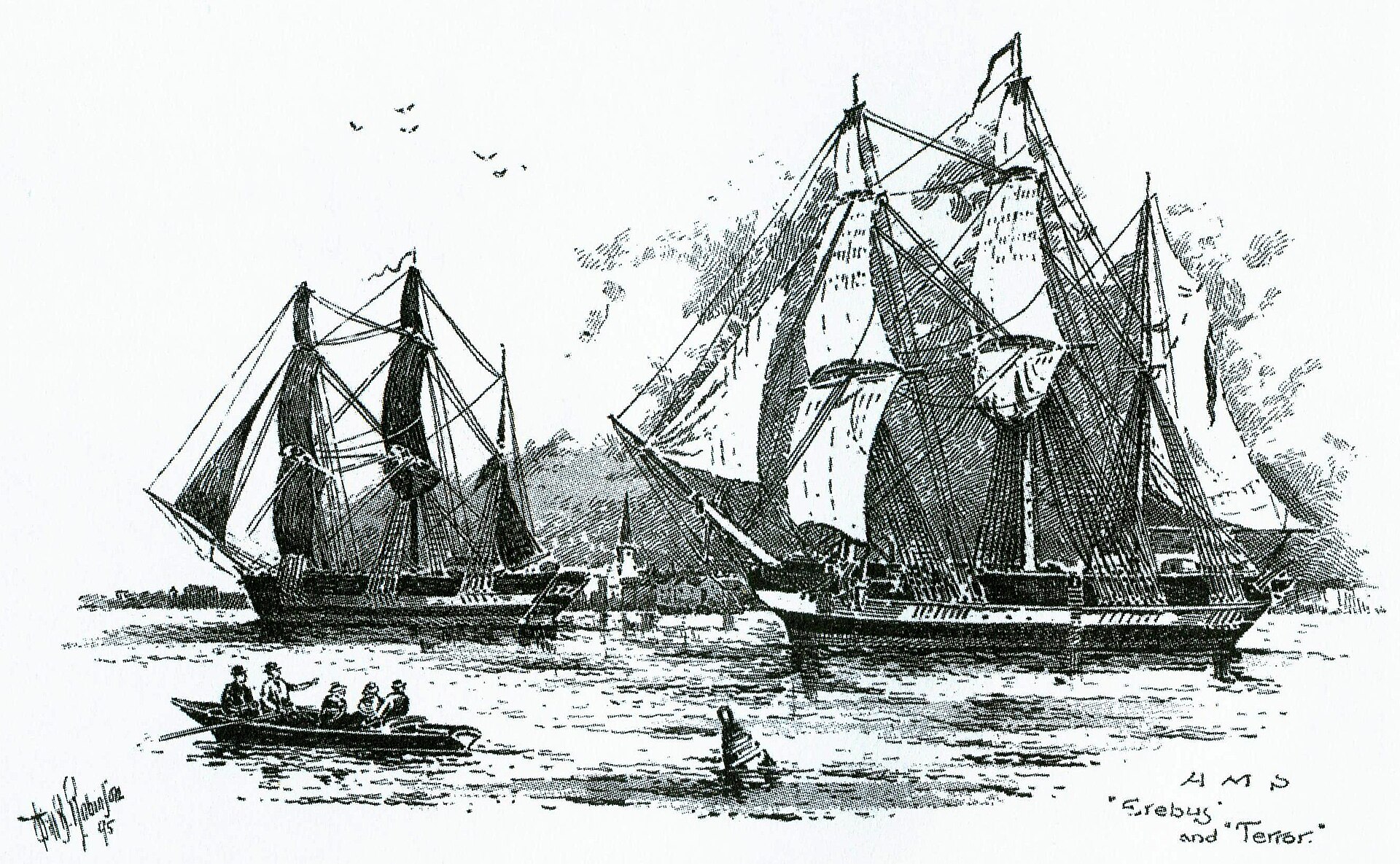
The Ships That Vanished Into the Ice
Two ships, 129 men, and a mission to conquer the last blank space on the map of the Arctic — none of them came home.