The Man Who Named Canada
A Breton mariner planted a wooden cross on a foreign shore and claimed a kingdom he did not understand — then spent a winter frozen into its river, praying a stranger's remedy would save his men.

Jacques Cartier was born in 1491 in Saint-Malo, a hard granite port on Brittany's northeastern coast, into a respectable family of mariners. In 1520 he married Mary Catherine des Granches, a member of a leading aristocratic family, a match that lifted his social standing considerably. He was well regarded enough in his hometown that his name appears repeatedly in baptismal registers as godfather or witness — a quiet mark of trust in a close-knit port community.
His fortunes turned in 1534, two years after Brittany was formally united with the French crown. Jean Le Veneur, bishop of Saint-Malo and abbot of Mont Saint-Michel, introduced Cartier to King Francis I at the Manoir de Brion, vouching for him on the strength of earlier voyages to Newfoundland and Brazil. On 20 April 1534, Cartier sailed under royal commission, tasked with finding islands and lands 'where it is said that a great quantity of gold and other precious things are to be found.'
The crossing took twenty days. From 10 May, Cartier explored Newfoundland, the Strait of Belle Isle, the southern shore of Labrador, the Gaspé and North Shore coasts of the Gulf of St. Lawrence, and islands including Prince Edward Island, Anticosti, and the Magdalen Islands. At the Islands of the Birds, his crew slaughtered roughly a thousand birds, most of them great auks — a species now extinct since 1852. His crew's early encounters with the Mi'kmaq on Chaleur Bay were brief, marked by some trading.
A more consequential meeting followed at Gaspé Bay with St. Lawrence Iroquoians. On 24 July, Cartier planted a ten-metre cross inscribed 'Long Live the King of France,' claiming the territory in the king's name. The Iroquoians' shift in mood suggested they grasped exactly what he had done. Cartier then took the two sons of their chief, Donnacona, agreeing only that they would return laden with European trade goods. He sailed home in September 1534, convinced he had reached the edge of Asia.
He returned in 1535 with three ships, 110 men, and his two Iroquoian captives, sailing up the St. Lawrence River for the first time to Stadacona, Donnacona's capital. Leaving his larger ships behind, he pressed on in his smallest vessel to Hochelaga, arriving on 2 October 1535, where more than a thousand people gathered to greet the French — a settlement far grander than Stadacona. Rapids blocked further passage; so certain was Cartier that China lay beyond them that the rapids and the town that later grew there were named Lachine.
More from Explorations

Humboldt: The Man Who Measured the World
A Prussian noble's son, once mocked as a sickly child, would climb a volcano to a world-record height and rewrite how humanity understood nature itself.

Sixty Ships Into the Unknown: Hanno's Voyage Down the African Coast
A Carthaginian fleet of sixty ships and thousands of settlers vanished past the Pillars of Hercules to found cities on an unmapped coast — and came home with the skins of hairy, hostile 'gorillas' as proof of how far they had gone.

HMS Challenger: The Voyage That Charted the Deep
A stripped-down warship, its guns torn out to make room for microscopes, set sail from Portsmouth to answer a question no one had ever properly asked: what lies at the bottom of the sea?

Scott's Last Expedition: The Letters Written at the End of the World
Five men reached the bottom of the world only to find a Norwegian flag already planted there. What followed was not glory, but a slow, frozen unraveling that the world would remember for a century.

Marco Polo: In the Court of Kublai Khan
A fifteen-year-old boy meets the father he barely knew — and is soon swept toward the richest court on Earth. Twenty-four years later, he returns home with tales so vast that Venice simply calls him 'Mister Millions'.
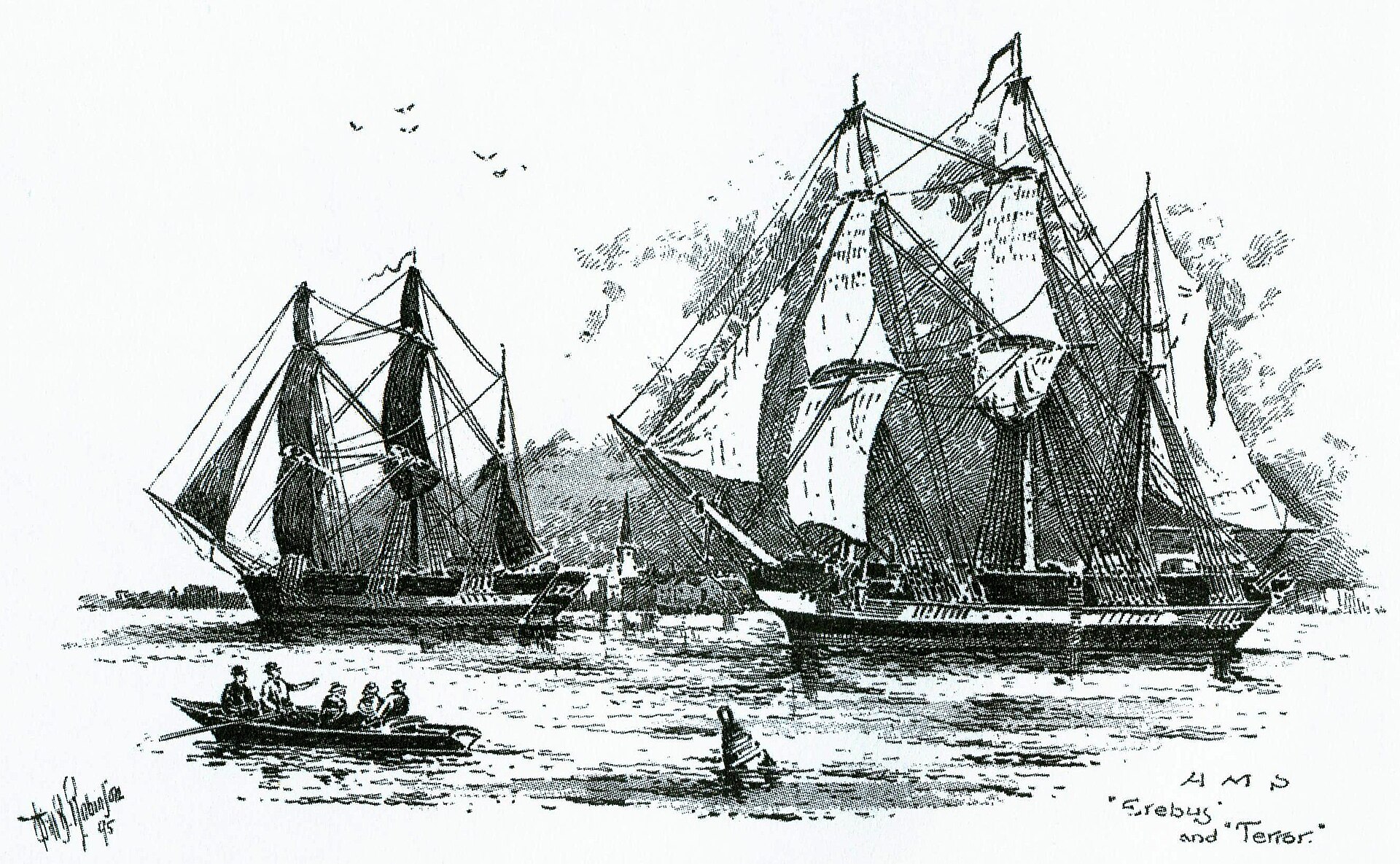
The Ships That Vanished Into the Ice
Two ships, 129 men, and a mission to conquer the last blank space on the map of the Arctic — none of them came home.