The Box That Walked Before an Army
A gilded chest with two carved angels on its lid led a nation through a desert, toppled city walls with nothing but trumpets, and then vanished so completely that its resting place remains one of history's great unsolved mysteries.
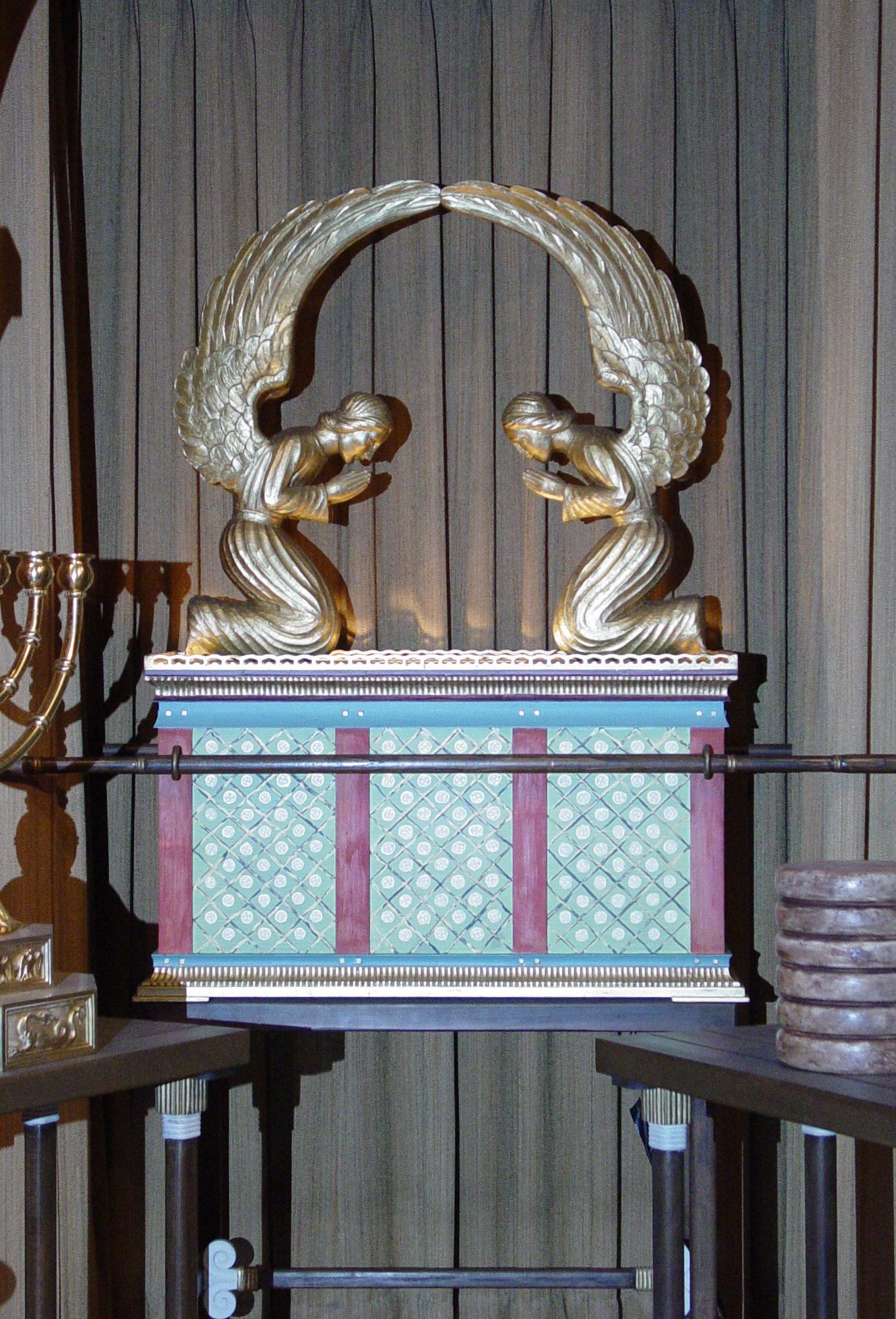
According to the Book of Exodus, roughly a year after the Israelites fled Egypt, Moses received precise instructions atop Mount Sinai for building a sacred chest. It was to measure about 131 by 79 by 79 centimeters, cut from acacia wood and covered entirely in gold, with a crown-like molding running around its rim. Moses passed the design to two craftsmen, Bezalel and Oholiab, who built it according to the pattern God had shown him.
Four gold rings were fixed to its corners, through which gilded acacia poles were threaded so the chest could be carried without ever being touched directly. Its lid, known as the Seat of Mercy, bore two facing cherubim in gold. Tradition holds that God spoke to Moses from the space between these two figures. Inside the chest, according to Exodus, Numbers, and the Epistle to the Hebrews, rested the stone tablets of the Ten Commandments, along with Aaron's rod and a pot of manna.
For forty years, as the Israelites wandered the desert after leaving Egypt, the Ark accompanied them. Whenever they camped, it was placed within the Tabernacle, a portable tent-sanctuary. When they marched, Levite priests carried it roughly 2,000 cubits — about 800 meters — ahead of the people, its form hidden always beneath layered coverings so that even the priests carrying it never glimpsed it directly.
When Joshua led the Israelites to the Jordan River on their approach to the Promised Land, the Ark went first. The moment the priests carrying it touched the water, the river dried up, allowing the people to cross; twelve stones were later set up at that spot as a memorial. At Jericho, the Ark was paraded around the city walls once a day for six days, trumpets sounding, and on the seventh day, after seven circuits, the walls collapsed and the city fell.
The Ark continued to mark pivotal moments in Israel's history. After a defeat at Ai, Joshua mourned before it. When Joshua later read the Law to the people between Mount Gerizim and Mount Ebal, they stood arrayed on either side of the Ark. It rested for a time at Bethel under the care of the priest Phinehas, grandson of Aaron, before being consulted ahead of the Battle of Gibeah and eventually settling at Shiloh, tended by Hophni and Phinehas, sons of the priest Eli.
More from Treasures

The Legend of the Nazi Gold Train
Somewhere beneath the hills of Poland, rumor insists, a train loaded with looted treasure vanished into a tunnel and was never seen again. The story survives because the plunder behind it was terrifyingly real.

The Treasure List Carved in Copper
While every other Dead Sea Scroll was written on parchment or papyrus, one was hammered into metal — a list of buried gold and silver that no one has ever found.

The Diamond That Vanished for a Century
For decades, treasure hunters and novelists spun theories about a lost 137-carat gem — sold, recut, melted into legend. It was sitting in a Quebec bank vault the entire time.

Gold, Ghosts, and the Mountain That Keeps Its Secret
For over a century, treasure hunters have vanished into a jagged Arizona range chasing a fortune that may never have existed at all. What they left behind was not gold, but one of America's most enduring legends.

The King Who Buried a River
When Rome finally cornered the Dacian king, it wasn't a sword that gave up his secret — it was a traitor's whisper about a riverbed.

The Fortune Dutch Schultz Took to His Grave
He asked New York's mob bosses for permission to kill a federal prosecutor — and when they said no, he disobeyed them anyway. It was a decision that would end his life and leave behind a fortune that has never been found.