The Clay Tablets That Shook the History of Writing
Buried with a burned, dismembered woman in a Transylvanian village, three small clay tablets have haunted archaeology for over sixty years — are they the world's first writing, or an elaborate illusion?
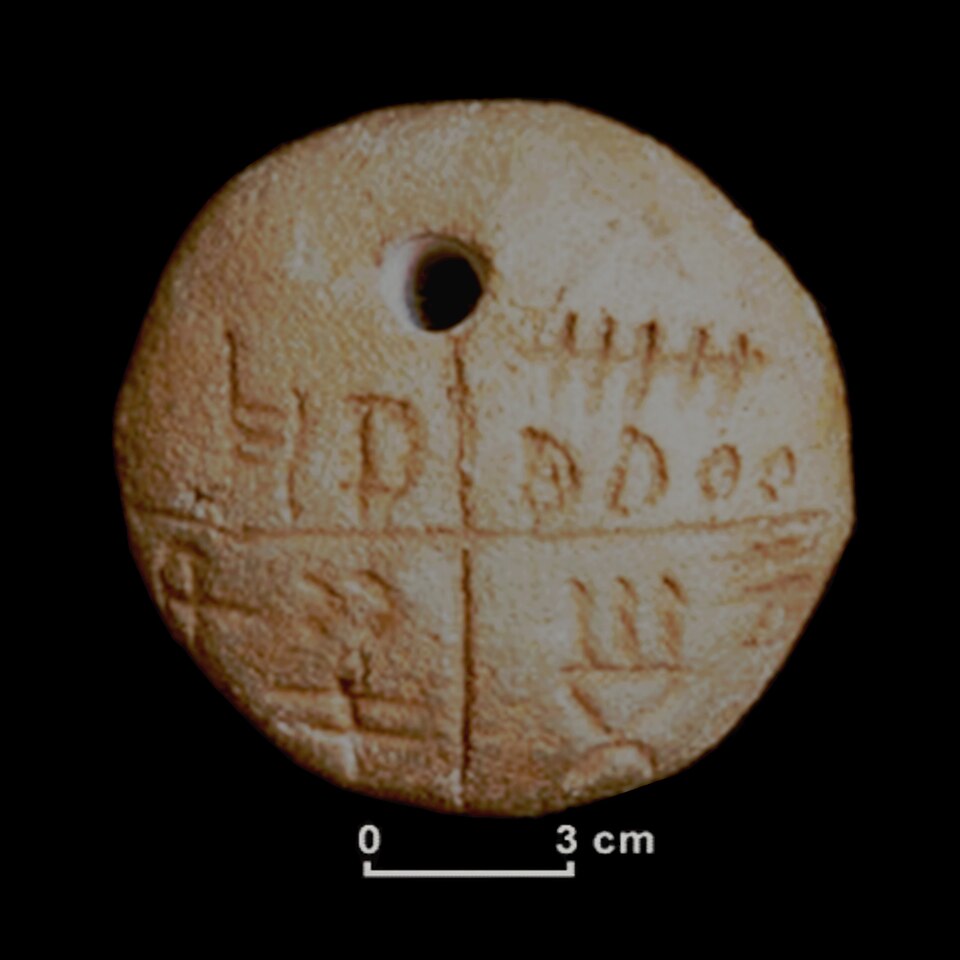
In 1961, a team led by archaeologist Nicolae Vlassa was excavating a Neolithic site in the village of Tărtăria, in Săliștea commune, some 30 kilometers from Alba Iulia in Transylvania. What they reportedly unearthed there would spark one of the most stubborn controversies in the study of ancient writing: three small, unfired clay tablets covered in incised symbols, found alongside twenty-six clay and stone figurines, a shell bracelet, and the burnt, broken bones of an adult woman later nicknamed 'Milady Tărtăria'.
No one agrees on who she was. Some have speculated she may have been a respected local wise-woman, shaman, or spirit-medium, but the burial itself resists easy interpretation, and Vlassa never fully explained the stratigraphy of the find — the layering of soil that would have anchored the tablets firmly in time.
The tablets themselves are unassuming objects. Two are rectangular, one is round, measuring just 6 centimeters across. Two have holes drilled through them. Each bears symbols carved into only one face. The unpierced rectangular tablet shows a horned animal, an unclear figure, and what looks like a branch or tree; the others carry mostly abstract signs, part of a broader corpus known as the Vinča symbols.
Dating them precisely has proven almost impossible. Workers at the conservation department of the Cluj museum baked the originally unbaked clay to preserve it, permanently closing off the option of direct radiocarbon dating. Scholars have instead had to rely on indirect evidence and disputed stratigraphy, producing wildly different estimates — some placing the tablets around 5300 BC, others suggesting a much later date closer to 2750 BC, nearer the beginning of Sumerian proto-writing around 3300 BC.
The stakes of that dating question are enormous. If the earlier date holds, and if the symbols genuinely constitute writing, the Tărtăria tablets would predate both Sumerian cuneiform and Egyptian hieroglyphs, making them the earliest known writing system in the world — earlier even than the first Minoan writing, the oldest known script in Europe. That possibility has made the tablets a flashpoint in debates about the so-called Danubian culture, a term coined by V. Gordon Childe to describe the first agrarian societies of central and eastern Europe, a hypothesis championed by scholars like Marco Merlini, Harald Haarmann, Joan Marler, and Gheorghe Lazarovici.//
More from Archaeology

The Bronze Disc That Rewrote the Sky
Two looters with a metal detector dug up something illegal, invisible in value, and older than Stonehenge's final stones — a map of the heavens buried for over three thousand years.

The Faceless Women of the Ice Age
Long before writing, before cities, before the wheel, someone carved a woman's body into stone and ivory — and left no name, no face, no explanation.

The Pebble That Might Be Human
A palm-sized stone found on a Moroccan riverbank may be humanity's oldest attempt to see itself — or simply a trick of erosion.

The Crown That Vanished: Deshret and the Red Land
A crown worn by kings for three thousand years has never once been found in a tomb — not one. So where did it go?

The Face That Traveled Between Empires
A farm worker's shovel struck stone in 1897 and unearthed a face so striking it would be sold to France, seized as war booty, and finally traded back for a Velázquez.

The Boy in the Dark Tunnel
A schoolboy fell into black water inside an ancient tunnel and surfaced with his fingers brushing letters no one had noticed for 2,600 years.