The Empty Frames of Boston: The Gardner Museum Theft
On a St. Patrick's night in 1990, two men in police uniforms talked their way into one of America's greatest private art collections — and vanished into legend, taking $500 million in masterpieces with them.
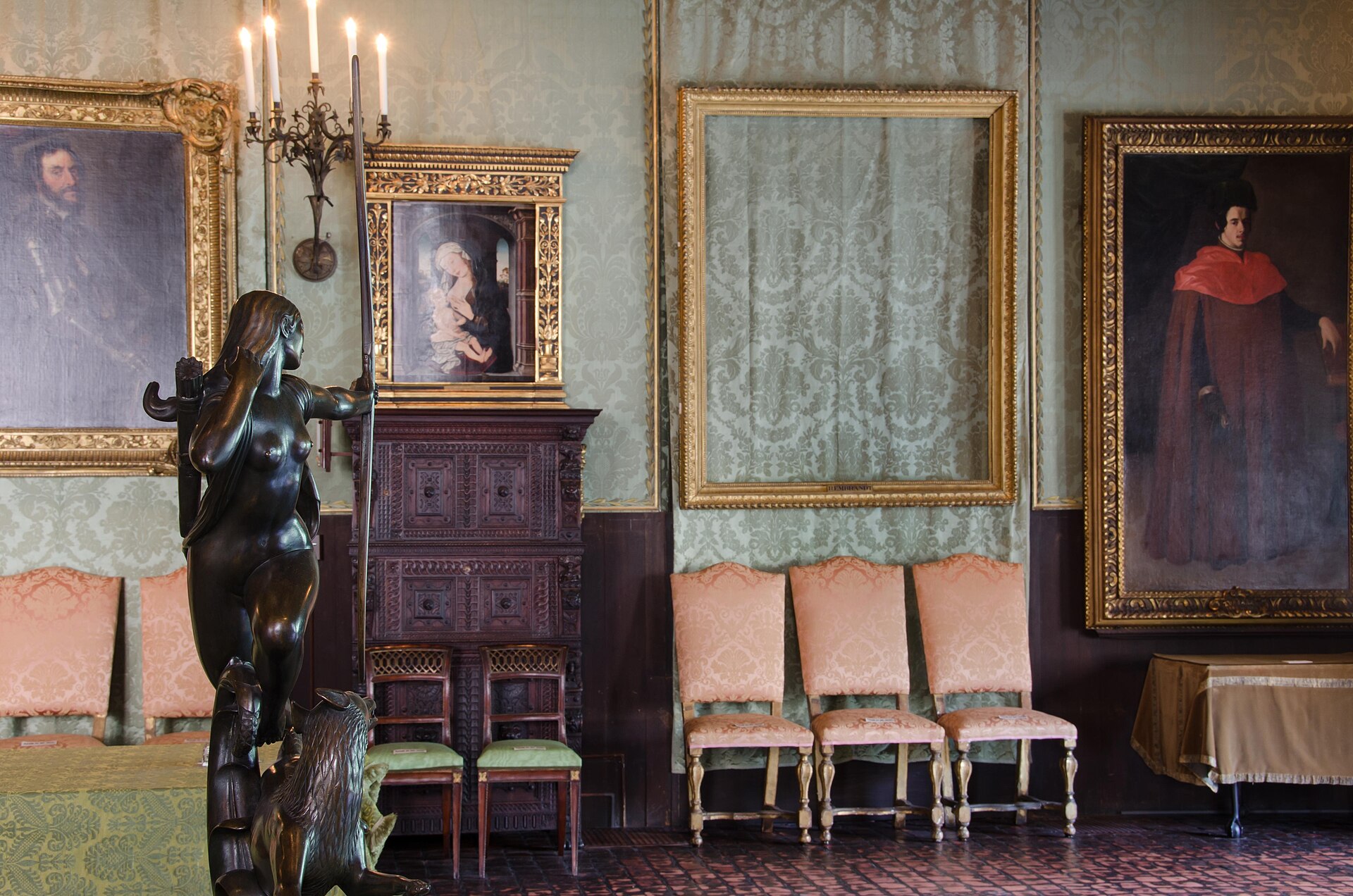
Just before 1:00 a.m. on March 18, 1990, two men dressed as Boston police officers stood at the side entrance of the Isabella Stewart Gardner Museum, claiming they were responding to a disturbance call. Night watchman Rick Abath, 23, buzzed them in. It was a decision that would haunt art history for decades.
The museum itself was the life's work of Isabella Stewart Gardner, a collector who had opened it to the public in 1903 to house her personal treasures. Her will was strict: nothing could be sold, nothing purchased, and the arrangement of art was never to change. By the 1980s, the institution she left behind was financially strained, lacking climate control, insurance, and — critically — any interior security cameras. A 1988 security review had flagged weaknesses, but budget constraints and Gardner's own rules against renovation blocked meaningful upgrades.
That night, guards Abath and Randy Hestand were the only staff on duty. Earlier in his patrol, fire alarms had gone off in several rooms; finding no smoke, Abath disabled the panel, assuming a malfunction. He also briefly opened the side door without telling his colleague — an act that, combined with the later ruse, allowed the impostors to walk straight into the building.
Over the next hour, the thieves bound both guards with duct tape in the basement and looted the galleries. They took thirteen works in total, executing a strange, selective raid. Among the missing pieces was Vermeer's The Concert, one of only 34 known works by the Dutch master and considered the most valuable unrecovered painting on Earth. Also gone was Rembrandt's only seascape, The Storm on the Sea of Galilee, along with other paintings and sketches by Rembrandt, Degas, Manet, and Govert Flinck. Oddly, they also grabbed a bronze eagle finial and a Chinese gu vessel of minor value — while leaving far more valuable works untouched.
The case has never been solved. No arrests have ever been made, and none of the artworks have surfaced. The FBI has valued the loss in the hundreds of millions of dollars, and the museum itself offers a $10 million reward — the largest bounty ever posted by a private institution — for information leading to recovery.
More from Art

The Painting With No Foreground
A single robed figure stares out at an empty grey sea — and the emptiness itself became a scandal. When it was unveiled in Berlin in 1810, no one knew quite what to do with it.

The Painter Who Chased the Light
For a few purple minutes each evening, an American exile knelt in an English garden and raced the dying sun to paint two little girls lighting lanterns. It took him two years to finish.

When a President Became a God
Look straight up inside the U.S. Capitol dome and you will find George Washington enthroned among the clouds, surrounded by goddesses — the founding father transformed into myth.

Marble Brought Back to Life
A corpse asleep, a wing barely brushing her skin — and marble somehow learns to breathe. This is the moment Antonio Canova dared to carve.

The World Turned Upside Down
Look closely at a sixteenth-century Flemish village and you'll find a man biting a pillar, another carrying daylight in a basket, and a wife slipping a blue cloak over her husband's shoulders. Every gesture is a joke — if you know the language.

The Girl in the Glass Case
She stood two-thirds life size, dressed in a real tutu and human hair — and the critics who saw her in 1881 recoiled as if she were something obscene.