The Face That Launched a Diplomatic War
Buried for over three thousand years in a sculptor's dusty workshop, a queen's painted limestone face would one day become the most contested object in Egyptology.
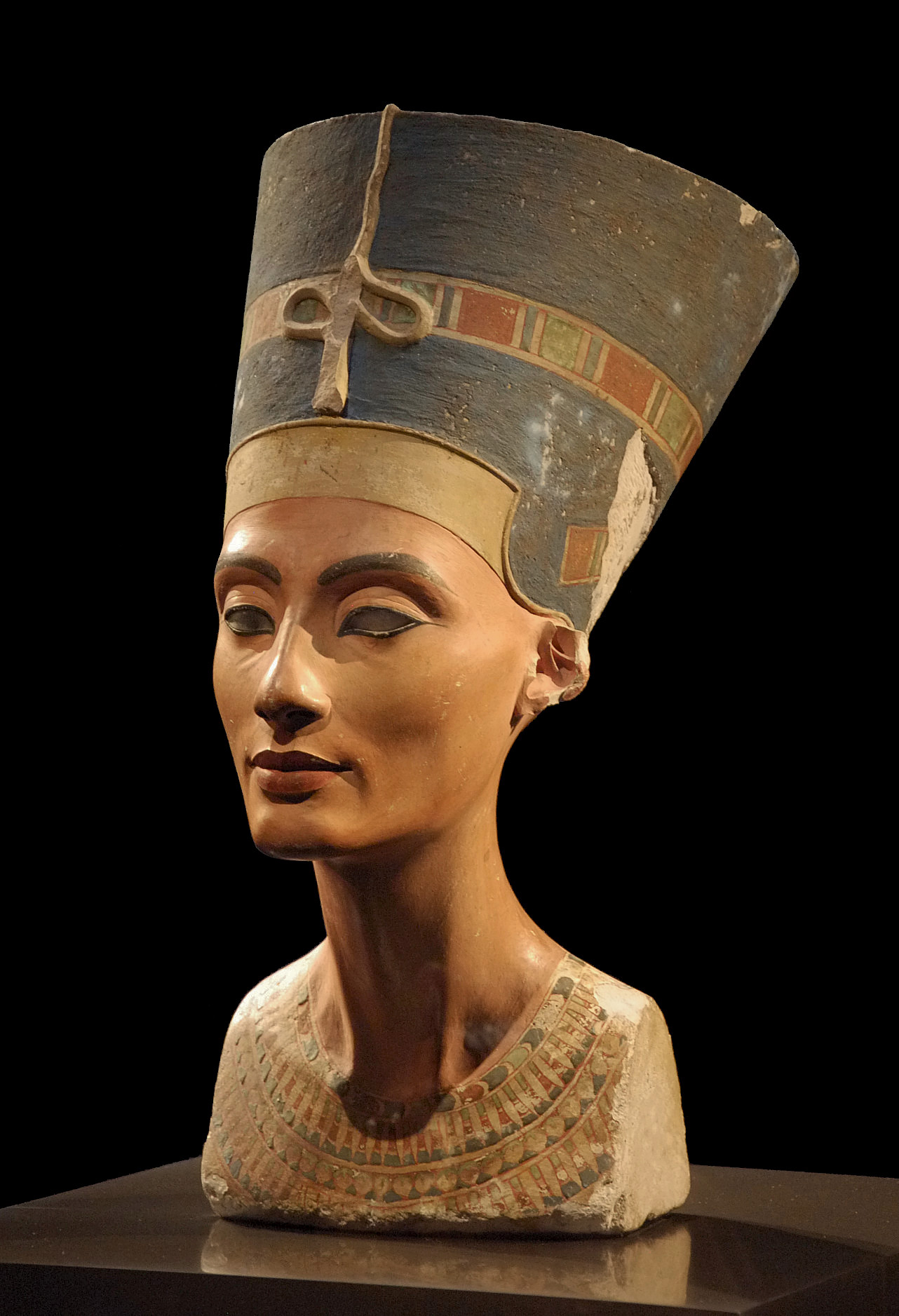
On 6 December 1912, in the sun-baked ruins of Tell el-Amarna, a German excavation team funded by the Deutsche Orient-Gesellschaft uncovered something extraordinary in the abandoned workshop of the sculptor Thutmose. Ludwig Borchardt, the expedition's leader, wrote in his diary that they suddenly held 'the most alive Egyptian artwork' in their hands — one, he said, that could not be described in words but only seen. What they had found was a bust of Nefertiti, Great Royal Wife of Pharaoh Akhenaten, crafted around 1345 BC.
Nefertiti herself remains a figure wrapped in mystery. She was the chief consort of Akhenaten, the Eighteenth Dynasty pharaoh who upended Egyptian religion by founding Atenism, a monotheistic worship of the sun disc Aten. Theories differ on her origins — Egyptian royal, foreign princess, or daughter of the official Ay, who later became pharaoh himself. She bore Akhenaten six daughters, one of whom, Ankhesenpaaten, later married Tutankhamun. Long thought to have vanished or died around the twelfth year of Akhenaten's reign, an inscription found at Deir Abu Hinnis proved she was still alive in its sixteenth year, and some believe she may briefly have ruled Egypt as pharaoh after his death.
The bust itself bears no inscription, yet its identity is unmistakable: the distinctive blue crown, seen on other labeled depictions of Nefertiti such as the 'house altar', confirms who she is. Standing 48 centimetres tall and weighing about 20 kilograms, it is made of a limestone core layered in painted stucco. The face is nearly symmetrical and remarkably intact, though the left eye lacks the quartz-and-beeswax inlay present in the right. A now-broken uraeus, a cobra symbol, once sat above her brow, and she wears a broad, flower-patterned collar.
The bust's departure from Egypt has fueled controversy for over a century. In January 1913, Borchardt met with a senior Egyptian official to divide that season's finds between Germany and Egypt. A 1924 document later revealed that Borchardt 'wanted to save the bust for us' — meaning Germany. According to accounts, he showed French antiquities inspector Gustave Lefebvre a photograph that did not show the bust in its best light, and Lefebvre may never have lifted it fully from its box before approving the division. Borchardt also wrongly described the bust as gypsum rather than limestone.
Egypt has long accused Borchardt of concealing the bust's true value to smuggle it out of the country, citing rules against removing artifacts of major archaeological significance. Germany, for its part, points to an official protocol signed by both German excavators and the French-led Egyptian Antiquities Service at the time, insisting the division was conducted fairly and that the bust simply topped the exchange list.
More from Art

The Painting With No Foreground
A single robed figure stares out at an empty grey sea — and the emptiness itself became a scandal. When it was unveiled in Berlin in 1810, no one knew quite what to do with it.

The Painter Who Chased the Light
For a few purple minutes each evening, an American exile knelt in an English garden and raced the dying sun to paint two little girls lighting lanterns. It took him two years to finish.

When a President Became a God
Look straight up inside the U.S. Capitol dome and you will find George Washington enthroned among the clouds, surrounded by goddesses — the founding father transformed into myth.

Marble Brought Back to Life
A corpse asleep, a wing barely brushing her skin — and marble somehow learns to breathe. This is the moment Antonio Canova dared to carve.

The World Turned Upside Down
Look closely at a sixteenth-century Flemish village and you'll find a man biting a pillar, another carrying daylight in a basket, and a wife slipping a blue cloak over her husband's shoulders. Every gesture is a joke — if you know the language.

The Girl in the Glass Case
She stood two-thirds life size, dressed in a real tutu and human hair — and the critics who saw her in 1881 recoiled as if she were something obscene.